

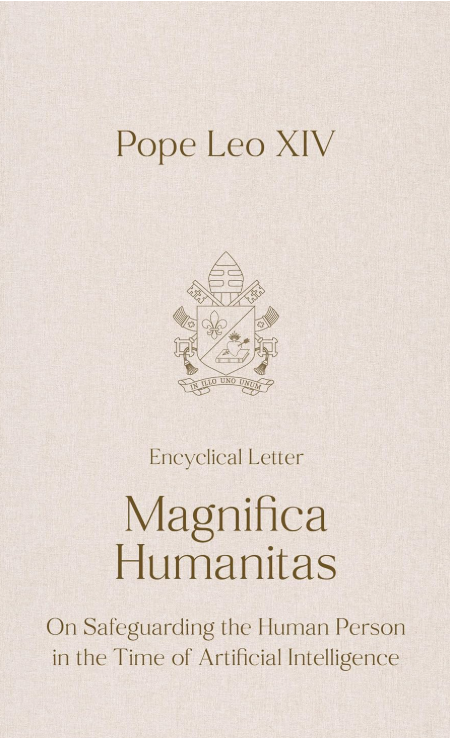
On May 25, 2026, only one week after Catholic Extension Society’s private audience with Pope Leo XIV, the Holy Father released his first papal encyclical, “Magnifica humanitas: On Safeguarding the Human Person in the time of Artificial Intelligence.”
This marked the first time a pope has so comprehensively addressed the topic of artificial intelligence (AI). Therefore, it will likely be remembered as a landmark papal teaching for many years to come. Pope Leo explained in the document that he was inviting the whole world—people of faith and all people of good will—into a moral discernment about the potential impacts of our rapidly evolving modern technologies.
Here are a few of our takeaways. We encourage everyone to read the document in its entirety.
AI is a valuable tool requiring vigilance
Pope Leo’s intent was not to condemn any particular technology as inherently evil, recognizing that AI and related technologies can achieve great benefits for us. He called it a “valuable tool requiring vigilance.”
As AI makes greater and quicker advances, he was particularly interested in discussing how to safeguard the dignity of workers, young people, and the poor and vulnerable of our society. He also addressed the immoral usage of AI in war, which can make conflict more impersonal at the expense of civilians.
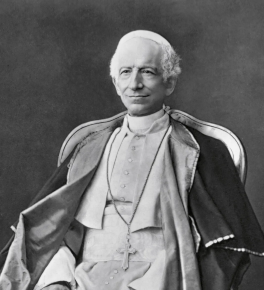
Throughout the five-chapter document, the pope leaned heavily on the core principles of Catholic social teaching, which emerged at the end of the 19th century. Catholic social teaching gained prominence from Pope Leo XIV’s namesake predecessor, Pope Leo XIII, pictured below, whose pontificate occurred at another time of rapid technological advance: the Industrial Revolution.
Catholic social teaching is rooted in the Gospels, and its tenants demand that power, structures, economies, resources, and technology must serve humans and help them flourish. Humans must never be subjugated for the benefit of a few.
Centrality of humanity
At the heart of Pope Leo XIV’s encyclical was the affirmation of the uniqueness of humans—no matter how great or knowledgeable our technologies become.
As artificial intelligence grows in analytic power and scale, humans remain irreplaceable. Pope Leo wrote,
No computational system, however sophisticated, can create a heart that gives itself, or a conscience that discerns good from evil. Even when machines excel in efficiency, a human face that asks to be gazed upon remains the center of our history.” (233)
At the core of our humanity, which is created in God’s own image and likeness, the pope says, is the ability to love and to be in relationship with others—something a machine cannot replicate.
Even our woundedness, the pope argued, can be used for good. This is because wounds provide an occasion for “harmonious growth.” Only inside the human mind we find “freedom and responsibility are intertwined with mutual care.” (12)
The pope said he felt it was important to go into specific detail about the ways technologies are harming us now, naming everything from the creation of disinformation to abuses of people’s personal data as means of controlling others.
He therefore called for disarmament, saying,
To disarm does not mean rejecting technology, but preventing it from dominating humanity.” (110)
He called humanity to work together for the common good by focusing on four actionable things: toning down escalatory words and rhetoric, building peace through justice, empathizing with the perspectives of victims, and reviving dialogue and multilateralism with realistic expectations.
While the issues are complex and daunting, the Holy Father reminded us, similar to his first exhortation, “Dilexi te,” regarding care for the poor, that we are not powerless to act in the face of such immense challenges. Pope Leo said, “No one is so weak that they cannot play their part.” (13)
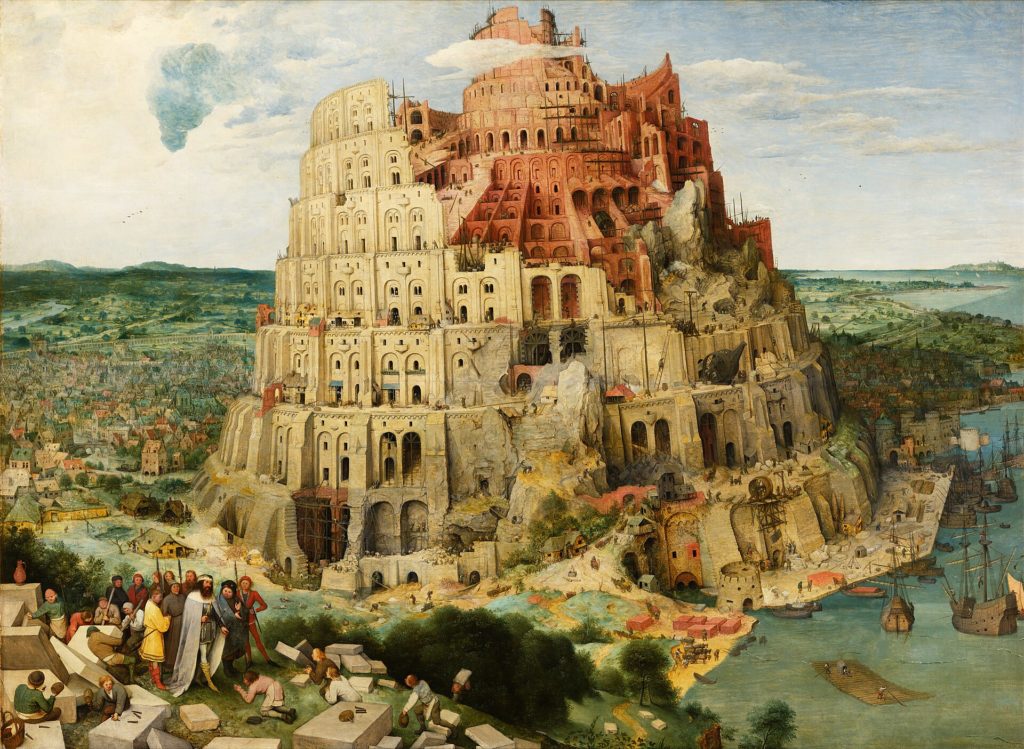
In the end, the pope asked us to be “weavers of hope,” (245) realizing that the quality of a civilization is measured not by the flashiness of what we create and the heights that we achieve technologically, but by our care for others. If we build things that are grandiose but are dehumanizing, then they will ultimately crumble, like the Tower of Babel in the Book of Genesis, which he used as a metaphor throughout the document.
The future is magnificently human
The encyclical indirectly addresses the unique work of Catholic Extension Society, which is profoundly humanizing. Like the pope, we too, believe that the key to our future rests in unlocking and unleashing the magnificent beauty and creativity of humans, such as these passionate lay leaders in Southern Georgia whose education we have supported.

We invest in real people in economically poor communities, so that through the solidarity of our financial support they will be able to develop their full human and spiritual potential.
By helping people thrive, our country will be transformed by their ingenuity and by their well-formed consciences, fueling their desire to care for others—none of which can be replaced by a machine.
Catholic Extension Society is a papal society founded in 1905. Our mission is to work in solidarity with people to build up vibrant and transformative Catholic faith communities among the poor in the poorest regions of America. Please support our mission today!