
Today, just 155 days into his papacy, Pope Leo XIV released his first apostolic exhortation—a communication that is meant to guide and encourage the faithful around the world.
This is a highly anticipated moment in his papacy, because the pope’s first exhortation offers themes and reveals points of emphasis as he begins to teach us as our “universal pastor.” It signals the direction he believes the Church must go in and how we as a people of faith must approach the challenges of our times and the hopes of God’s family.
Pope Leo notably signed the apostolic exhortation, titled in Latin “Dilexi te” (“I have loved you”) on Sunday, October 4—the feast of St. Francis of Assisi, the saint best known for his love for the poor.
This document has heightened significance for Catholic Extension Society, as we are a pontifical organization overseen by the Holy See, whose mission is focused on building up the Church’s presence among the poor—which happens to be the subject of this particular exhortation!
While we will surely spend time reflecting deeply on Pope Leo’s words, here are our initial takeaways from this important document that we offer to you:
1. The Pope says the poor are at the center of the Church and the heart of our faith life.
Pope Leo’s predecessor, Pope Francis, famously said in his first apostolic exhortation (“Joy of the Gospel,” 2013), “I want a Church which is poor and for the poor (198).” Pope Leo picks up right where Pope Francis left off, and perhaps even “ups the ante” by saying,
“Love for the Lord, then, is one with love for the poor.”
He continued,
This is not a matter of mere human kindness but a revelation: contact with those who are lowly and powerless is a fundamental way of encountering the Lord of history. In the poor he continues to speak to us.” (5)
He says lives can be turned around by our encounter with the poor (109).
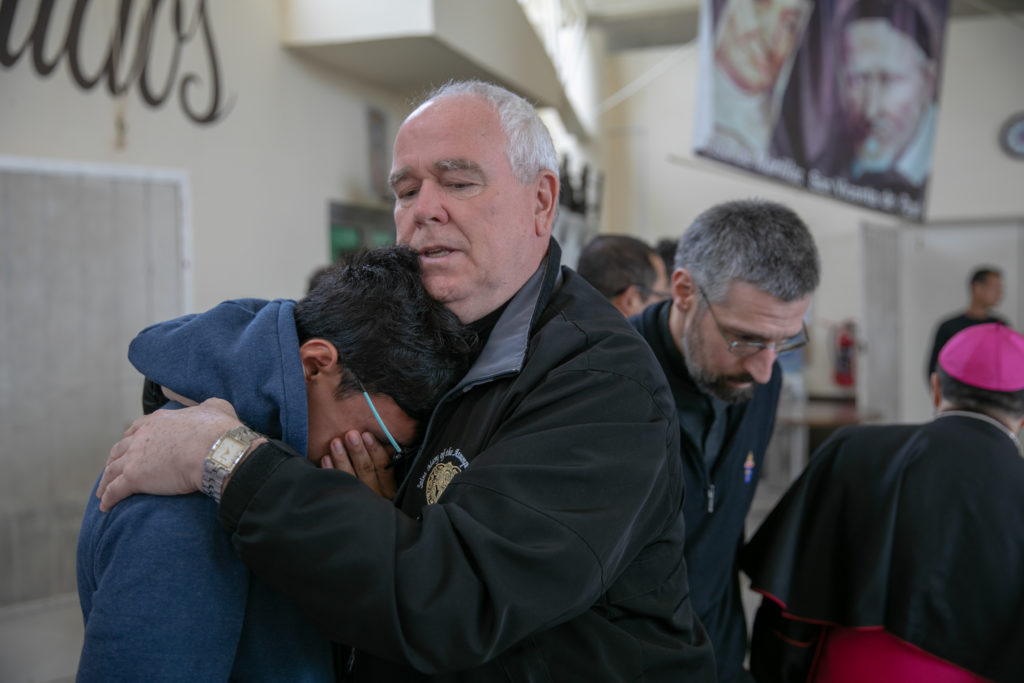
In other words, Catholics see Christ in the poor. That tracks with our experience at Catholic Extension Society. When we encounter the lowly, we too are transformed, like our 500 parish partners who have traveled with us across the country to witness Christ in the face of the poor, as this group of Massachusetts pastors did when they went to a shelter in South Texas that protects young people fleeing from violence.
2. You cannot help but feel proud to be a Catholic after reading this exhortation!
The Pope is reinforcing our Catholic identity, rooted in our action on behalf of the poor.
Beginning with the scriptures and covering the saints of early centuries all the way to Mother Teresa of Calcutta, the pope reminds us that care of the poor has always been a part of who we are as a people of God. He is urging us to see that Christianity is more relevant than ever in a world with so much suffering.
The Pope says,
when the Church bends down to care for the poor, she assumes her highest posture.” (79)
It reminded us of this iconic picture we took of Sister María de la luz Lara Solís, whose ministry we supported in Salinas, California. As she walked the parish grounds she encountered this homeless woman. Sister Luz had a special place in her heart for the homeless because of her experience growing up in a poor family in Mexico, where she too experienced homelessness. By bending to speak to this woman she indeed assumed her highest posture.

3. Spiritual practice and care of the poor go hand in hand.
Pope Leo challenges those that would prefer to separate doctrinal assent and practice of the faith. Quoting Latin American bishops, he says that one cannot be concerned with the “purity of the faith” without also “effective witness in the service of one’s neighbor, the poor and the oppressed.”
This is true, he says, even when we go to Mass.
If the faithful do not encounter Christ in the poor who stand at the door, they will not be able to worship him even at the altar.” (41)
In other words, seeing Christ in the Eucharist is connected to seeing Christ in the face of the poor. Consequently, he says, “charity is not optional but a requirement of true worship.”
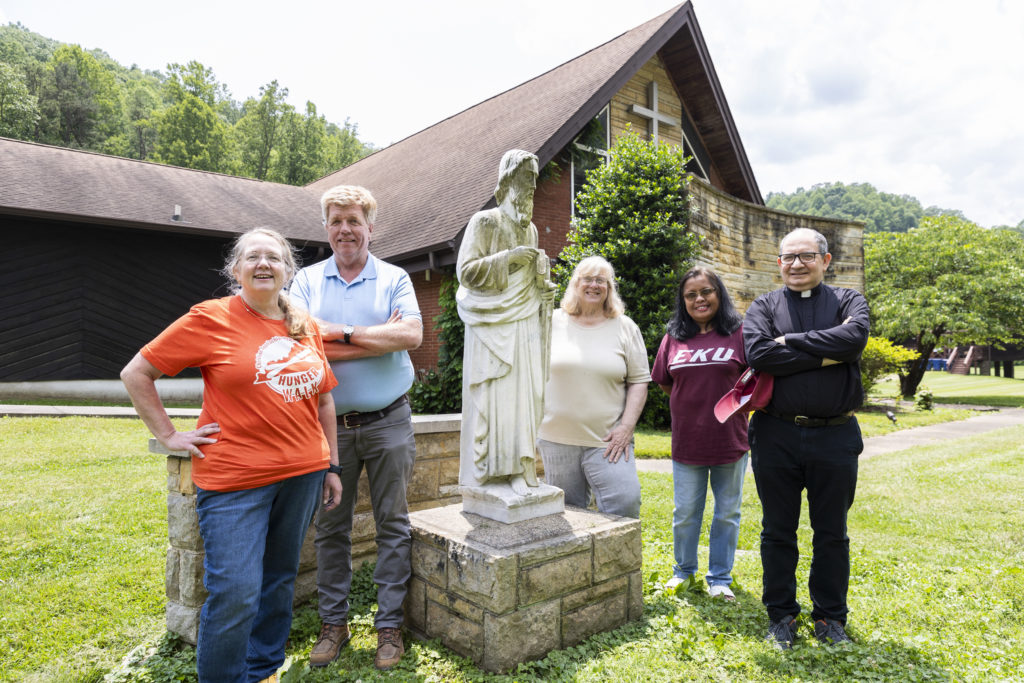
This reminds us of all the little mission churches we work with in the mountains across Appalachia, like St. Paul in McKee, Kentucky. In a place where there is great material poverty, the church is connected to their service center, where parishioners offer meals, clothing, and assistance to all that come through their doors from across county. Even though the parish consists of only a few dozen people, their care of the poor reaches the entire county! Seeing Christ in the poor and worship at the altar go hand in hand.
4. In a world with complex problems, we are not powerless to respond.
Pope Leo spoke a great deal about the structural challenges that perpetuate poverty. But, he also wanted to make it crystal clear that we should not wait around for others to take action. He spends a late chapter encouraging people to practice almsgiving (i.e. donating money), saying,
“Almsgiving remains, for the time being, a necessary means of contact, encounter and empathy with those less fortunate.”
He went on,
Almsgiving at least offers us a chance to halt before the poor, to look into their eyes, to touch them and share something of ourselves with them.” (116)
The Pope’s words called to mind the tens of thousands of donors to Catholic Extension Society who come from all 50 states. Apart from experiencing our fundraising events like this one (below) in New York, many of these donors have never visited the Catholic faith communities they support. And yet, they are moved to give out of a sense of compassion and deep conviction that this is what our faith calls us to do.

5. The poor are in every country.
Finally, the Pope reminds those of us in developed countries that we have poverty in our own backyard as well. He says,
In wealthy countries too, the growing numbers of the poor are equally a source of concern.” (12)
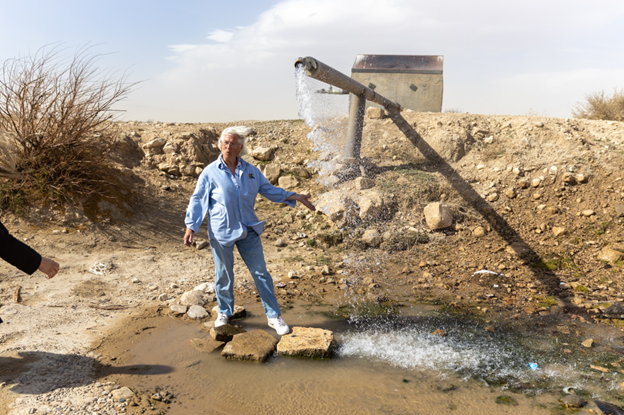
Poverty is not a developing world problem only. In fact, as we travel the country in our work at Catholic Extension Society, we often encounter conditions and realities that many of our fellow American citizens would assume only exist in developing nations. Such as the Native American communities that we support in New Mexico, where church leaders help deliver potable water to their communities, a basic human need, in an area where people lack indoor plumbing.
As we are only in the first hours after this exhortation’s publication, we will continue to digest its rich content. Expect more reflections from Catholic Extension Society in the coming days!
Cover photo taken by ALESSIA GIULIANI/Reuters