

Today, Easter Monday, NASA’s Artemis II mission is reaching its pinnacle as it flies past the moon, making it the first crewed lunar mission in more than 50 years.
As a people who profess belief in a God who is the creator of the universe, Catholics have always had a great interest in space exploration.
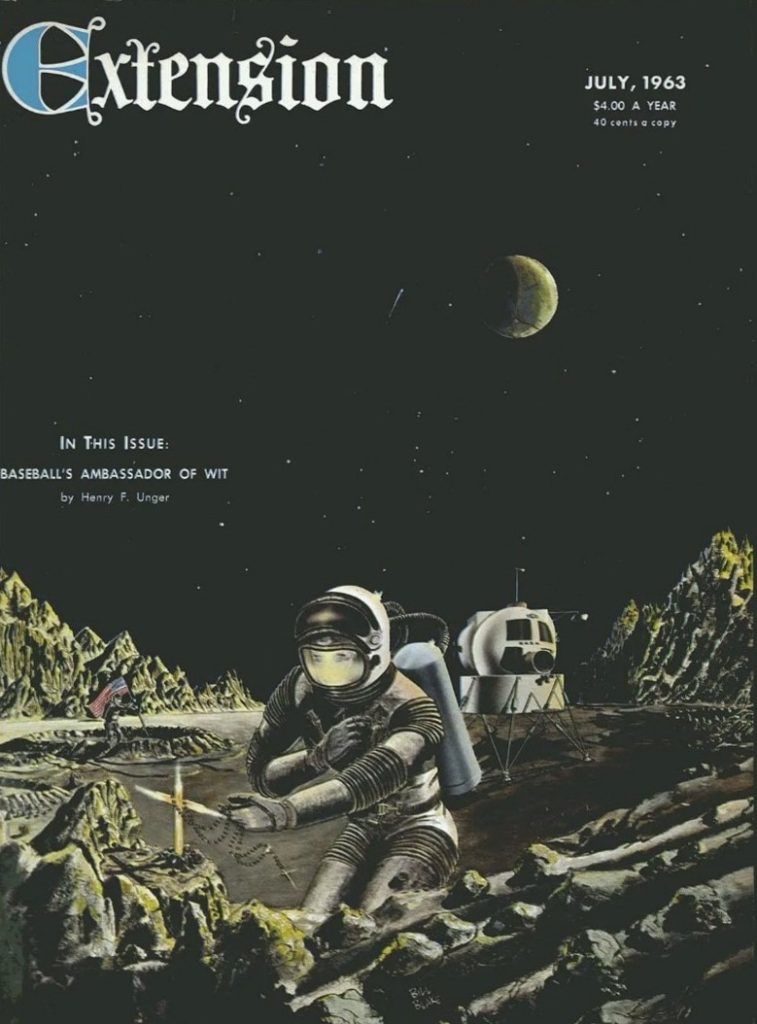
Only nine months after President John F. Kennedy’s “moonshot speech,” in which he laid out America’s ambition to send people to the moon, Catholic Extension Society adorned its July 1963 magazine cover with this creative image of an astronaut praying on the moon’s surface. Only six years later, Americans landed on the surface of the moon.
On that momentous occasion in 1969, Pope Paul VI sent a congratulatory message to the moon explorers from America. It was his hope that this exploration would lead us to see God’s power more clearly.
He told the explorers,
Through your intrepid adventure, man has taken another step toward knowing more of the universe.”
In his 1998 encyclical, Fides et Ratio, Pope John Paul II reminded us that faith, rational inquiry, and natural science are complementary and not contradictory disciplines. Several years earlier, in a speech to the Pontifical Academy of Sciences, he even retracted the Church’s condemnation of Galileo in 1633 for asserting that the Earth traveled around the sun. He said that the Church’s mistake was to “unduly transpose into the realm of the doctrine of faith a question which in fact pertained to scientific investigation.”
The Vatican has had its own observatory since it was founded by Pope Leo XIII in 1891 to promote scientific inquiry. The observatory is located at the Pope’s summer retreat outside Rome, Castel Gandolfo, to mitigate light pollution.
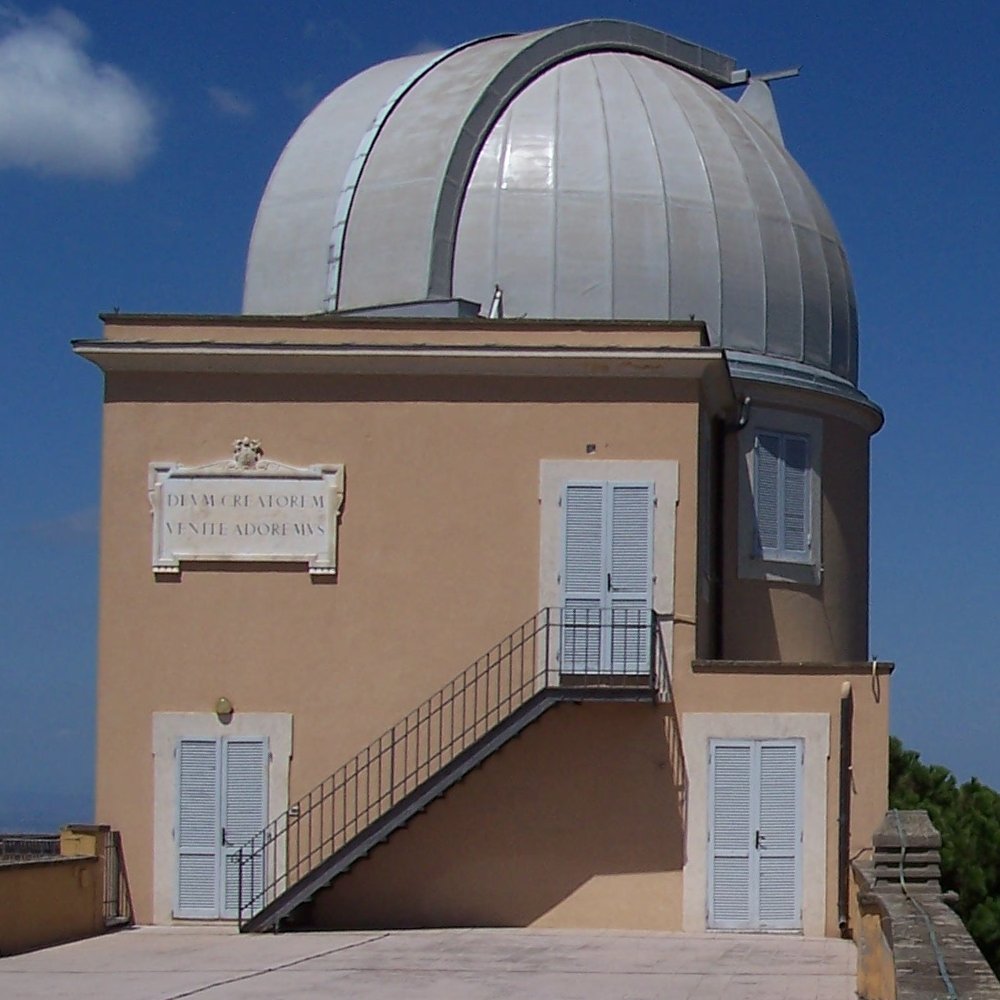
Its current director is a Jesuit priest, Father Richard A D’Souza. He called the Artemis II mission currently underway a “great development” according to an EWTN news report from April 1.
“Science can contribute to the cause of peace”
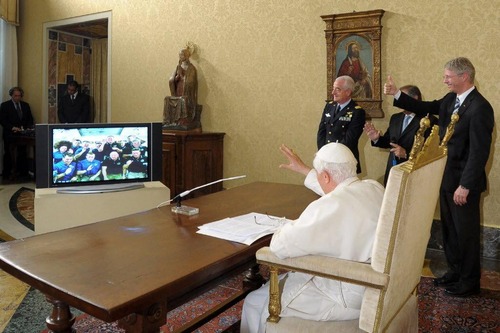
In 2011, Pope Benedict XVI was the first pope to speak live with astronauts at the International Space Station. On that occasion he called the Earth a “beautiful fragile oasis,” speaking of “the responsibility we all have toward the future of our planet.”
Additionally, he spoke of our common humanity, given that from the vantage point of space, there are no borders separating nations.
Profoundly he remarked,
I think it must be obvious to you [astronauts] how we all live together on one earth, and how absurd it is that we fight and kill each other.”
He continued with this beautiful question to the astronauts that rings more true today than ever:
“When you are contemplating the Earth from up there, do you ever wonder about the way nations and people live together down here, or about how science can contribute to the cause of peace?”
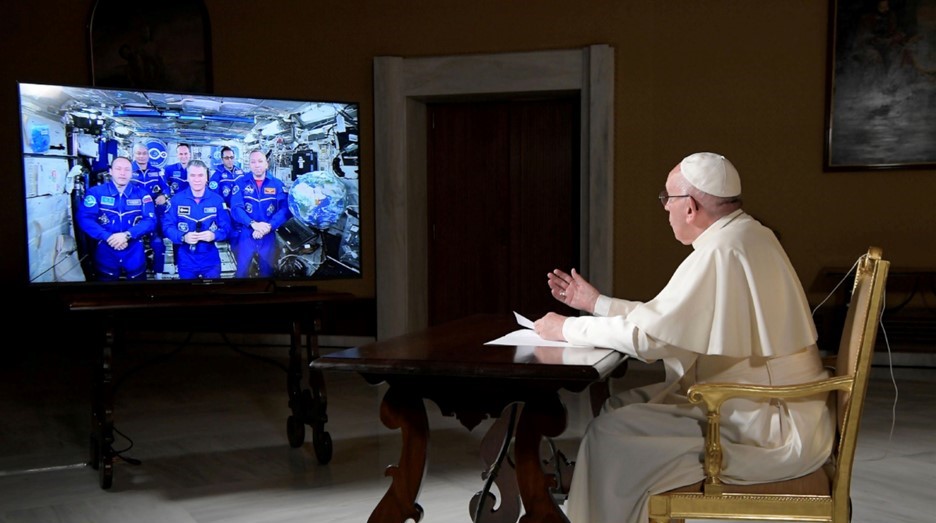
Pope Francis continued this tradition of speaking live with the crew of the International Space Station in 2017. As the author of Laudato si’, the first papal encyclical on care for creation, he spoke of the Earth’s vulnerability saying it “has an atmosphere so fine it can be destroyed.”
Later in 2023, Pope Francis offered a message to young people participating in the Vatican’s astrophysics summer camp, urging them to never lose their “sense of wonder.”
Throughout the years, the popes have urged that scientific advance must be at the service of humanity and must never do harm to the dignity or rights of humans.
Today, as Americans and as Catholics, we can rightfully celebrate humanity’s return to the far reaches of space in the hopes that our exploration will bring us closer to the one who made the universe, and who through the miracle of Easter, promises to renew all of creation.
Catholic Extension Society works in solidarity with people to build up vibrant and transformative Catholic faith communities. Please support our mission.