
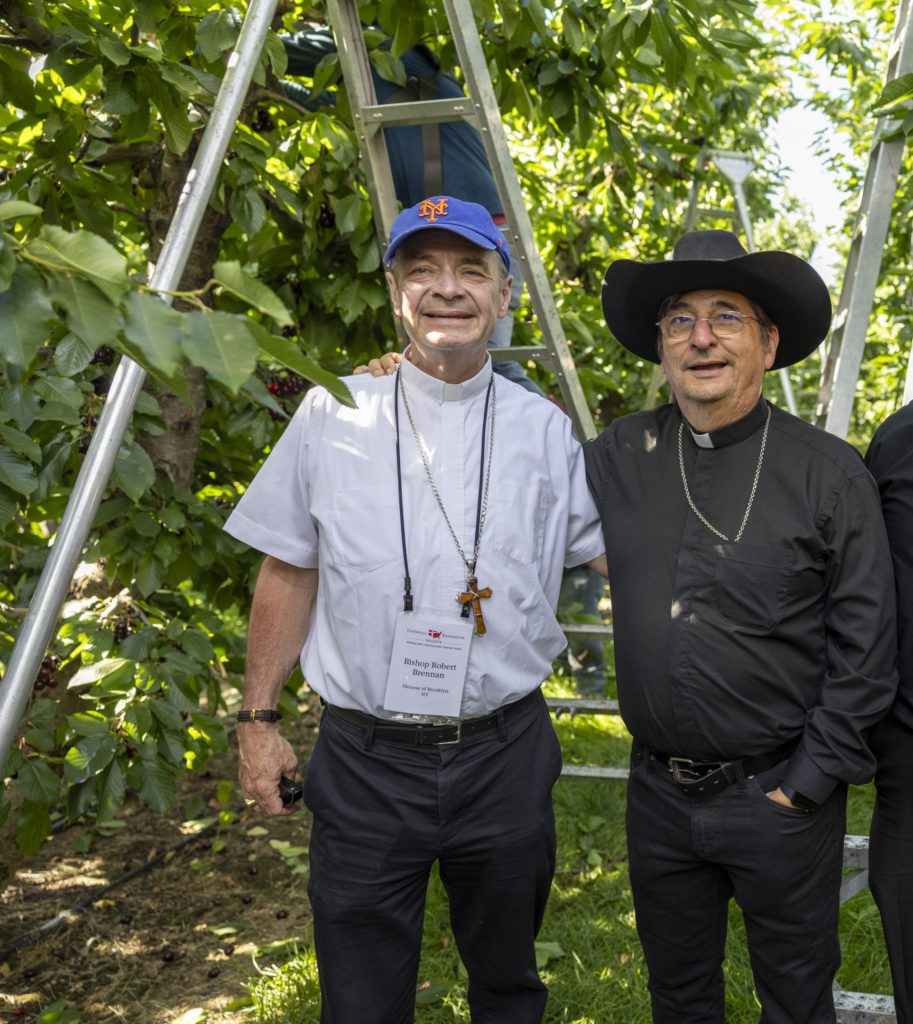
Bishop Robert Brennan has his hands full. He leads the Diocese of Brooklyn and its 1.5 million Catholics and 185 parishes. But he accepted our invitation to visit farmlands and orchards in Yakima, Washington, last summer, along with nine of his priests.
The Pastor Immersion Program supported by Catholic Extension Society has existed for eight years, and Bishop Brennan was the first diocesan bishop to attend. He is pictured below with the Bishop Joseph Tyson of Yakima, who shared with him the realities of shepherding an Extension diocese.
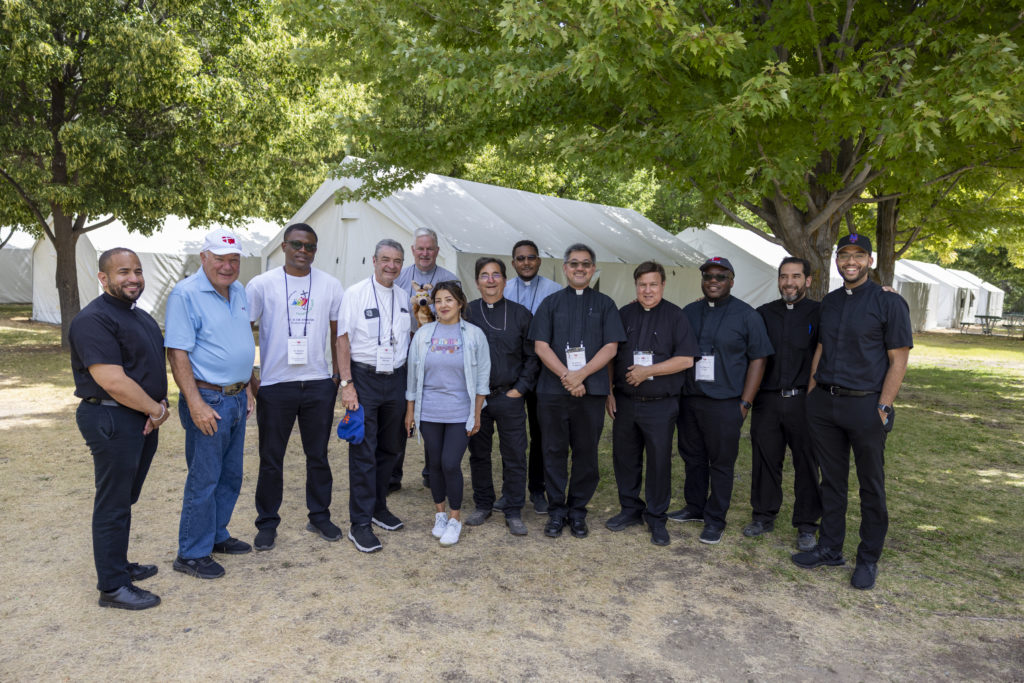
Funded by a foundation grant, an immersion trip gathers a small group of pastors to spend two to three days together visiting Catholic communities that are rarely visited and scarcely known to the outside world. These trips to economically poor areas that are supported by Catholic Extension Society are meant to expand priests’ pastoral horizons and help them rediscover why they fell in love with ministry in the first place.
Bishop Brennan and his priests visited an agricultural community in Washington State, where they met with farmworkers and witnessed firsthand the Church’s amazing pastoral care of those that labor in the fields and packing houses.
Time well spent
In his podcast, “Big City Catholics,” recorded during the trip, the bishop said, “We get to see life as it’s lived here and how the local Church is a Church that meets people exactly where they are.”
He continued,
The Church goes out to the fields, goes out to the camps where people are living, walks among the people and it’s bringing the Church. It’s really about bringing the Church in all its fullness. That’s the point of the Catholic Extension Society.”
Bishops of major urban dioceses are doers. They are always in motion, trying to understand and respond to the million and one things on their plate. Bishop Brennan is that dedicated shepherd. But he had to slow down and listen.
Speaking about the workers he met along the way on various jobsites and fruit packinghouses, he said, “People wanted to share the journey of their lives with us, and they wanted us to learn something. And as you go through this with the Catholic Extension Society, they don’t want you to do anything. You’re not there to help. You’re there to learn. That’s a big insight!”
An immersion trip, therefore, is not a service trip. It is a learning trip in which participating pastors place themselves in the classroom of the People of God. Bishop Brennan was an apt and humble participant in their school.
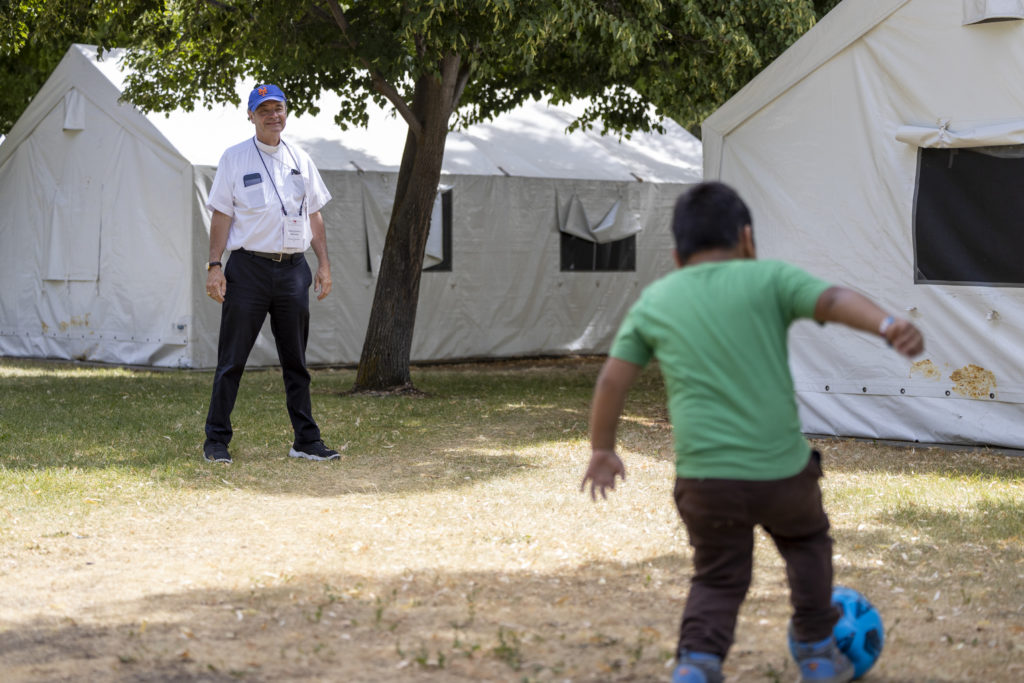
He noted that he encountered a different side of poverty with the seasonal farmworkers he met, along with the challenge of being constantly uprooted from one place and moving to the next.
He said, “We saw real poverty, but we see real poverty right here in Brooklyn and Queens as well. It’s a different kind. We see the urban reality here. It was interesting to learn the rural and the seasonal, the migrant. You know, people go from up along the coast, along the Pacific Coast as the seasons turn, to harvest the fruits along the way, to work hard at it.”
His priests gained just as much from this experience. “This is a great thing for us to ensure unity,” Father Juan Luxama said. “We are working together and we have one mission, and to set the example for other dioceses and to partner with the Catholic Extension Society is incredible. I never thought I would see that a bishop would take three days of his busy schedule to travel with priests from his diocese and to be part of the journey of the people.”
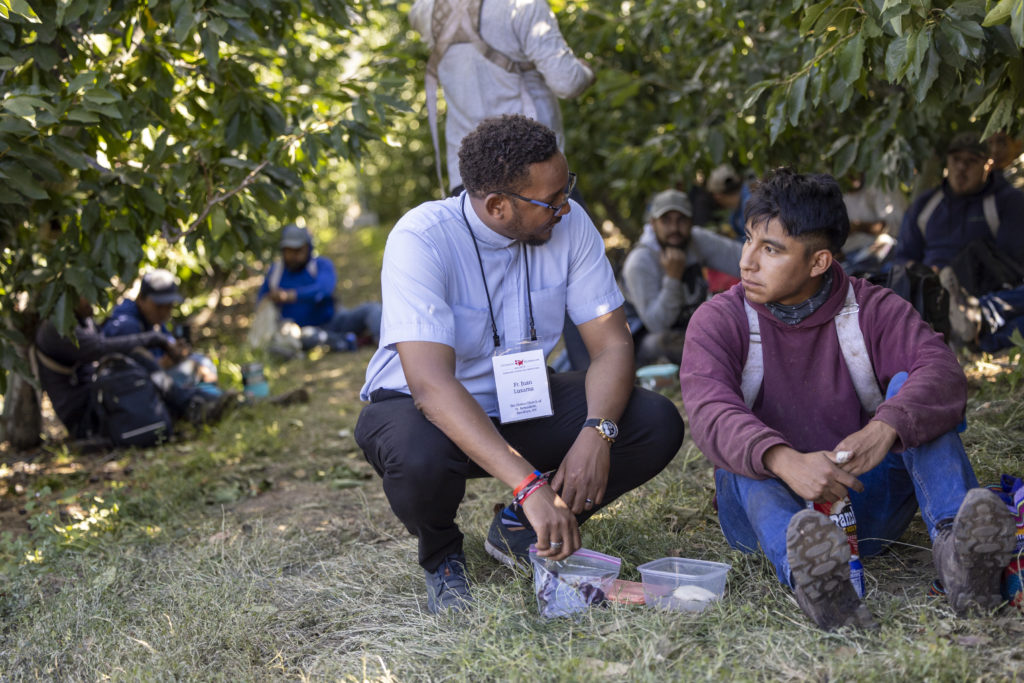
Bishop Brennan reflected that an immersion trip is like a retreat. “It affects our prayer life and how we hear the prayers at Mass.” Seeing people harvest fruits helped him more deeply understand the prayer over the gifts at the offertory: “Blessed are you, Lord God of all creation, for through your goodness we have received the wine we offer you: fruit of the vine and work of human hands. It will become for us our spiritual drink.”
Bishop Brennan said that he will never pray these prayers again without thinking of the orchards and the laborers who bring fruit to our tables. This is what an immersion trip does. It helps pastors walk in solidarity with those on the margins, sharing their burdens and joys and hearing the Gospel in new and powerful ways. This is an immersion trip’s true harvest.
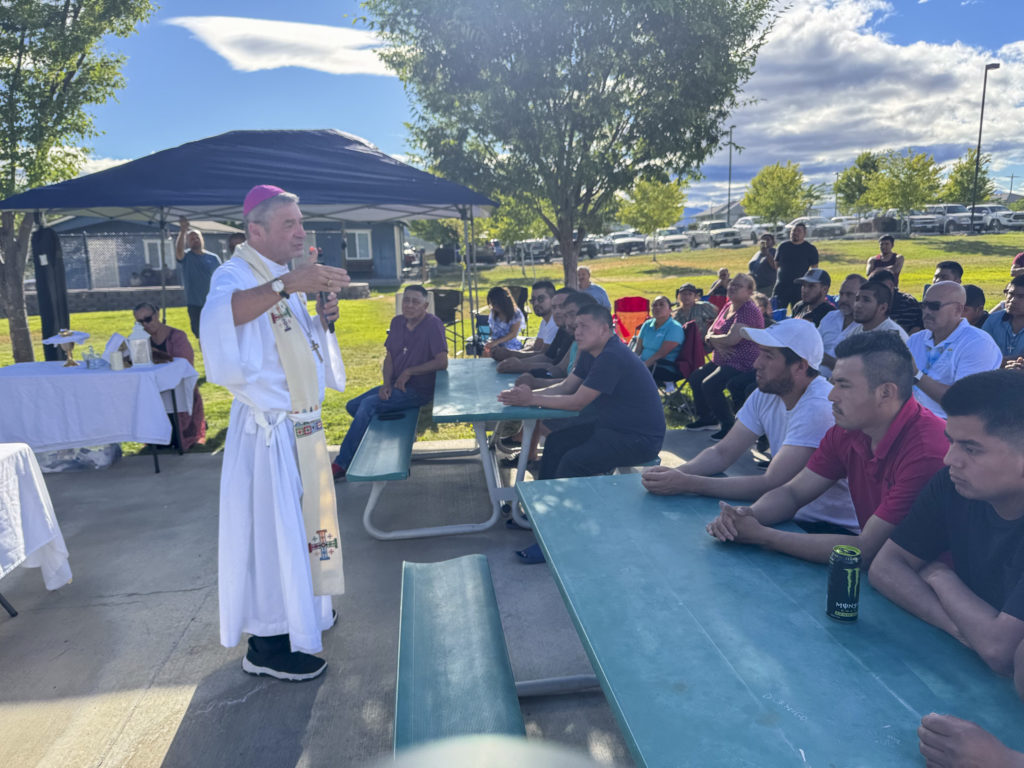
How blessed are the priests and people from the Diocese of Brooklyn to have a bishop who knows his way around both a cherry orchard and God’s abundant orchard. “I mean, that’s really what was so remarkable about this experience for me, is that this is the Church being the Church … this was really about celebrating the sacraments, being present to people, praying with people. To me, that was just so moving,” Bishop Brennan said.
Pastors nationwide renew their hearts
What is happening in Brooklyn is happening across the country. To date, 525 pastors from 85 dioceses have participated in immersion trips. Among them is Father Gabriel Curtis, administrator of St. Catherine of Siena Parish in Hillside, New Jersey. Father Curtis has traveled with Catholic Extension Society twice, including a trip to Puerto Rico.
While in Puerto Rico, Father Curtis visited schools and churches that were still recovering from the devastating earthquakes in January 2020 and Hurricane Fiona in 2022.
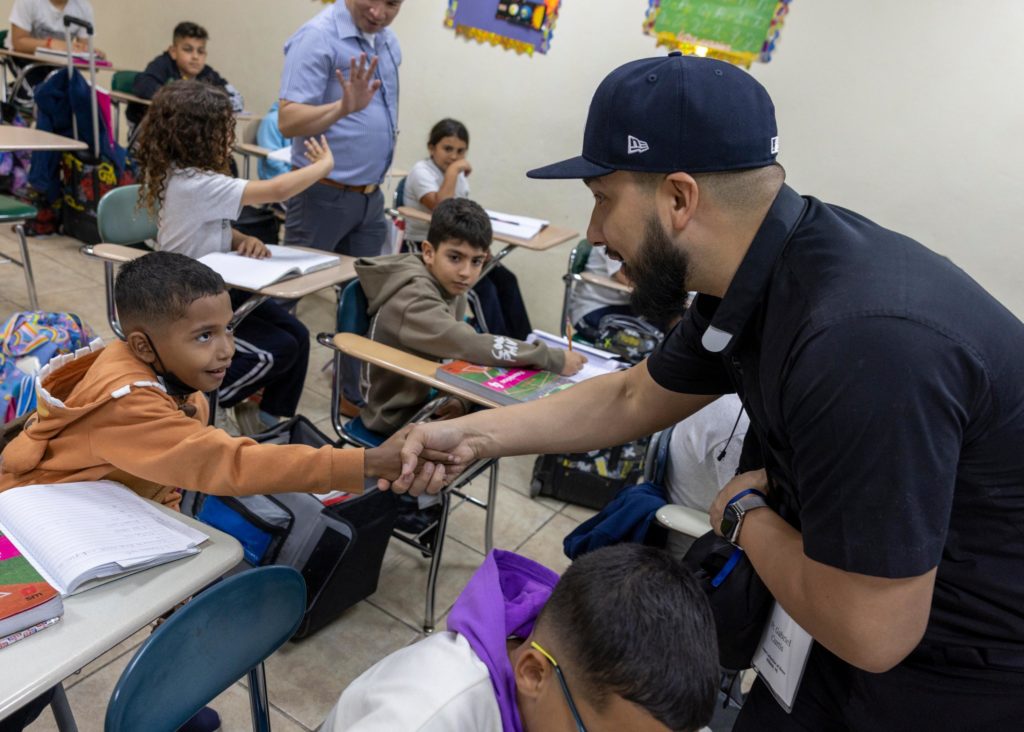
From the remote hillside chapels to the proud Cathedral of San Juan Bautista, Father Curtis witnessed the islands’ proudest treasure: the indomitable, faith-filled spirit of the Puerto Rican people.
The immersion experience lives on in his parish. For example, every Christmas Eve parishioners place envelopes in baby Jesus’ manger for support of Catholic Extension ministries, and the parish supports Catholic ministry to impoverished children in Arecibo, Puerto Rico. The connection to the impoverished baby Jesus and the children of Puerto Rico is not lost on the parishioners.
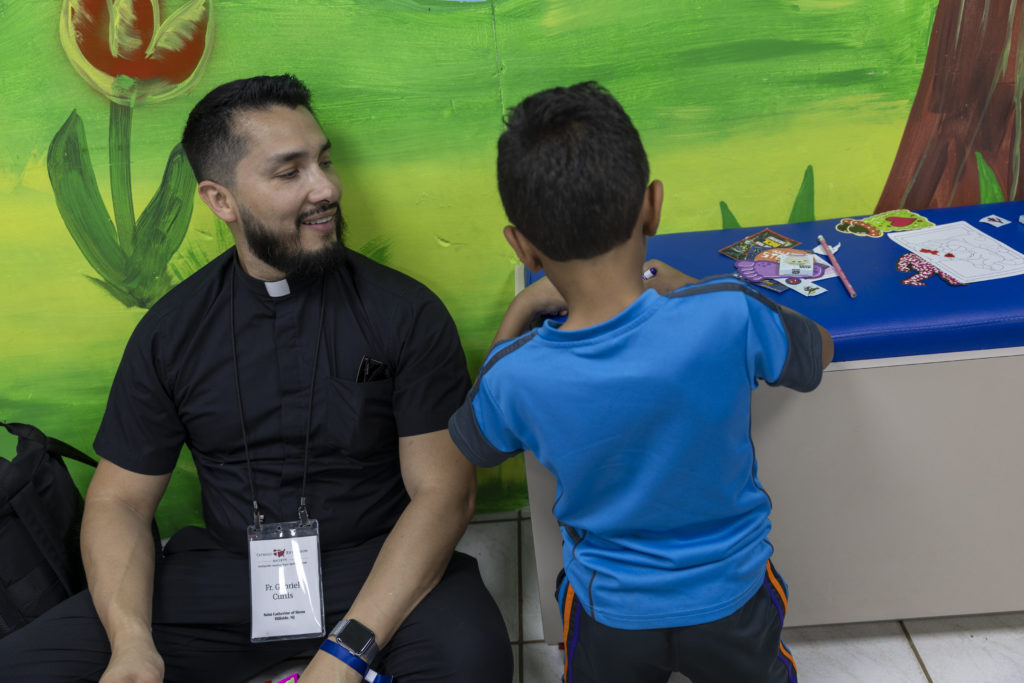
This show of parish solidarity with others has helped create unity by allowing English, Hispanic and Portuguese cultures to come together and understand they are more alike than they imagined, which is, after all, their best gift to the baby Jesus.
All Saints Catholic Church in Houston is Texas big. Its 24 ministries and groups keep Father Eli López running. His immersion trip to Arkansas helped him experience another kind of “big”: the “big” of remote mission territories here in the United States.
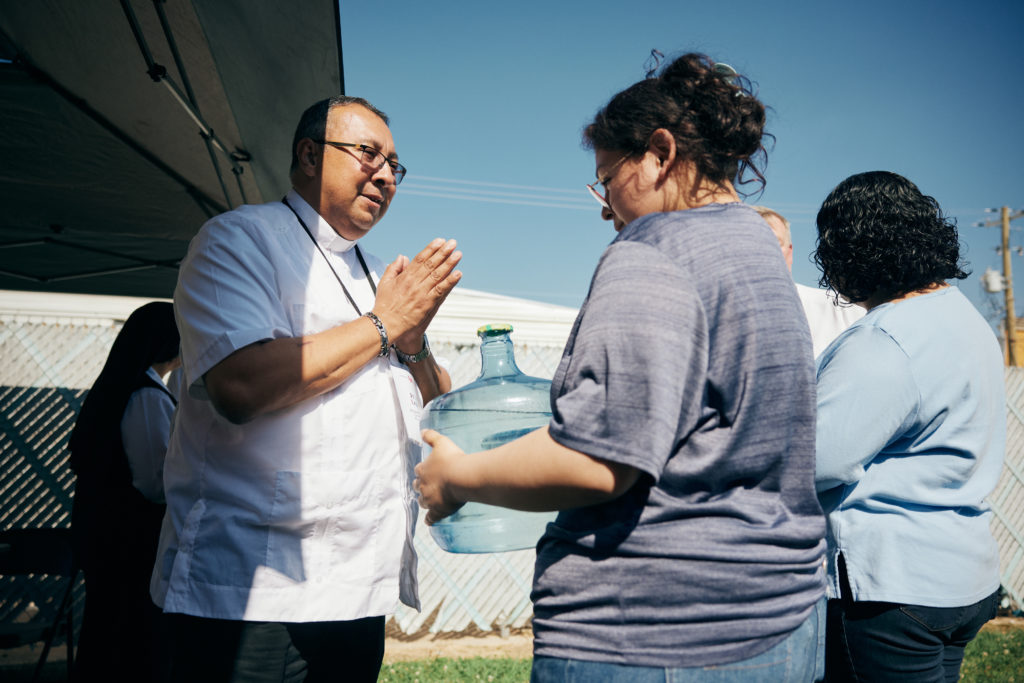
Father López had always heard about the work of Catholic Extension Society, so he went to the Diocese of Little Rock, which encompasses the entire state of Arkansas, to see for himself. Father López said, “These immersion trips renew me. They help me step back from all my meetings and daily activities and enter into the pain and hope of others.”
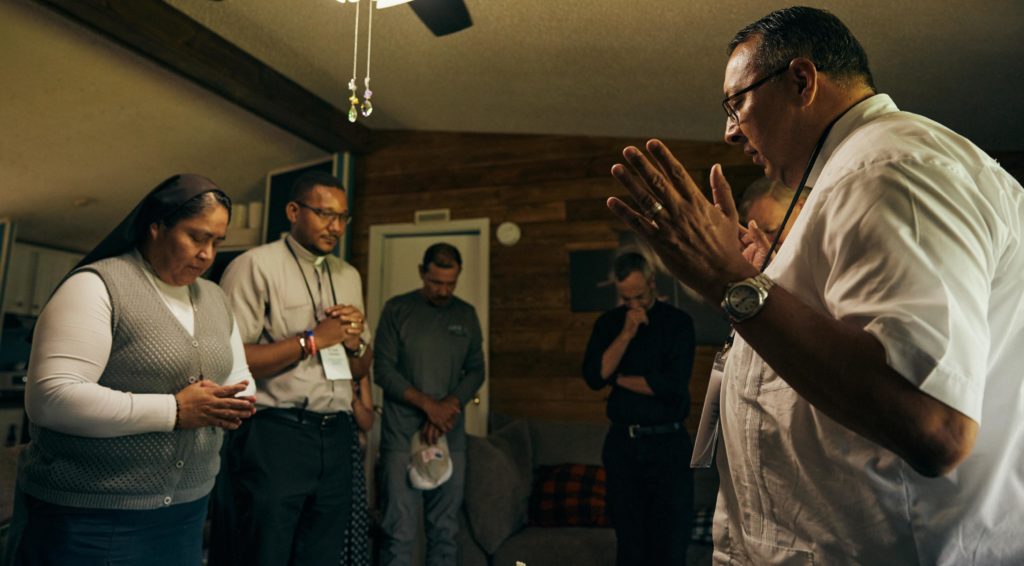
An extra dimension to immersion trips, Father López added, is that pastors get to be with priests from around the country which renews the bonds of priestly fraternity that so often can get lost in the rush of parish ministry.
So, there is Texas big and Arkansas big. Both are held within the arms of the universal Church. Father Efraín Bautista is the pastor of Corpus Christi Catholic Church in Bonita, California. The parish’s name inspires the community to look beyond its boundaries to see the needs of the universal church. This is why Father Bautista traveled to Santa Fe, New Mexico, on his immersion trip.
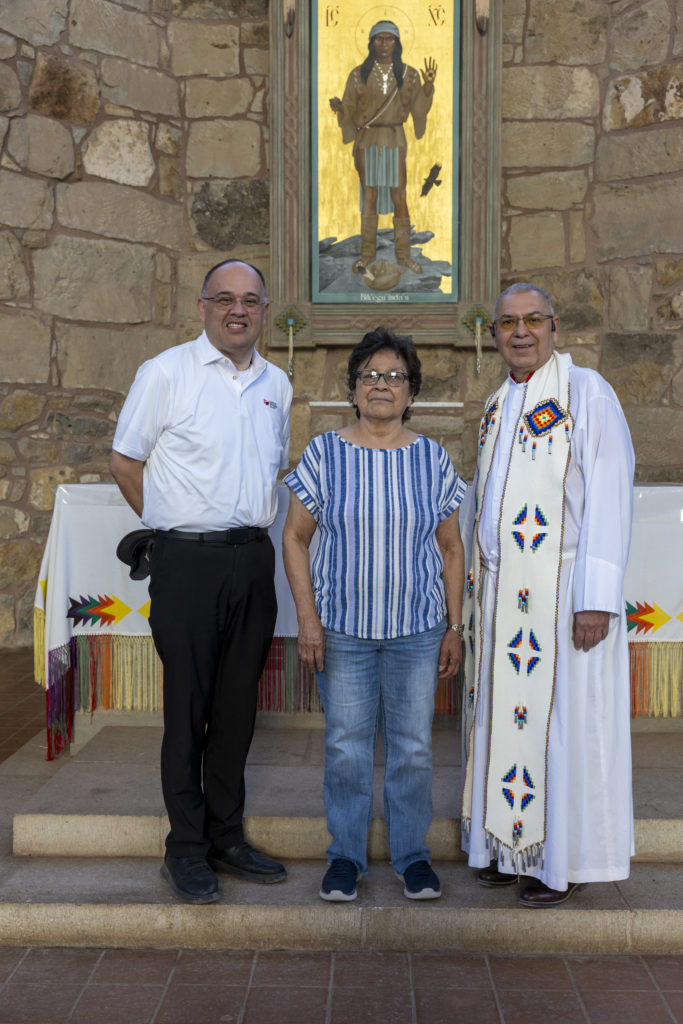
“Among the things which struck me is the need to see the Church beyond the Diocese of San Diego,” he said. “It is, at times, easy for us to simply focus on our parish, diocese and region and not think about the broader Church. Immersion trips help me facilitate opening the eyes of others. To see that we are part of something greater.”
Father Bautista believes that an immersion trip is a great opportunity to see the wider Church, to more deeply understand who we are and what we belong to. The trips help him to see the diversity which makes the “Corpus Christi,” the Body of Christ, his parish’s namesake, so beautiful.
It is no surprise that by “immersing” themselves with the poor and those who work with the poor, bishops and pastors renew their spirits. It is a way of spending time with Jesus. Matthew 25 proclaims that when we stand with the poor, the hungry, the stranger, the imprisoned, we stand with Him. By going to the margins, we rediscover what is essential and renew our hearts for ministry.
Catholic Extension Society works in solidarity with people to build up vibrant and transformative Catholic faith communities among the poor in the poorest regions of America. Please consider supporting our mission!