

At the plenary meeting of U.S. bishops in Baltimore in November 2025, a small miracle occurred. For a moment, there were no polarizing debates that have been known to divide the body of 220-plus bishops. Instead, they spoke openly, passionately, and unanimously in an extraordinary joint statement defending the dignity of immigrants.
Speaking as heartbroken shepherds, the bishops said, “We are grieved when we meet parents who fear being detained when taking their children to school and when we try to console family members who have already been separated from their loved ones.”
The statement, which passed overwhelmingly in a 216-5 vote, said, “We oppose the indiscriminate mass deportation of people.”
They added, “We note with gratitude that so many of our clergy, consecrated religious, and lay faithful already accompany and assist immigrants in meeting their basic human needs.”
Angels emerge
One of the members of the lay faithful doing her part to assist immigrants is Cristina Hernandez, Coordinator of Hispanic Ministry for the Diocese of Youngstown, Ohio, whose pastoral education is being funded by Catholic Extension Society.
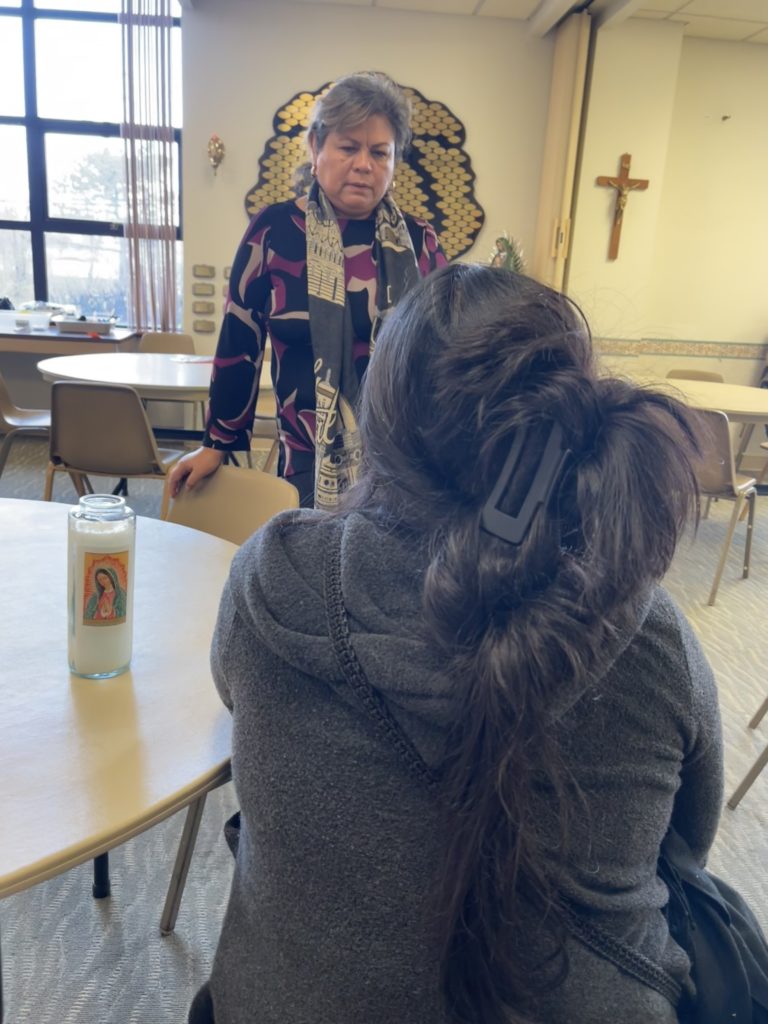
No amount of education, however, could have ever prepared her for the work she is doing now.
As a Spanish-speaking leader in the Church, Hernandez has accepted the responsibility of helping families that have been torn apart by detentions and deportations. She doesn’t do this because it is in her job description. She does it because of her Christian convictions.
She says,
I’m a follower of Jesus and helping the least of His people is my way to give thanks to Him.”
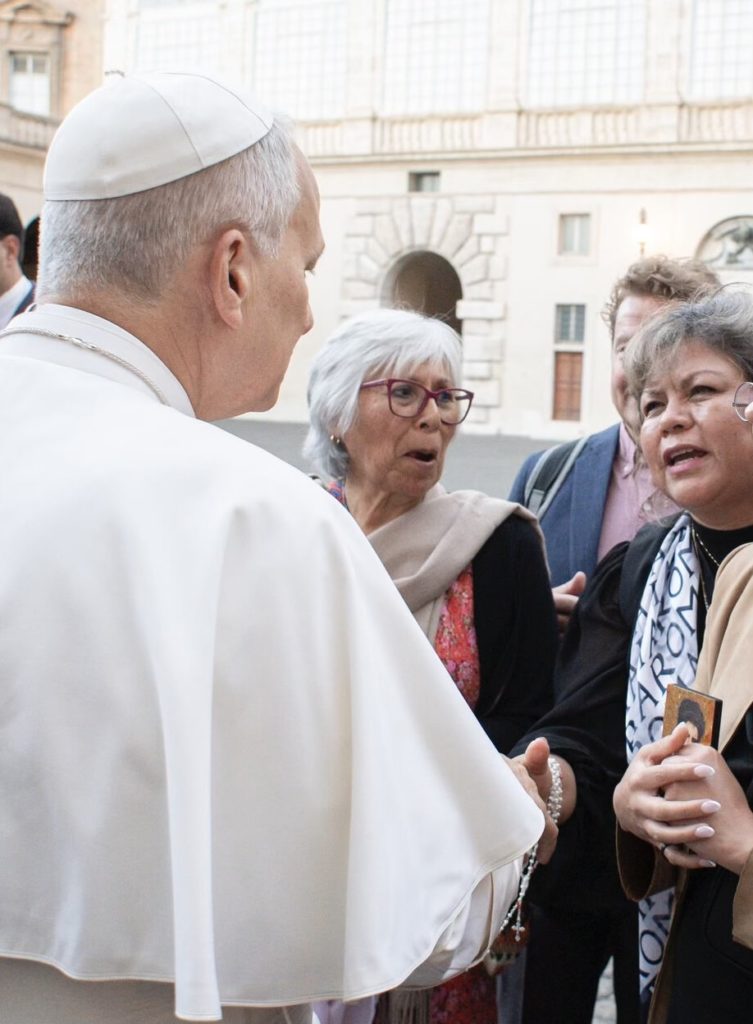
In October, Hernandez met with Pope Leo XIV for The World Day of Migrants and Refugees. Today, she meets with mothers of vulnerable children whose husbands have vanished. Hernandez knows this is the kind of action the pope wants.
Confronting the carnage
At just one parish in her diocese, Cristina has been serving 38 children who have become fatherless in the past several months as ICE arrests have increased.
Among them is a woman from Guatemala. She has six children, the youngest of which is under 2 years old. After her husband (who had a work permit) was detained, she has not been able to work given that the cost of childcare for six kids would exceed what she could reasonably earn.
She still has her children, but without her husband’s income their future is painfully uncertain.
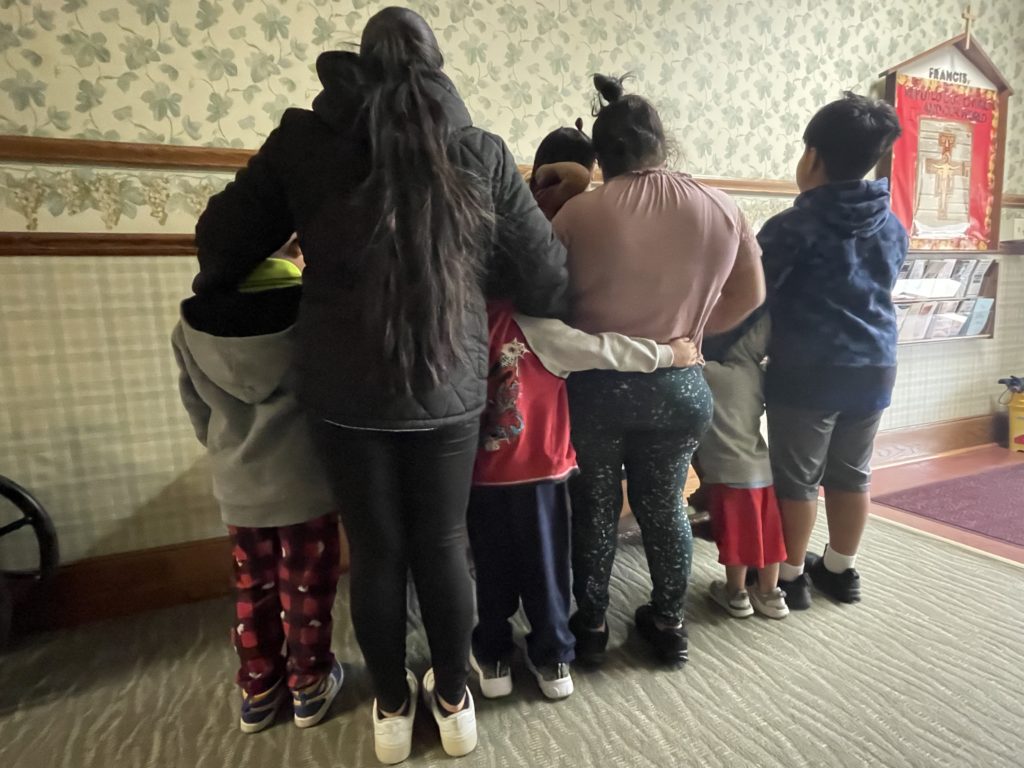
Other families have had to make excruciating economic decisions to survive. After a Salvadoran father was arrested in August he left behind his wife and three U.S.-born teens, aged 19, 18, and 17.
The eldest daughter buried her face in her hands as she wept, describing how she dropped out of college to take a job as a dental assistant to help her mom pay the rent and keep a roof over the heads of her siblings, who are still in high school. She is terrified that her mom, also from El Salvador, will be arrested next, leaving her and her siblings as orphans in the U.S.
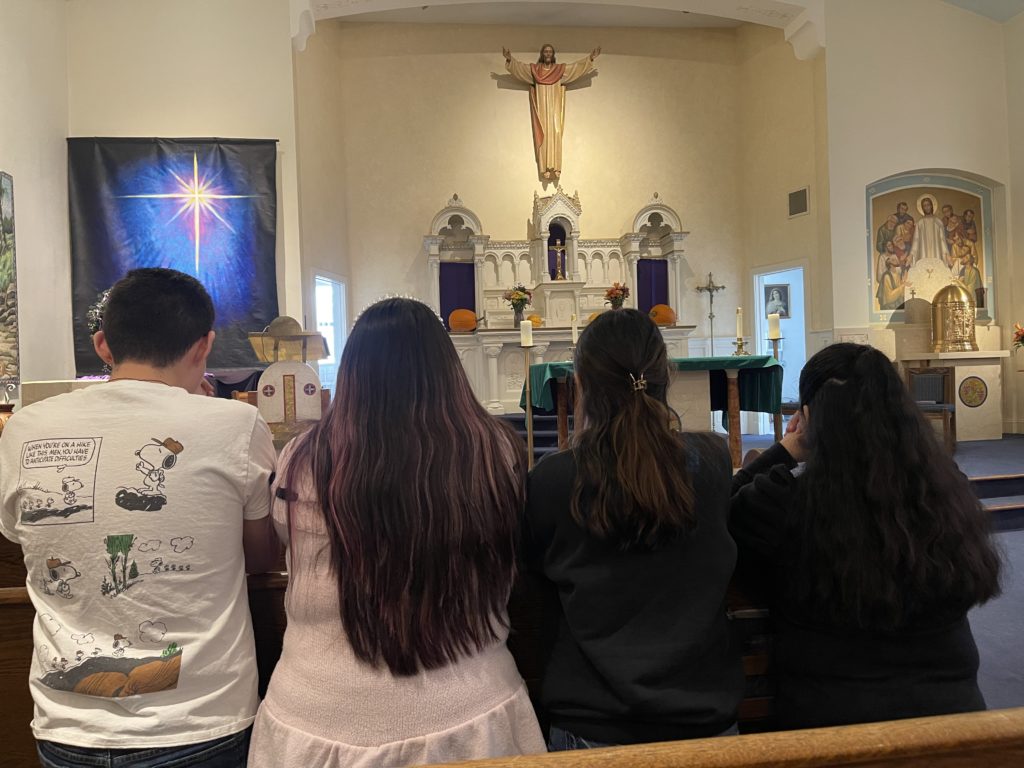
The 19-year-old says the pressure and anxiety have been crushing. She, her mom and siblings regularly go to church to pray for God’s help.
Meanwhile, Hernandez is currently working to cobble together support for families like these in Ohio who have lost household income, have U.S. children to feed, and are struggling to pay bills. She is asking Catholic Extension Society to help fund their ministries with these families. At least five different parishes in the Diocese of Youngstown are encountering similar situations with immigrant families.
More than providing economic help, Hernandez shares these families’ sorrows. She accompanies children to detention centers, where they see their dads in shackles and confined behind thick glass.
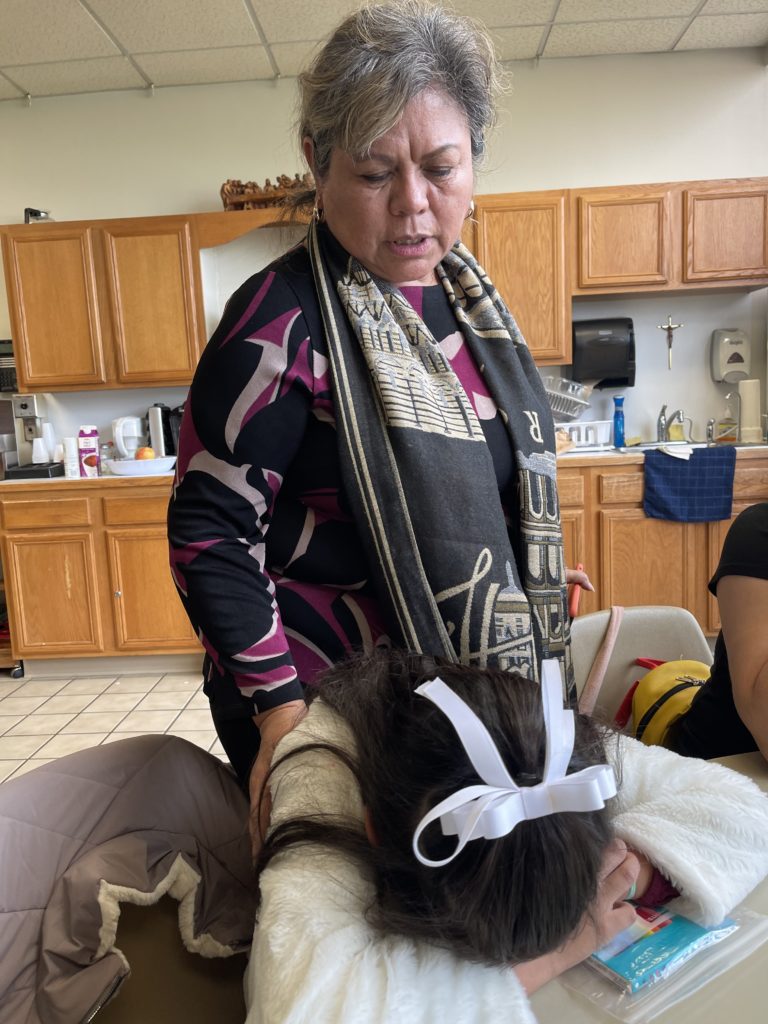
One child she knows well is a 7-year-old girl who wears a beautiful bow in her hair. The mere thought of her father in prison causes her to sob uncontrollably, as you can hear below.
Hernandez can only rub her back softly.
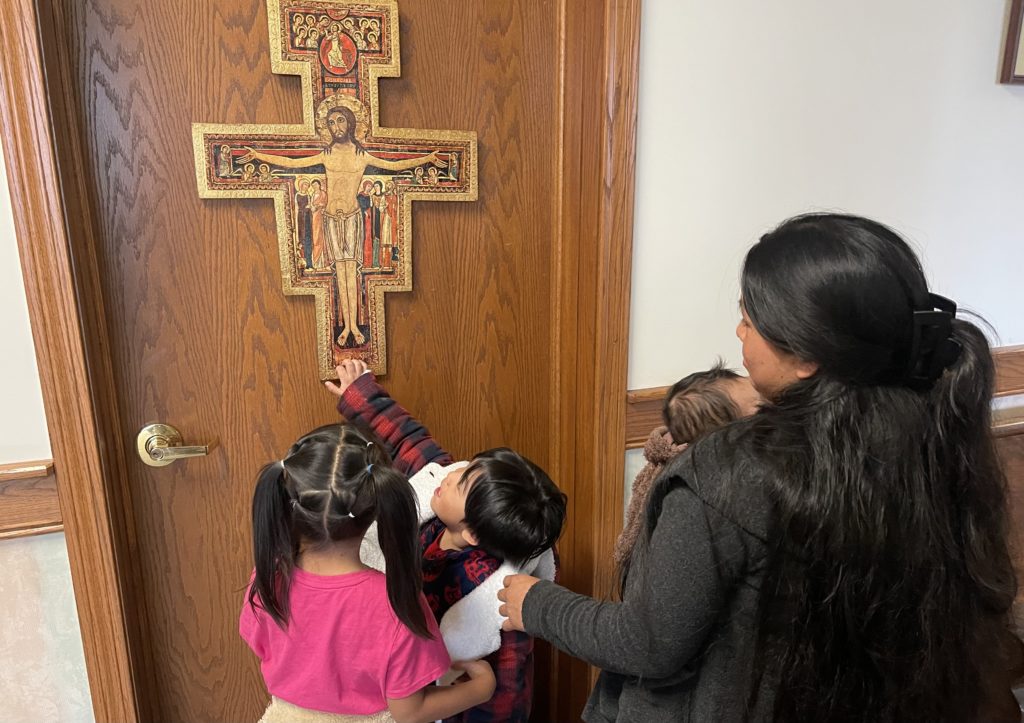
Another mother of three small children came to the parish carrying a 2-month-old, with two other children under the age of 5 in tow. Her husband, from Honduras, was taken two weeks ago. With tears streaming from her face, she begs Hernandez to help her find him, as she does not know where he is being held.
As she cries, her rambunctious children frolic about the parish hall, too innocent to know the heaviness of the cross their mother bears.
Calling for help
Hernandez is working alongside Sister Karen Lindenberger, a religious sister in Stark County, Ohio. Sister Karen has been a missionary her whole life. She is as saintly as she is steady in the face of such human suffering. And somehow, she is still able to smile.
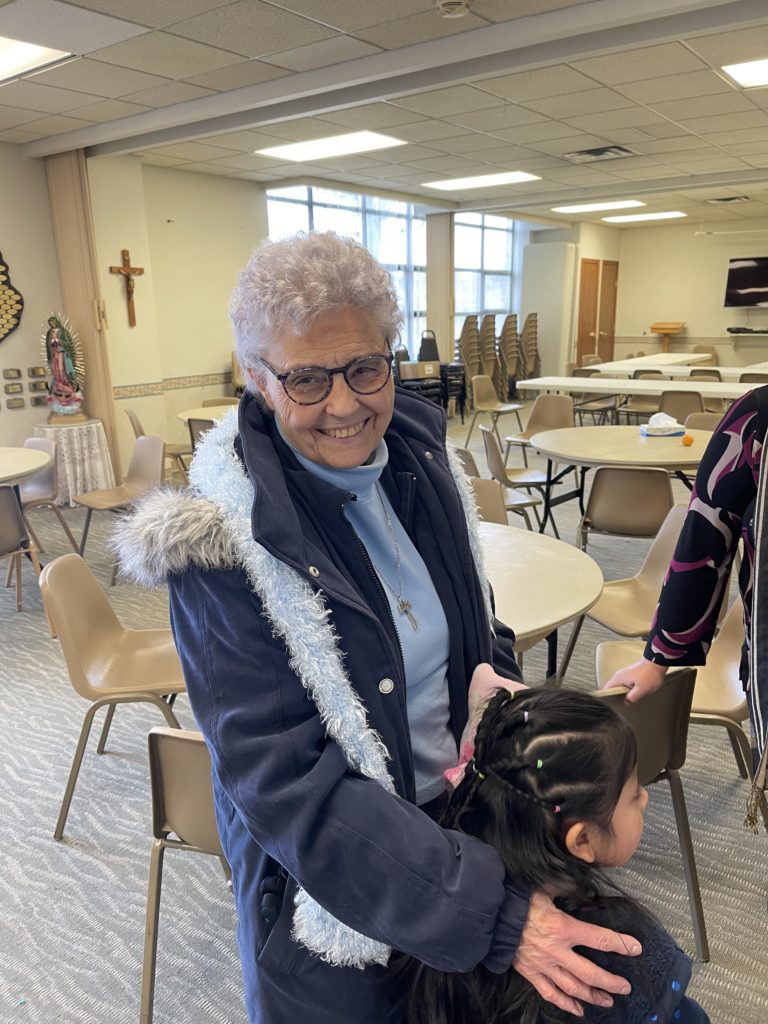
The Franciscan sister of Tiffin, Ohio says, “this is what we do,” referring to helping the poor who show up at the parish doors.
She added,
“The most important people in the Church right now are these immigrant families, and we have to walk with them.”
Sister’s words are a wake-up call to all of us.
In parishes that Catholic Extension Society supports, priests, sisters, and lay leaders are stepping in quietly—bringing food, paying rent, and comforting children whose parents are missing. These are acts of mercy in the face of a growing humanitarian crisis. At Catholic Extension Society, our only purpose is to lift up the Church’s ministry among the poor.