


Since its inception in 1978, the Lumen Christi Award, Catholic Extension Society’s highest honor, has been given annually to people who radiate and reveal the light of Christ present in the communities where they serve.
Each year, bishops are asked to nominate one individual, group, or institution from their diocese for this award. From this year’s 46 outstanding nominees, a group of finalists will be announced later this summer, followed by the selection of a national honoree in the fall. Award finalists will receive $15,000 each, and the national honoree will be awarded $100,000 to support their ministry.
Collectively, the nominees’ stories of spiritual care, compassionate service, and compelling self-sacrifice for others showcase the mission of the Church in this country. We invite you to read each of their inspiring stories below!
Alexandria | Anchorage-Juneau | Arecibo | Armenian Eparchy of Our Lady of Nareg | Baker | Beaumont | Biloxi | Bismarck | Cheyenne | Davenport | Dodge City | Duluth | El Paso | Eparchy of Our Lady of Lebanon | Eparchy of St. Maron of Brooklyn | Fargo | Fresno | Gallup | Gaylord | Grand Island | Great Falls-Billings | Houma-Thibodaux | Jackson | Kalamazoo | Lafayette | Laredo | Lexington | Little Rock | Lubbock | Marquette | Memphis | Nashville | Owensboro | Pensacola-Tallahassee | Portland | Rapid City | Reno | Salt Lake City | San Angelo | San Bernardino | Savannah | Springfield–Cape Girardeau | Steubenville | Stockton | Ukrainian Eparchy of Saint Josaphat in Parma | Youngstown
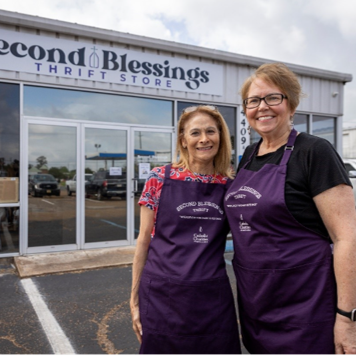
Reviving diocesan-wide social services in a region where many families live below poverty
Catholic Charities of Central Louisiana | Diocese of Alexandria, Louisiana
In Louisiana, the impact of Catholic Charities of Central Louisiana is steadily growing.
Reestablished in 2022 after years of inactivity, Catholic Charities was built from the ground up under the leadership of Father John Brocato. A former Army chaplain and licensed professional counselor, Father Brocato returned to the Diocese of Alexandria at the request of Bishop Robert Marshall Jr., bringing both pastoral experience and clinical training to meet urgent local needs. In just a few years, a small team supported by volunteers and partners has grown into a ministry that has already served more than 5,000 people across 13 Louisiana civil parishes (“counties”).
“In a mission territory such as ours, where resources can be limited and needs are great, Catholic Charities serves as a visible sign of Christ’s love in action. Its leadership, staff and volunteers consistently demonstrate faith-filled dedication,” said Bishop Marshall.
Guided by its mission to “empower individuals, families and communities to become self-sustainable,” Catholic Charities of Central Louisiana focuses on three core areas: emergency basic needs, disaster response and recovery, and mental health services. These priorities reflect the realities of the region, where many families live near or below the poverty line and often face sudden hardship due to medical crises or job instability.
-
Read more
Still reeling from the devastation of Hurricane Laura two years prior, Catholic Charities stepped into a leadership role in long-term disaster recovery, coordinating efforts with FEMA and local organizations to help families secure safe housing. At the same time, the organization provided critical assistance with rent, utilities, food and clothing.
For clothing and additional household items, Catholic Charities now operates a thrift store called Second Blessings, which was established earlier this year.
Mental health services have become a defining feature of the ministry. Through low-cost counseling and collaboration with hospitals, Catholic Charities addresses a critical gap in rural health care access.
Catholic Charities of Central Louisiana reflects what is possible when faith is put into action with persistence and care. The ministry has become a steady source of support for families navigating hardship, offering both immediate assistance and a path forward. And as the ministry of Catholic Charities continues forward in the coming years, their immediate assistance will surely turn into long-lasting impact.
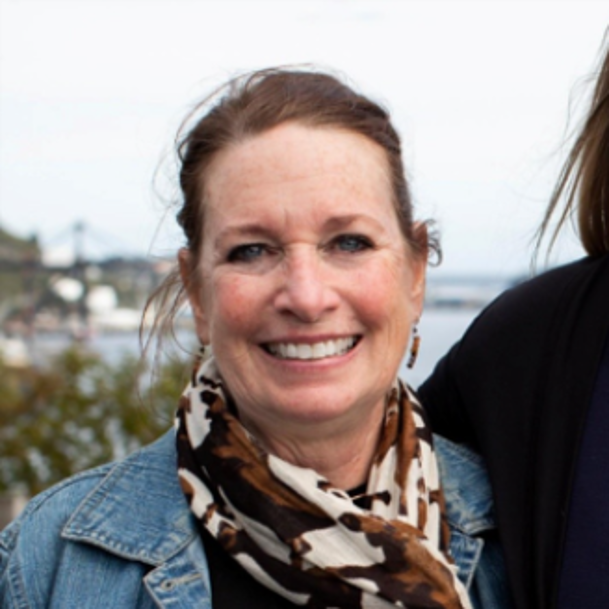
Saying yes to a calling 4,000 miles away
Liz Loeffler | Archdiocese of Anchorage-Juneau, Alaska
Liz Loeffler’s ministry in the Archdiocese of Anchorage, Alaska, is marked by attentive leadership, endless energy and a willingness to say yes when the Church calls—even when that call comes from over 4,000 miles away.
Before arriving in Alaska, Loeffler served as a campus minister at a Catholic high school in South Carolina. In 2015, she attended a Catholic school conference in Orlando. There, during a dinner conversation, she met a priest from Anchorage. After hearing Loeffler speak about her work and vocation, he told her, “My school in Alaska needs a Liz Loeffler.” Within weeks, Loeffler and her family packed up and moved to Anchorage.
From 2015 to 2022, Loeffler served as campus minister at Lumen Christi High School in Anchorage, maintaining an open‑door policy for students and developing spiritually profound retreats. During her time there, enrollment grew from 63 students and struggling to 141 students and thriving. In 2022, she accepted dual roles that are shaping the future of the Catholic Church in southern Alaska: superintendent of Catholic schools and director of faith formation.
-
Read more
As superintendent, Loeffler ensures that Catholic schools in the archdiocese are fostering environments in which students learn to think critically, act ethically and care compassionately for others. As director of faith formation, she coordinates archdiocesan liturgies, oversees youth and young adult ministry, organizes the annual Catholic Youth Conference in Alaska, prepares young people for World Youth Day, supports directors of religious education, and is reworking policies and handbooks to strengthen formation efforts systemwide.
Alongside these roles, Loeffler serves as deputy chief for the Alaska Police and Fire Chaplains and is on call 24/7. She manages training and scheduling, supports community outreach initiatives, responds to critical incidents and walks with families through moments of profound grief. Her service has taken her across Alaska, including to Tutka Bay, where she once responded to a plane crash with five fatalities.
Loeffler has also taken initiative to bridge the immense distances between communities in Alaska. She joined the director of Native ministry on a visit to Prince of Wales Island, which is accessible only by boat or plane, to form a personal connection to the extremely isolated communities there.
A certified spiritual director, Loeffler brings deep listening and presence into every ministry. As she reflected on her work, she said, “You get the privilege of being able to help others see how amazing they are and how much they’re loved.”
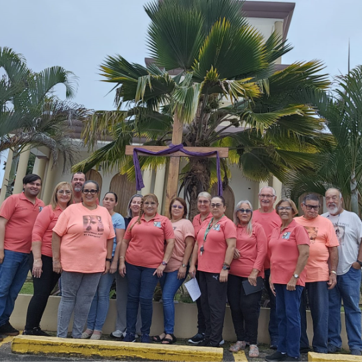
Walking past the poor is not an option for them
Movidos Por El Espíritu | Diocese of Arecibo, Puerto Rico
St. John of the Cross once said, “In the end we will be judged on love alone.” What does this mean for us as we pass the homeless in our streets, the hungry, hopeless, abandoned and discarded? What is our responsibility to them? Walking on by is not an option. We need examples of what the Gospel requires.
Movidos por el Espíritu (“Moved by the Spirit”) is just such an example. They are the Corporal Works of Mercy in action.
Founded in Arecibo, Puerto Rico, in 2015, Movidos por el Espíritu is a dynamic, lay-led Catholic ministry that brings the Gospel to life through a sustained commitment to the works of mercy, serving some of the most vulnerable and marginalized populations in Puerto Rico. Responding to both immediate needs and deeper human struggles, the ministry integrates charitable outreach with intentional spiritual accompaniment.
-
Read more
Through direct, hands-on service, the ministry provides food, clothing, hygiene supplies and other basic necessities to individuals experiencing extreme poverty. At the same time, it addresses often-overlooked emotional and spiritual needs by offering prayer, pastoral presence and guidance rooted in faith. This holistic approach allows the ministry to not only alleviate suffering, but restore dignity, renew hope and foster meaningful encounters with Christ.
Movidos por el Espíritu serves diverse populations on the margins, including the homeless, individuals battling addiction, the sick, elderly persons who are abandoned or isolated, and families in crisis. The ministry also extends its outreach to support priests, religious sisters and other consecrated individuals, strengthening the broader Church community.
The ministry directly impacts approximately 400 individuals each year. Beyond these measurable efforts, the ministry recognizes that each act of service carries a multiplying effect, extending hope, strengthening families and inspiring others to serve, thus amplifying its reach far beyond those directly served.
Arecibo Bishop Alberto Morales understands what drives the members of Movido por el Espíritu: “The ministry is born out of the divine call to love one’s neighbors and is guided by the Holy Spirit in its mission to serve.”
When the Holy Spirit drives our efforts, the Gospel comes alive and mercy flows to those who need it most. By living their faith openly and joyfully, members of Movidos por el Espíritu serve as a visible sign of a vibrant Catholic faith. They are the Corporal Works of Mercy in action.
In the words of St. John of the Cross, the members of Movido por el Espíritu are answering the call of “love alone.” They are a powerful example of how we must never simply walk by the suffering in our midst.
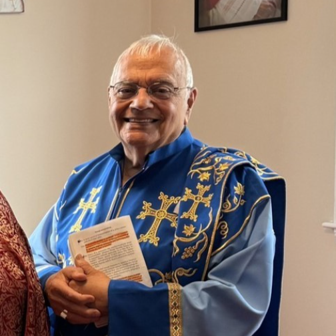
Six decades of serving his parish with hopeful eyes for its future
Marcel Karian | Armenian Eparchy of Our Lady of Nareg
For more than 65 years, Marcel Karian has faithfully served Holy Cross Armenian Catholic Church located in Belmont, Massachusetts. Over these six decades, he served the parish under 13 pastors, providing continuity through moments of transition and change.
Yet even after decades of devotion, Karian is most concerned with what comes next—and with ensuring that the Catholic faith remains alive and meaningful for the Church’s youth. His long presence has helped preserve not only parish traditions, but the sense of identity and belonging that defines the community.
Karian serves as a subdeacon at Holy Cross. In the Armenian Catholic Church, subdeacons assist deacons or priests during the Divine Liturgy by handling sacred items. They also serve as and train younger altar servers. Parishioners described Karian as someone whose love for the Church is evident in both word and action. His passion for liturgy and his joyful demeanor have made him a staple within his parish community.
-
Read more
Throughout his decades of service, Karian has been known for placing the needs of the Church above his own. Parishioners recognize his willingness to serve faithfully, often without recognition. His example has encouraged others to participate more fully in parish life.
While deeply committed to preserving the parish he has served for so long, Karian believes the Church must remain attentive to the needs of younger generations. He is convinced that faith must be communicated in ways that are engaging and accessible.
“Faith is meant to be lived in joy,” Karian has said.
That conviction guides his ministry and outlook. Through lifelong service and a forward-looking commitment to forming the next generation, Marcel Karian is a devoted spirit who has given a lifetime to his Church.
“His long and unwavering commitment has made the church not simply a place he attends, but the center of his vocation and identity,” concluded Most Reverend Mikael Mouradian, bishop of the Armenian Catholic Eparchy of Our Lady of Nareg.
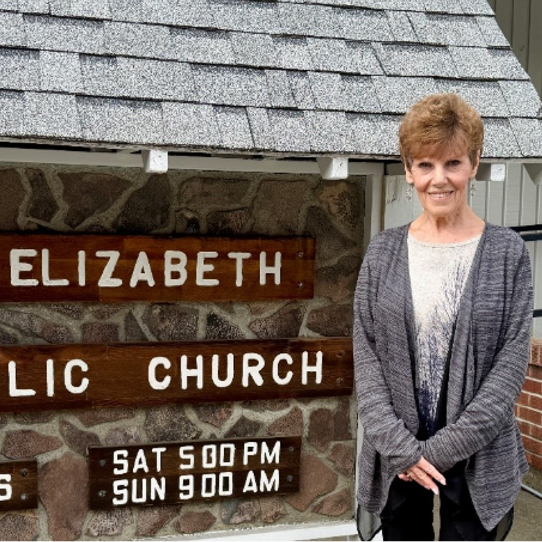
Parishioners describe her as an ‘angel in disguise’
Barbara Comer | Diocese of Baker, Oregon
Imagine a woman such a pillar within her parish and so trusted that someone thought it a sure bet to call her before 911 in an emergency. A fellow parishioner said this about Barbara Comer: “When I needed to go to the emergency room at 4:30 a.m., I called Barbara (not 911). Without hesitation, she took me to the hospital and remained by my side until I was able to return to the church. She truly is our St. Elizabeth angel in disguise.”
We often take for granted the everyday blessings that make our parishes special. The open doors of the church an hour before Mass. The fresh flowers and decorations that adorn our worship spaces. The hot coffee and fresh donuts after Mass. The coordination of volunteers at parish events. The 24/7 hospitality that provides emergency rides and delivers meals to homebound seniors.
Barbara Comer helps make the parish community of St. Elizabeth of Hungary in John Day, Oregon, a special place. She is the loving presence that opens doors, warms coffee, assembles parish volunteers and cares for the homebound. In other words, Comer is a living example of Jesus’ call to action in Matthew 25:40: “Amen, I say to you, whatever you did for one of the least of these brethren of mine, you did for me.”
-
Read more
Whether she is leading the rosary before Mass or serving lunch at the senior center, she always takes the first to step to support her friends and neighbors whenever there is a need.
And it is no surprise that Comer’s ministry extends beyond the boundaries of St. Elizabeth. Most Reverend Thomas Hennen, bishop of Baker, said, “Barb also generously and compassionately serves others in the wider community, especially the poor, the sick, the elderly and the homebound. She is ‘leaven’ in her community that quietly but powerfully makes the whole batch rise.”
One day, a young woman came to St. Elizabeth’s rectory seeking help. She had been struggling with drug addiction and had recently been diagnosed with breast cancer. She needed temporary assistance to cover the cost of a hotel room until her apartment was ready.
When the time came for her to move, Comer stepped in without hesitation, helping the young woman move from the hotel to her new apartment. The only items she had to her name were three grocery bags of personal belongings. The small studio apartment contained only a mattress and a small table.
Wanting to ensure she had a fresh start, Comer purchased essential items to help furnish her kitchen, along with linens and blankets to make her bed comfortable and welcoming. She wanted the young woman to feel cared for and supported during such a difficult time.
Comer is an everyday blessing that is easy to take for granted. But the truth is that she makes St. Elizabeth of Hungary parish a special place. Her loving presence is the Light of Christ in all the big and small ways that matter.
Her work to feed thousands in Southeast Texas is ‘spirit driven’
Carolyn Fernandez | Diocese of Beaumont, Texas
Carolyn Fernandez describes her work leading an enormous array of charitable programs in the Diocese of Beaumont as “Spirit‑driven, God‑driven.” Since she began as president and CEO of Catholic Charities of Southeast Texas in 2009, Fernandez has overseen and expanded programs that now care for nearly 10,000 people—physically, mentally and spiritually—each year across the diocese’s nine counties.
Fernandez traces her call to service to St. Mary’s Academy, an all‑Black girls’ Catholic high school in New Orleans run by the Sisters of the Holy Family. Under the sisters’ guidance, she learned the value of hard work and doing the right thing.
Today, the programs she leads through Catholic Charities respond to every facet of need in the region, providing access to healthy food, home goods and clothing; family counseling; grief support for children; housing, rent and utility assistance; disaster relief services; and immigration legal services.
-
Read more
One of Fernandez’s most impressive achievements is leading the transformation of a gymnasium into the Market of HOPE (Help Other People Eat) in less than one month! This innovative food pantry affirms the dignity of those in need of food assistance by giving them the autonomy to make their own selections, including fresh produce, replicating a grocery-shopping experience.
In one year, the Market of HOPE served 5,505 individuals with 18,647 pantry visits and 1,346,506 pounds of food distributed.
One woman who feeds her family from the Market of HOPE wrote that the market helps her in a “tremendous way,” and she is grateful to have the ability to choose fresh fruits and vegetables for balanced meals.
This program has changed the course of many people’s lives, including those it serves, those volunteering and even those involved in the construction of the project. One man who helped convert the space reflected that collaborating with Fernandez on this project “changed the focus of my life. … Carol is truly a gift from God. Hardworking, focused, kind and loving. … She knows clients by name. What an example to all of us.”
Fernandez also oversaw the rebuilding of the Diocese of Beaumont Hospitality Center after years of disrepair, restoring it to a safe, welcoming environment that provides free daily meals 365 days a year. Last year, nearly 40,000 meals were served.
Fernandez returns often to Luke 17:10 for guidance: “So should it be with you. When you have done all that you were ordered to do, say, ‘We are unprofitable servants; we have only done our duty.’” For nearly 16 years, Fernandez has thoughtfully ensured that the daily activities of each charitable program in the Diocese of Beaumont remain fixed on the Church’s commitment to love and serve the poor and marginalized.
Her outreach curbs homeless deaths caused by Mississippi heat
Jennifer Williams | Diocese of Biloxi, Mississippi
Jennifer Williams has dedicated the past 25 years to helping the most vulnerable in the Diocese of Biloxi better their lives, always guided by compassion and the inherent dignity of every person. Williams is now the executive director of Catholic Charities of South Mississippi (CCSM).
Her journey with CCSM began nearly 30 years ago as a summer job during high school. What started as a temporary opportunity became a lifelong vocation to serve the poor. Returning each summer throughout college, Williams immersed herself in every aspect of the organization’s work, gaining a deep and practical understanding of the Church’s social mission. These formative experiences inspired her to pursue a degree in social work, launching her career in ministry. She later joined CCSM as a multi-program case worker, where her ministry with clients laid the foundation for her leadership today that is deeply relational and hands-on.
Over the years, Williams has skillfully led CCSM through pivotal moments that have strengthened its impact across South Mississippi. She helped expand ministries to meet emerging needs, her leadership especially vital in the aftermath of Hurricane Katrina, when she helped guide the organization’s transition from immediate disaster relief to long-term recovery. Deacon John Jennings of Biloxi praised Williams for approaching each challenge with a “calm and can-do demeanor.”
-
Read more
One of the most significant milestones under her leadership came in May 2024 with the opening of the Mercy Cross Center, a day shelter and ministry of CCSM created in response to the tragic deaths of individuals experiencing homelessness, especially during extreme summer heat. Williams tirelessly created this service by transforming a Catholic high school gymnasium into a comprehensive, multiagency hub that restores dignity and offers pathways to stability. Guests can rest safely, access showers and laundry, receive medical and mental health care, connect with addiction recovery programs, and obtain assistance with benefits, identification documents, and other support services.
The impact has been profound. In 2025 alone, the Mercy Cross Center registered 255 guests, and by year’s end, 206 individuals had secured stable housing. Thousands of meals have been served, and CCSM now anticipates serving 175,000 families in the coming year. These results are made possible because Williams mobilizes resources and volunteers effectively. Additionally, her “gift for attentive listening,” according to Bishop Louis F. Kihneman III of Biloxi, has allowed her to understand the needs of clients, staff and community partners in order to act with clarity and vision.
Williams prioritizes presence over position. She ensures that CCSM’s mission is informed by real human experience and rooted in the Gospel call to serve. Through her leadership and the support of countless volunteers at CCSM, she continues to build a more compassionate Church—one encounter at a time.
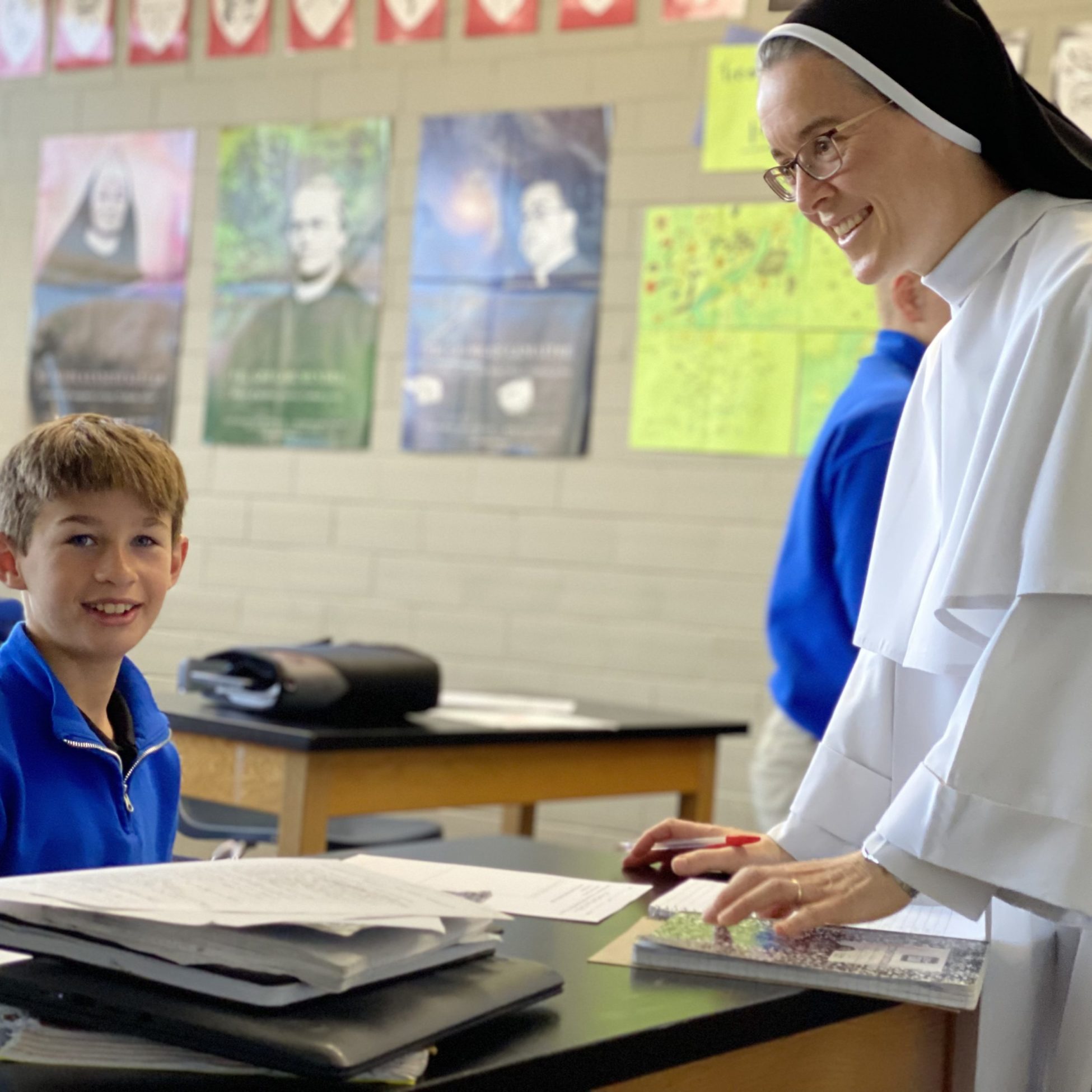
She educates children and teens with love
Mother Mary Joseph Campbell | Diocese of Bismarck, North Dakota
William Butler Yeats wrote, “Real teaching is about lighting a fire, not filling a bucket!”
There is a fire burning in the Diocese of Bismarck, and Sister Mary Joseph Campbell is fanning the flames.
With the support of Bishop David Kagan of Bismarck, North Dakota, Mother Mary Joseph Campbell has established the St. Mary Sisters as a Catholic Religious Institute. The foundation of this effort is as old as it is new. The institute was founded in response to the desire of Catholic consecrated women to give themselves completely to God as elementary and high school educators. Many people today run from teenagers. Mother Mary Joseph and her community are running toward them.
The sisters are going to areas that are in great need for well-trained teachers to help bring together struggling communities, schools and students by the witness of their lives and teaching tradition. They have begun their efforts in the Bismarck area and plan to serve more areas as the institute grows in membership. The sisters plan to start Houses of Formation, where more women can enter throughout the United States and the world.
-
Read more
These sisters have taught over 850 students in the Bismarck area. They bring education grounded in virtue, proper discipline and growth of the whole child to North Dakota. To date, the sisters have taught religion classes at four parochial schools, educated over 50 families of homeschoolers in catechism and science, and spent a semester teaching high school courses in catechism and business. This coming academic year the sisters will begin their work in the local Catholic high school teaching philosophy and theology.
Mother Mary Joseph’s approach is simple: She believes that discipline and love bring freedom to both students and administration. “When principals do their job and support teachers and set boundaries, it trickles down as support for the students. The students may not always get exactly what they want, but they will be training to pursue things that bring them the greatest happiness, freedom and discipline. If you draw kids toward virtue, it brings them an interior peace because they are getting closer to God.”
Mother Mary Joseph dreams no small dreams. She said, “At a time in American Catholic history when the number of consecrated religious teaching in classrooms throughout the USA is particularly low, why not establish new Houses of Formation to train brave young women to give their lives in service to the little ones?”
So there is a fire burning on the great plains of North Dakota. Mother Mary Joseph and the St. Mary Sisters are preparing young, consecrated women to give God permission to use their lives for the Salvation of the World.
William Butler Yeats would be delighted!
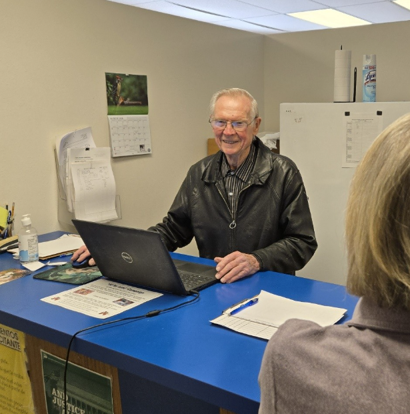
Deacon, 87, is active as ever in ministry
Deacon Ken Pitlick | Diocese of Cheyenne, Wyoming
Deacon Ken Pitlick moved to northeastern Wyoming in 1995 for work in the oil fields. More than 30 years later, Deacon Pitlick’s quiet, steady service has become a defining part of Catholic life in Weston County.
Ordained a permanent deacon in 1991, Deacon Pitlick moved to Wyoming after accepting a position in the oil industry. Together with his late wife, Mary Ann, they raised two sons—one biological and one adopted Native American son—building their family life centered around hard work and faith. Not long after settling in Newcastle, he began serving at Corpus Christi Catholic Church and its two mission parishes, where Catholic Extension Society supported Mass and ministry as recently as last year.
Most notably, Deacon Pitlick directs the BREAD Office—the local food pantry that serves Newcastle and surrounding countryside communities. Additionally, he works with the Newcastle Ministerial Association, a coalition of local churches working together to meet urgent community needs. Through these ministries, individuals and families receive food, help with rent and utilities, durable medical equipment and warm clothing for the snowy Wyoming winters.
-
Read more
“You would be surprised at the number of folks that need food and other assistance every month in our town and county,” Deacon Pitlick said. “Between the BREAD Office and the Ministerial Association, I can’t believe how much food we provide, along with help for rent, utilities, medical equipment, winter coats and travel for those most in need.”
Prior to taking charge at the food bank, Deacon Pitlick served as a chaplain at a state-run minimum-security prison in Newcastle for 15 years beginning in 2006. He held the job past his 82nd birthday.
He continues to walk with those in difficult circumstances today, presiding at funerals and accompanying families through moments of grief. Whether in the hard moments in life or at his beloved Corpus Christi Parish, you’ll always run into Deacon Pitlick, now 87, at church and in the community. Each week, he leads a communion service and delivers the Eucharist to the sick and homebound. Even after undergoing two knee replacement surgeries in recent years, he returned to parish and community ministry within days.
Through decades of faithful and often unseen service, Deacon Pitlick has uplifted the Church’s presence in Newcastle and the surrounding countryside. His life reflects a personal call to holiness—lived through humility, perseverance and love.
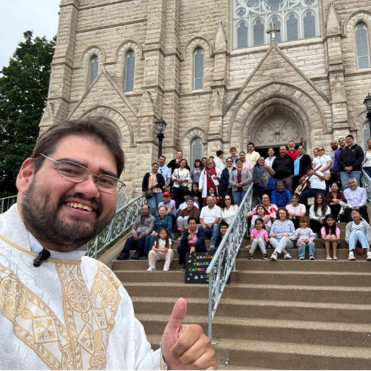
Pastor who abruptly passed away at 39 was a ‘ray of hope’ in the eyes of his people
Father Guillermo Treviño | Diocese of Davenport, Iowa
Posthumous nomination.
Always young at heart, Father Guillermo Treviño’s priesthood was driven by his ministry to young people. He could connect with them on a variety of engaging topics—March Madness brackets for the local Catholic high school leagues, WrestleMania and Star Wars. Every October 31 he joked, pointing to his bearded face, that it was NOT a Halloween mask as laughter ensued.
Upon returning from a trip to Rome after Pope Leo XIV’s World Gathering of Popular Movements, Father Treviño fell ill and passed away suddenly—on October 31, 2025. His teens lamented that he was not there to make his traditional Halloween joke.
His unexpected passing at only 39 years old was a loss felt deeply across the communities he served in rural southeastern Iowa, especially among the youth and the immigrant families who had come to rely on him not only as a priest, but as a constant presence in their lives.
-
Read more
Ordained in 2015, Father Treviño had most recently served as pastor of St. Joseph Catholic Church in Columbus Junction and St. Joseph’s in West Liberty, part of the Diocese of Davenport, Iowa. Here, he ministered primarily to Hispanic immigrant communities, many of whom worked long hours in agriculture and meatpacking plants and faced daily uncertainty.
His commitment to these families was personal, as his 18-year-old godson was deported in the summer of 2025 despite his DACA status (Deferred Action for Childhood Arrivals). Just a few years prior in 2021, Father Treviño founded Escucha Mi Voz Iowa (“Listen to My Voice”), a group aiding Latino workers and immigrants. Now a team of lay and clergy leaders continue this work in his memory.
Supporting these families, and especially young people, was a big part of Father Treviño’s priestly identity. Along with religious sisters in Catholic Extension Society’s U.S.-Latin American Sisters Exchange Program, Father Treviño instituted programs that helped parents pass on the faith to their children. Through his leadership and Catholic Extension Society’s support, Father Treviño helped bring initiatives to his rural parishes that strengthened family faith formation and recognized the home as the best way to build and strengthen our Church.
The void that Father Treviño leaves behind is profound to those that he so faithfully served. As one former parishioner, Petra Mujica, said, the communities he impacted feel both grief for this immense, sudden loss and a great deal of gratitude for having known him and his compassionate spirit.
“I do not recall exactly the number of people who contacted me soon after Father Guillermo’s passing, crying, saying something along the lines of ‘what are we going to do now,’” Mujica said. “They saw Father Guillermo as a ray of hope in their lives, someone who would walk with the weak and needy.”
Reflecting on Father Treviño’s legacy and posthumous nomination for this year’s Lumen Christi Award, Mujica concluded with the way parish youth fondly remember him: “Throughout his work, Father Guillermo brought the Light of Christ closer to his flock, with faith, hope and love in his simple, humble, childlike manner.”
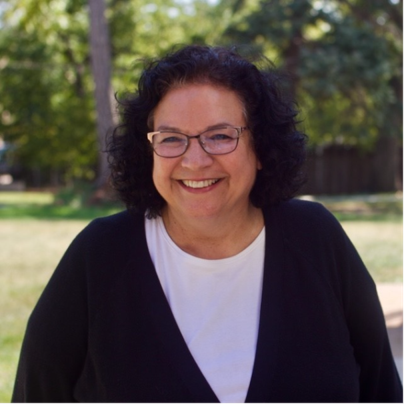
She builds spiritual competencies through education in America’s Heartland
Coleen Stein | Diocese of Dodge City, Kansas
Parish leaders don’t just happen. Their potential must be identified. Their skills must be nurtured and their growth enhanced. Without paying attention to this all-important spiritual infrastructure, parish ministry would languish and die.
Coleen Stein has been building the spiritual infrastructure for the Diocese of Dodge City for over 23 years. She was appointed director of Adult Formation for the diocese in 2003. In this role, her responsibilities included Adult Formation, Interactive TV Network, Diocesan Liturgies and the Order of Christian Initiation of Adults at the diocesan level.
As director of Adult Religious Formation, Stein has collaborated with Newman University to offer 30 hours of theology coursework for individuals seeking to deepen understanding of their faith and those who aspire to take on leadership roles. Her ministry includes selecting courses, coordinating instructors, maintaining student records, ensuring accreditation requirements are met and inviting and accompanying adults as they grow in faith and knowledge of the Catholic tradition.
-
Read more
In 2012, the Diocese of Dodge City welcomed the Diocese of Salina into its partnership with Newman University. Together, the dioceses gathered learners from across western Kansas into a learning community providing mutual support as they learned the truths of the faith and helped others to join in the mission of Jesus. Stein serves as the coordinator for both dioceses.
In 2016, Stein established the Pastoral Ministry Formation Program in Spanish, expanding access to theological education for Spanish-speaking leaders across the state. This program mirrors the Pastoral Ministry Program in English.
In the fall of 2023, seeking to expand access to Adult Formation and introduce more people to Pastoral Ministry Formation classes, Stein launched Tuesdays with the Diocese. This initiative offered Zoom-based adult formation sessions designed to introduce theological topics and invite adults into ongoing faith formation. This model has broadened participation, reduced financial and geographic barriers and served as an entry point for future Pastoral Ministry Formation candidates.
Dodge City Bishop John Brungardt knows how important Stein’s Pastoral Ministry Formation Program is. He said, “Coleen’s ministry is not just about planting seeds of faith; she is also focused on nurturing the community and creating the right environment for these seeds to flourish.”
Coleen Stein knows that parish leaders don’t just happen. Over the course of two-plus decades, she has built the spiritual infrastructure to nurture, develop and accompany adults in their call to be disciples of Christ in the parishes of western Kansas.
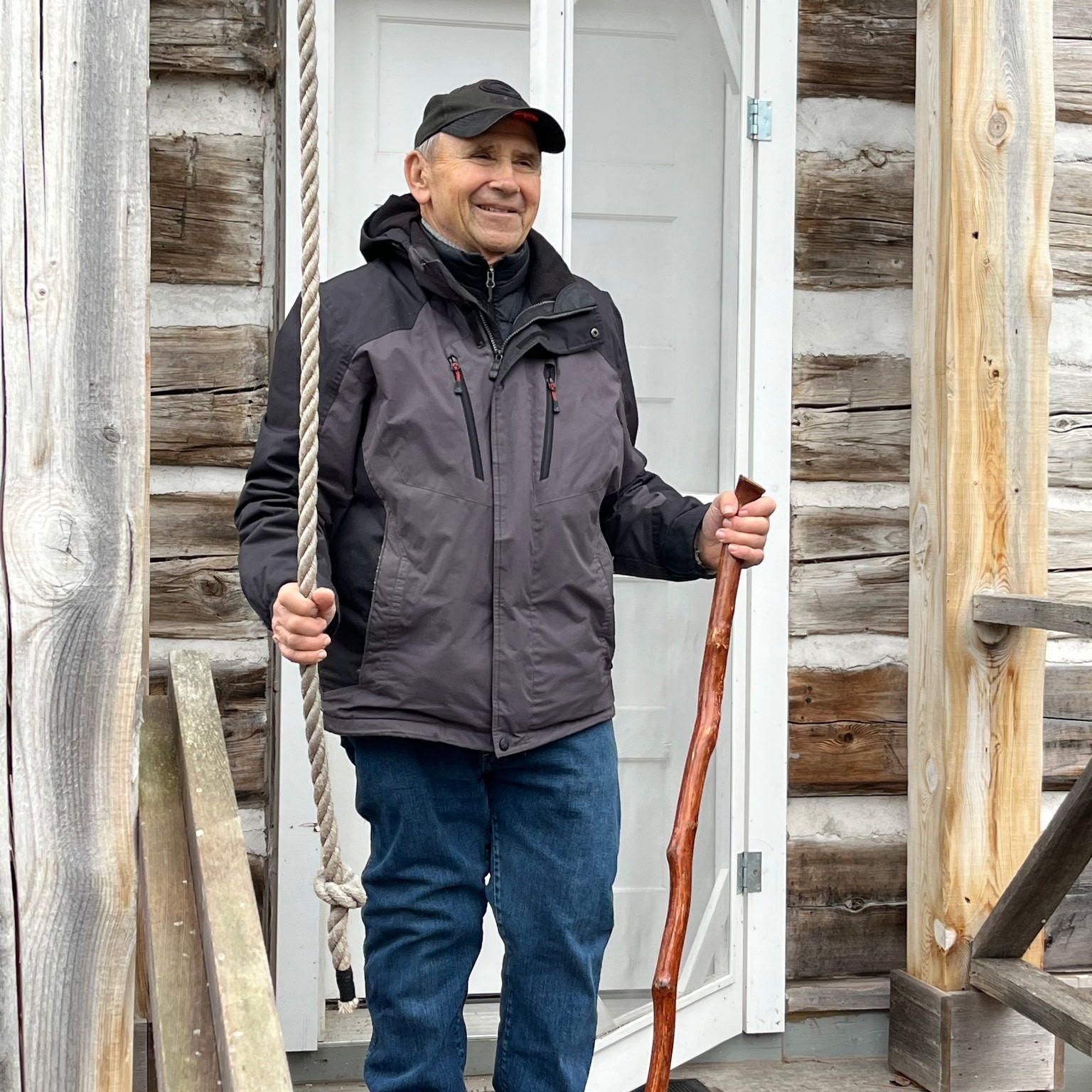
Deacon saved historic church on Native land
Deacon Bryan Bassa | Diocese of Duluth, Minnesota
After 35 years as a teacher, Bryan Bassa retired and became a permanent deacon in the Diocese of Duluth—a vocation he has been proud to serve in for 16 years. Perhaps his greatest joy in this ministry comes from one of eastern Minnesota’s historic churches—the St. Kateri Tekakwitha Log Church on the Fond du Lac Indian Reservation, constructed in 1884 by the Lake Superior Chippewa. Many Native peoples continue to be served in this diocese.
As the congregation at the “old log church” grew, a new brick building, Sts. Mary & Joseph, was dedicated right next door in 1969. And after decades sitting in disrepair, the historic log structure faced imminent demolition.
Rather than let the building be lost, Deacon Bassa committed himself to finding a way forward. With no funding in place, he began working to generate support for restoration. Catholic Extension Society provided critical early support, and in total, more than $300,000 was raised to save the church.
-
Read more
The effort also depended on parish volunteers who contributed time, labor and skills. Deacon Bassa enlisted volunteer carpenters who helped keep the church’s historic log structure intact.
The roof and flooring were replaced, and the bell tower—Deacon Bassa’s favorite symbol of the structure—was rebuilt. The original 1886 bell was found in use by local Catholic sisters as a dinner bell. The sisters happily returned the bell during the restoration and it is now on display at the church.
Inside the old log church, the wooden altar was reconstructed, and many of the original beams, walls and additional features were preserved. Deacon Bassa remained closely involved throughout the process, helping guide decisions and ensure that the work respected the church’s historical features and history.
“To see a historic building brought back to life was just amazing,” Deacon Bassa said.
The restoration brought people together and returned the church to its original purpose. It preserved a place of worship while honoring the Native families who first built it, creating a space that continues to carry faith traditions forward. At the old log church, the Shrine of St. Kateri Tekakwitha invites all to honor Indigenous heritage, while creating a beautiful and prayerful environment.
Fellow Deacon of the Diocese of Duluth, Jim Philbin, and his wife, Margo, said, “Deacon Bassa’s immense contribution to the life of his parish community and the wider Catholic community by taking seriously his call to preserve this chapel has sent waves of faith, prayer, love and all the many gifts of the sacraments down the river of the Catholic story here in Minnesota.”
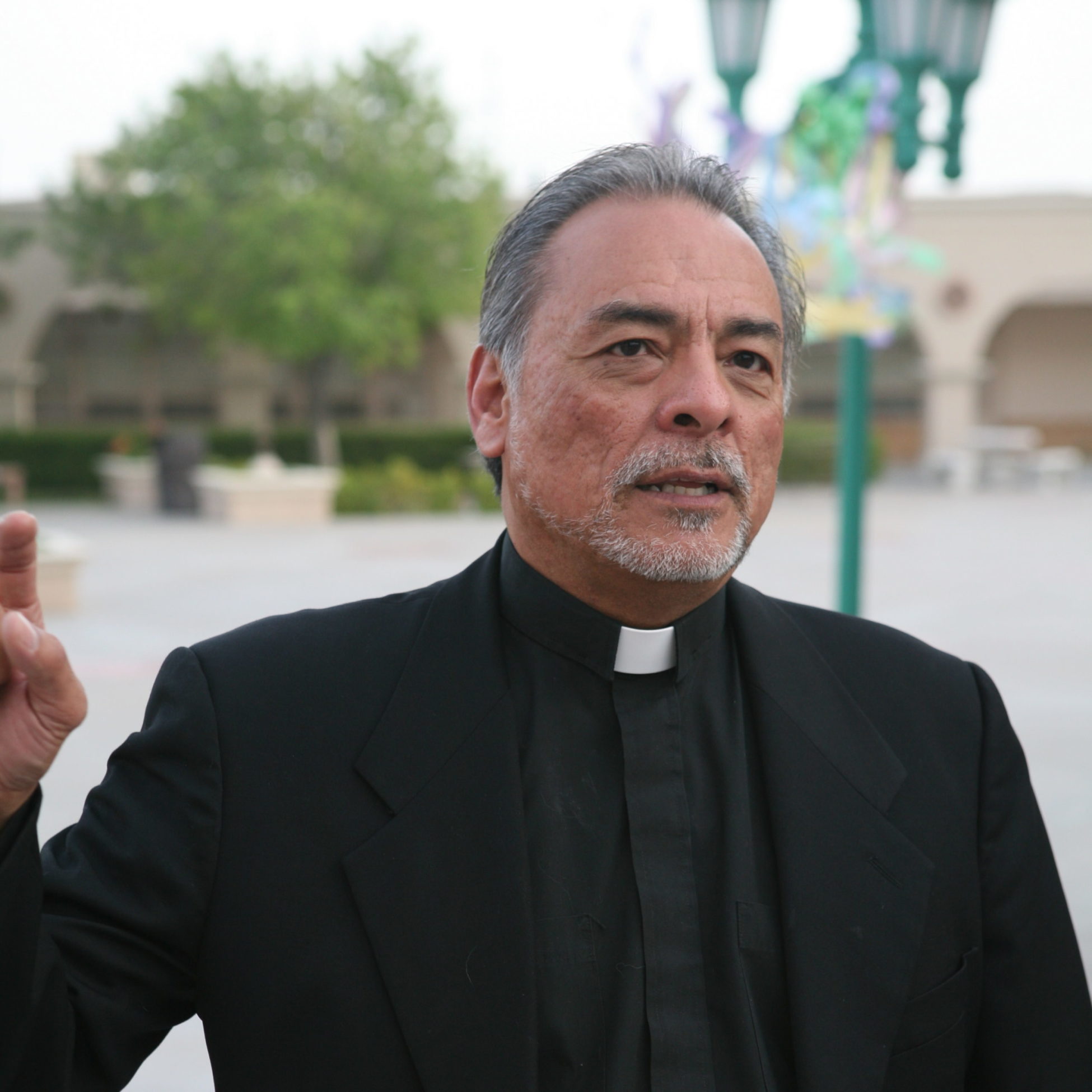
A pastor’s storied career began with a message from Our Lady of Guadalupe
Monsignor Arturo Bañuelas | Diocese of El Paso, Texas
Throughout his 46 years of service, Monsignor Arturo Bañuelas has helped the Church in the Diocese of El Paso thrive by empowering Catholics to use their gifts to serve with great impact. Early in his priesthood, Msgr. Bañuelas recognized that many parishioners viewed the Church’s ministry as belonging primarily to the priest. This realization shaped his lifelong quest of helping them embrace their baptismal call as leaders in the life and mission of the Church.
That vision was brought into focus in 1988 during a pivotal moment on a discernment retreat at the Basilica de Guadalupe in Mexico City. On his last day, standing at the site of Our Lady’s apparition to St. Juan Diego, Msgr. Bañuelas believes he received inspiration from Our Blessed Lady herself. He returned to then-Bishop Raymundo J. Peña with a bold proposal to create a lay ministry formation program in the diocese to help build the Church. At that time there was little ministry education available to lay leaders, and opportunities for them to serve parishes were scarce.
-
Read more
The Tepeyac Institute was born that same year. Rooted in the powerful symbolism of Our Lady of Guadalupe—whose presence affirmed God’s love for all people, especially the marginalized—this center has become a transformative force across the region. What began with 1,200 people participating in the first classes offered has now cultivated over 83,000 lay leaders to date. Practically every parish in West Texas has lay ministers that have been trained by Tepeyac. Many graduates now serve as leaders in parishes, and others have pursued advanced theological education and now teach and lead formation programs themselves, multiplying the impact.
As Msgr. Bañuelas explained, participants come to recognize that they are “not volunteers … they have a calling to promote the body of Christ,” a shift that creates a more engaged and mission-driven Church.
His parish leadership at large parishes in El Paso reflected this same philosophy. Serving as pastor of St. Pius X Parish from 1988 to 2014 and later at St. Mark Parish from 2015 until his “retirement” in 2022, Msgr. Bañuelas encouraged parishioners to bring their gifts and education from the Tepeyac Institute and put them into action. At St. Mark’s, 62 distinct ministries have taken root, while at St. Pius X, hundreds of lay leaders were trained and new ministries emerged weekly, such as caring for immigrant children, cancer patients and families living in the poor outskirts of town and lacking basic resources.
As Msgr. Bañuelas put it, “the needs are there and the gifts surface.” In turn, parishes thrive and become places of hope.
Msgr. Bañuelas’ influence extends on a national level. He co-founded the Academy of Catholic Hispanic Theologians of the United States in 1989 to promote research and theological reflections rooted in the faith experiences of Hispanic communities. Additionally, he is widely respected for his leadership on border issues, having founded the Hope Border Institute in 2015, where he has worked to promote dignity, justice and pastoral care across the U.S.-Mexico border region.
Msgr. Bañuelas’ enduring legacy is a generation of Catholics who see themselves not as helpers, but as missionaries. They are inspired and continue to motivate others to live out their faith boldly—taking ownership in the Church and helping to shape its future with faith, leadership and hope.
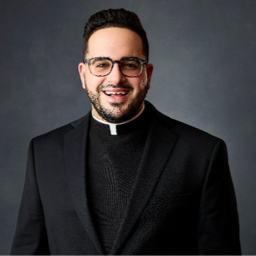
Recently ordained priest energizes a growing wave of young Catholics
Father Christopher Nahra | Eparchy of Our Lady of Lebanon
Father Christopher Nahra hit the ground running after his ordination to the priesthood in 2023 for the Eparchy of Our Lady of Lebanon. He not only serves as associate pastor of St. Sharbel Maronite Catholic Church in Clinton Township, Michigan—one of the largest Maronite Catholic communities in the country—but he is also the new vocation director for the eparchy. It’s a big responsibility for a young priest, and he has taken it on enthusiastically, walking with men and women from across the country as they discern their vocations.
On top of these roles, Father Nahra serves nationally as one of three chairs on the Strategy Implementation Team for the National Federation of Catholic Youth Ministry (NFCYM) as well as works with the USCCB on topics of Eastern Catholicism.
Father Nahra was born and raised in Cleveland, Ohio, the son of Lebanese immigrants. He grew up in the Maronite Catholic faith and considered a career in medicine before discerning a call to the priesthood through the Maronite youth program.
-
Read more
During his three years of pre-seminary formation, he, along with his youth leadership team, transformed the Maronite youth program in Cleveland from five members to over 80 members. He began to serve on the National Maronite Youth Board. In 2017, he entered the Maronite Seminary in Washington, D.C., where he completed his theological and pastoral formation for the priesthood. Now, he is continuing graduate studies in theology and ministry.
Father Nahra is focused on developing the next wave of disciples who will carry the message of the Gospel to those most in need. He is part of a pivotal team that coordinates youth conferences across the country from Ohio to California. As youth grow in their relationship with God, he also guides, forms and accompanies the next generation of young priests and religious who will minister to the Church in various capacities. He creates spaces where young people can personally experience the love of Christ and discover their mission in the Church. Having received his own call to the priesthood through youth ministry, Father Nahra understands firsthand the transformative power of authentic accompaniment. For Father Nahra, spreading the Catholic faith is about spreading Christ to a generation of youth that are lonely and isolated.
Father Nahra’s ministry contributes to a Church that is joyful and missionary in spirit as he works to ensure the Maronite Catholic faith continues to flourish throughout America.
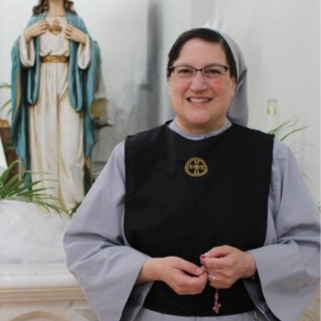
Former Washington Post journalist founded a new religious order
Mother Marla Marie Lucas | Eparchy of St. Maron of Brooklyn
In his first international journey, Pope Leo XIV traveled to Lebanon, visiting the tomb of St. Charbel Makhlouf, a Lebanese saint known for many healing miracles. “For the world, we ask for peace,” Pope Leo said. “We especially implore it for Lebanon.”
For Maronite Catholics in the U.S. with family roots in Lebanon, this moment was deeply meaningful. It was a reminder that their history, their faith and their tireless care for the poor served as a global witness to the mercy of the Catholic Church.
A Catholic sister for more than 42 years, Mother Marla Marie has served both the Roman Catholic and Maronite Rite Catholic Churches. Her path to religious life was unexpected. After studying political science and journalism at George Washington University, she began a career at The Washington Post, planning a future centered on work and family. But a simple encounter changed everything. When a Catholic sister asked if she had ever considered religious life and she responded, “I’m not worthy to be a nun,” the sister replied, “Marla, no one is worthy.” In that moment, Mother Marla Marie said, “I felt through that nun that God was saying, ‘I want you to come and be all mine.’”
-
Read more
She entered religious life in 1983 in a congregation based in New York City. In 2008, she followed that call in a new way—founding the Maronite Servants of Christ the Light, the only Maronite Catholic women’s religious congregation in the United States. Today she serves with two sisters in the community, and together their impact is profound. They provide religious formation to children, youth and adults; host retreats; guide young women in discerning religious vocations; and serve the sick, homebound and grieving.
“Under Mother Marla Marie’s leadership, the Maronite Servants do outstanding work throughout our eparchy and beyond,” said Bishop Gregory John Mansour.
Rooted in her Lebanese heritage—her grandparents emigrated to the United States in 1905—Mother Marla Marie is passionate about helping Maronite Catholics understand the strength and beauty of the Church. She reminds them that the Maronite faith is pivotal in preserving the Catholic Church in the Middle East; it remains a vital presence in the Holy Land and a powerful example of faith amid hardship.
Reflecting on Pope Leo XIV’s visit, she said, “I think every Lebanese was proud. The pope sees us, the pope hears, the pope knows. And to be seen means a lot, and that God has His hand on us.”
For Mother Marla Marie, everything flows from trust in God’s providence. “That’s my greatest lesson in all of my religious life. If you’re willing and you trust God, He’s the one that’s working.”
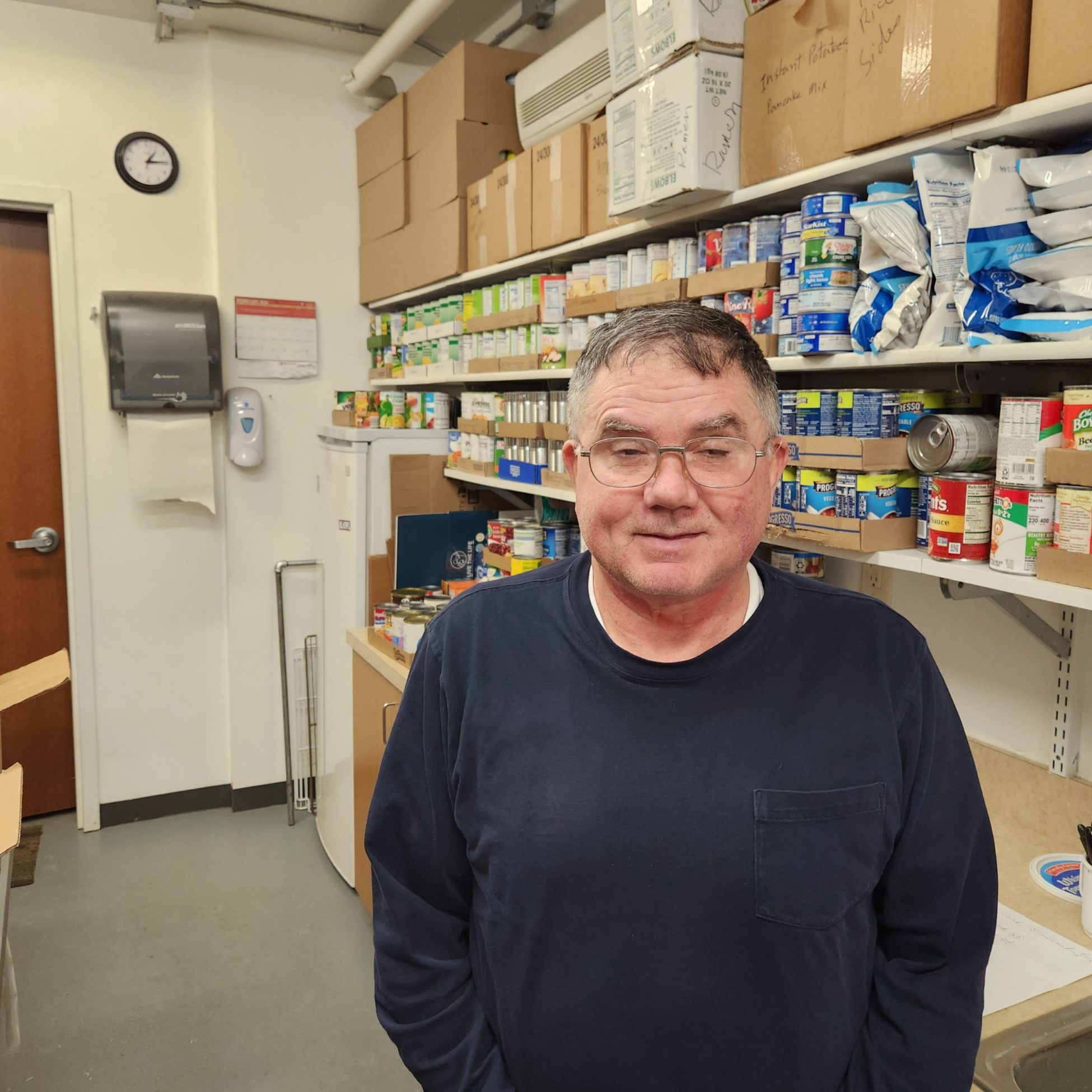
There is no job he won’t do for the Church
Greg Sauvageau | Diocese of Fargo, North Dakota
Greg Sauvageau is everywhere. There is little he has not done for his spiritual home of St. Mary’s Cathedral, where he has been a parishioner for over 50 years. His talents are matched only by his humble generosity. If it seems like Sauvageau is everywhere, it is because he is.
Sauvageau has been the director of the food pantry at St. Mary’s Cathedral for over 20 years. He volunteers at the Catholic Cemetery, volunteers at St. Vincent de Paul Society and helps with a myriad of maintenance projects around the cathedral’s campus. He is everywhere.
Whether the church’s grass needs mowing, a home needs fixing or food needs distributing, Sauvageau is there. Just like God’s love, Sauvageau is everywhere, a role model and example for us all.
As the director of the cathedral’s food pantry, Sauvageau volunteers approximately 25 hours each week. This ministry provides over 6,000 pounds of food to 150 families each month.
-
Read more
A donor gave 100 turkeys to the food pantry just before Christmas last year. Sauvageau moved them out fast. He knew of a woman who didn’t normally come to the pantry, but he sought her out and, after gifting her with the regular box of food, shared a Christmas turkey with her as well. Through tears, she told Sauvageau how this gift would enable her to provide a good Christmas meal for her family, a meal she hadn’t been able to provide in years.
Like St. Joseph, Sauvageau is a master carpenter. There is always something at the cathedral that needs fixing, and he is there with his all-purpose tool belt. Sauvageau is nonchalant about the help he gives. He said, “I need to do this. I have to do this. I don’t need ‘thanks.’ I have capable hands and a body ready to serve, so why wouldn’t I? We are all called to serve one another.”
Fargo Bishop John T. Folda knows that Sauvageau is everywhere. He said, “For over 20 years Greg has quietly organized this vital parish ministry that provides food to the hungry. In addition to his leadership, Greg volunteers his time to groundskeeping at the Holy Cross cemetery, provides his expertise and skill for unique parish maintenance projects and devotes many hours to the St. Vincent de Paul ministry by making home visits and assessing needs.”
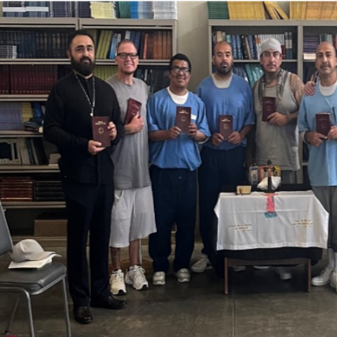
Iraq war vet is prison chaplain in the diocese with the most inmates on Earth
Andres Zamudio | Diocese of Fresno, California
In April, Pope Leo XIV visited a prison in Equatorial Guinea, offering a message of hope to those behind bars: “No one is excluded from God’s love!” He emphasized that “life is not defined solely by one’s mistakes.” There is always the possibility, the Holy Father said, “to start over, learn and become a new person.”
Tears welled in Andres Zamudio’s eyes as he recalled the Holy Father’s message.
As a full-time Catholic chaplain at Pleasant Valley State Prison in California’s Central Valley, he said “That gives me hope,” to hear such words from the “supreme pontiff.”
The pope’s words take on extra meaning given that the region of California that encompasses the Diocese of Fresno has more prisoners than any place on earth.
-
Read more
Zamudio’s ministry is extensive but deeply personal. He serves approximately 3,000 inmates and 1,200 prison staff, embracing his bishop’s call to be a “chaplain to everyone.” His work is rooted in seeing people’s humanity—something he sees as essential in a prison environment.
When new inmates arrive, Zamudio greets them personally, with a handshake, restoring a sense of dignity often stripped away by prison life. He makes sure to learn their real names, recognizing that in prison, “people lose their names to nicknames, and profanity.”
Zamudio’s path to this work reflects a lifetime of service and formation. He served in the U.S. Army from 1999 to 2003. During this time he became interested in St. Ignatius, who was also a soldier. He said being in the military can “strengthen your faith and your prayer life.” Zamudio also worked as a firefighter with the U.S. Forest Service and spent years as an educator. He later pursued theological studies with the Jesuits in Guadalajara, Mexico.
Today, he continues teaching inside the prison while offering Catholic Communion services, Bible reading services and programs that help inmates prepare for life beyond incarceration. His ministry extends to families, recognizing the deep wounds caused by imprisonment. He said, “When they become incarcerated, they break families apart. No family’s ever ready to face incarceration.”
When he is in the prison, Zamudio wears shirts that easily identify him as a person of faith, showing Christ or Our Lady of Guadalupe, because “in prison, people need to see it,” he said. “There is a reason our Catholic tradition is very visible.”
“Chaplain Zamudio has devoted his time and considerable talents to the promotion of the Word of God among those who have been imprisoned,” said Bishop Joseph Brennan. “He celebrates this work of mercy with zeal, understanding, patience and integrity. He is a builder of faith, an inspirer of hope and an igniter of positive change in many men’s lives.”
In Native lands, she is expanding the church’s merciful outreach
Vicki Trujillo | Diocese of Gallup, New Mexico/Arizona
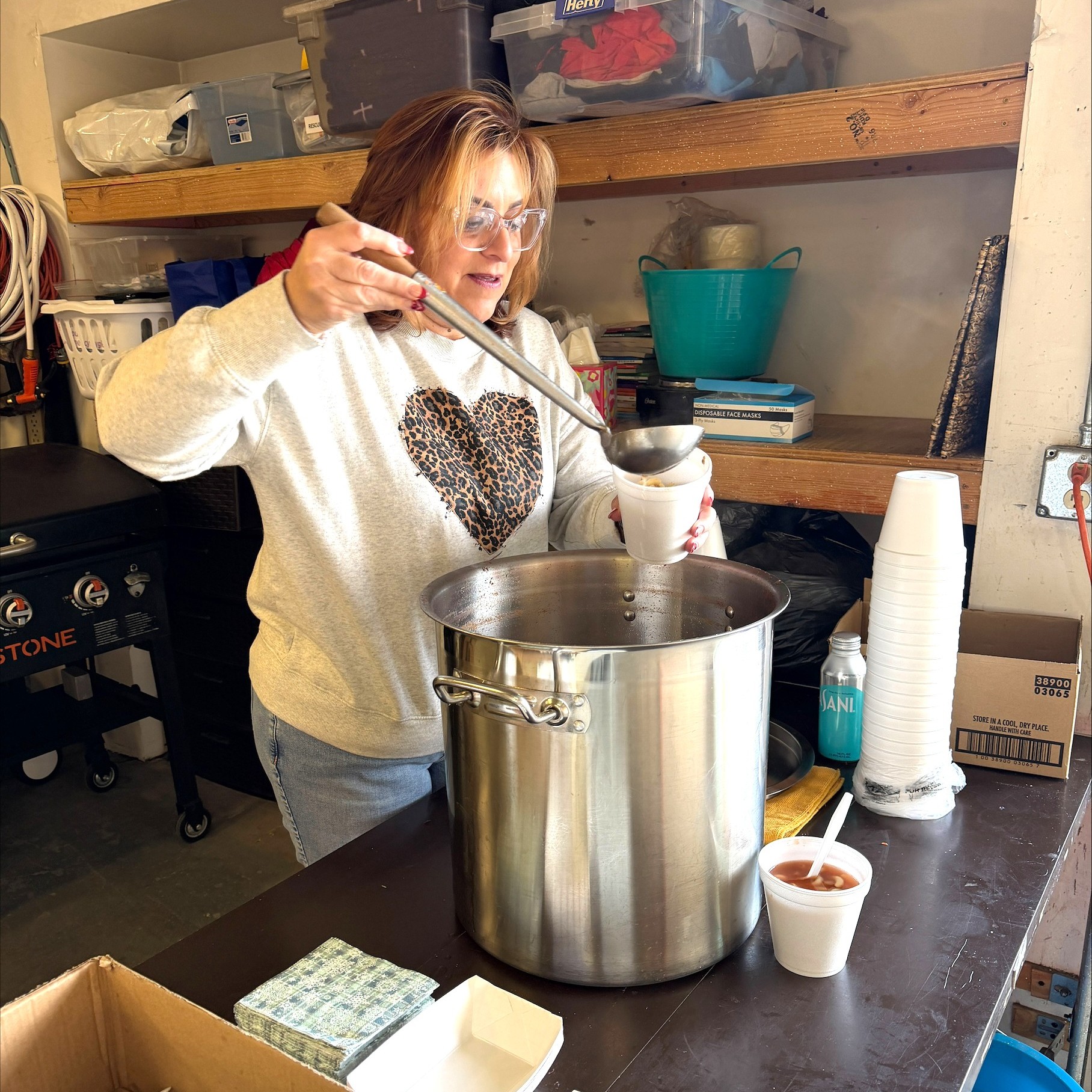
Heat. Running water. Electricity. Food. Shelter. These are daily essentials that we take for granted—that is, until they are gone. When the poor and vulnerable in the Diocese of Gallup have no one to turn to, they turn to Vicki Trujillo.
Trujillo serves as the executive director of Catholic Charities of Gallup. She leads a multisite ministry across rural New Mexico and northeastern Arizona through five regional offices. Her ministry is rooted in Catholic social teaching and the conviction that every person served is a neighbor deserving dignity, compassion and hope.
Under her leadership, Catholic Charities provides daily meals, emergency assistance, and essential supplies to people facing homelessness, food insecurity and poverty, while also helping stabilize families experiencing sudden displacement, job loss or financial hardship.
-
Read more
Trujillo has strengthened Catholic Charities’ ability to respond in rural and remote areas where access to services is limited and where many elderly and vulnerable individuals live without running water, electricity or adequate heat. Beyond city limits, Trujillo has helped expand outreach into remote reservation communities where needs are severe and services are scarce.
Through Catholic Charities’ firewood and heating assistance program, elderly and vulnerable individuals receive firewood, wood pellets and support for propane costs during harsh winter months. This program has not only helped keep families safe and warm but has also strengthened the local economy by purchasing firewood directly from Native community members who may themselves be experiencing hardship.
As if providing this essential aid isn’t challenging enough, Trujillo has had to sustain Catholic Charities through COVID-19, funding losses, and ongoing uncertainty. Her deep community relationships and robust faith have helped Catholic Charities to not only survive, but flourish.
The Diocese of Gallop’s Bishop James Wall said it best: “Vicki’s leadership is marked by prudence, perseverance and an unwavering commitment to the dignity of every person served. At the heart of Ms. Trujillo’s service is a deep Catholic faith. Prayer sustains her leadership and the ministry she carries.”
So, for the family of four who is homeless and living in their car, for the grandmother shivering through the harsh cold of winter, for the hungry and the hopeless, for those who would otherwise have nowhere to turn, the Catholic Church is there for them. Trujillo and the many staff and volunteers of Catholic Charities in the Diocese of Gallup are the eyes, ears and hands of God.
And for their light, we give thanks!
They were persecuted for their faith, but now happily share it with others
Manuel Obando and Maria Victoria Perez | Diocese of Gaylord, Michigan
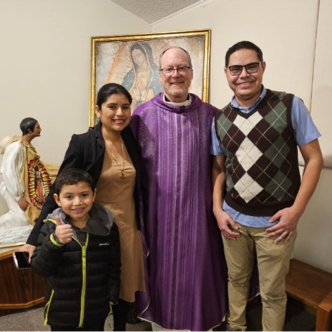
Manuel Obando and Maria Victoria Perez are a married couple serving as director and assistant director of Hispanic Ministry in the Diocese of Gaylord.
Their ministry is deeply shaped by their journey of faith and perseverance, starting when they both worked for the Archdiocese of Matagalpa in Nicaragua. During a time of political persecution against the Church, Obando was unjustly imprisoned for the crime of working for the Catholic Church. In recent years the Nicaraguan government has imprisoned priests and bishops, expelled religious, and seized church properties. Obando was separated from his wife and their infant son, not knowing if he’d see them again. Through the miracle of prayer, the family safely reunited in the Diocese of Gaylord in 2023, where they are political asylees.
More than victims, the Church saw the couple as powerful witnesses of the faith and gave them work in the diocese. Their experience informs the compassion and attentiveness with which they accompany those they serve today; many of whom arrive to America carrying their own stories of hardship and uncertainty. Since assuming ministerial roles in April 2024, the couple has reached farmworkers and their families spread across 21 rural counties.
-
Read more
When they arrived in the rural region, they encountered a Hispanic population that was largely scattered, isolated and hungry for the Church’s presence. In the diocese’s 73 parishes, rarely any priest speaks Spanish, deepening the existing language barriers and leading to migrant families not approaching those churches.
Today, the couple’s leadership has reshaped that reality. Our Lady of Guadalupe Chapel in Traverse City, Michigan, is the center of outreach for Hispanic ministry, strategically located near farms and vineyards to provide care for migrant workers harvesting the region’s abundant cherries, apples and Christmas trees.
Through their efforts, Spanish-language Masses have been added, and bilingual missals are now available in all parishes. They have implemented Spanish-language faith formation and catechesis and launched livestreamed liturgies to reach those unable to travel. They also began hosting training sessions for priests interested in learning how to celebrate Mass in Spanish, increasing access to the sacraments for 200 families in the coming year.
Catholic Extension Society is providing funding for building improvements to the chapel where they serve outside Traverse City, which will further strengthen its mission. As Perez explained, this investment will “dignify [this sacred space] … where people can form relationships and participate in the celebration of God,” and in turn, give dignity to the community, reminding them that “they are seen, valued and no longer hidden.”
At the heart of their work is a simple but profound conviction: Obando said, “When we don’t have anything, we still have God. The most important thing is to bring more people to Jesus.”
A 48-year career dedicated to the Church
Jean Ann Molczyk | Diocese of Grand Island, Nebraska
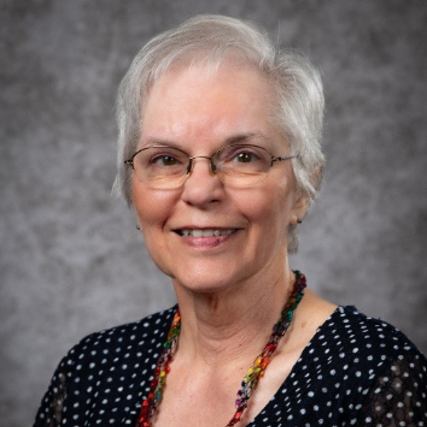
In 1978, typewriters rather than computers sat on desks, written communication could take weeks through the mail and bookkeeping was done by hand. This is the year Jean Ann Molczyk began working for the Diocese of Grand Island, where she remained as a steady, dedicated employee until her recent retirement.
For 48 years, Molczyk served in the finance office of the Chancery, dedicating her career to supporting the life of the Church across a vast diocese spanning 42,000 square miles, 71 parishes and missions and more than 40,000 faithful. She served under three different bishops, and over time, her role expanded far beyond finance. She took on responsibilities in human resources, operations, IT and countless other areas, becoming a trusted resource for priests, parish leaders and diocesan staff alike.
Her work was marked not only by competence, but by care. Molczyk helped pastors and parishes navigate complex matters such as employee benefits, insurance and financial planning—always with a patient and kind approach. Her institutional knowledge became an invaluable asset, but it was her spirit of service that defined her legacy.
-
Read more
“Molczyk’s generosity in serving the Church for over 48 years as a Chancery employee has had a tremendous impact on many people over the years,” said Bishop Joseph Hanefeldt of Grand Island.
Beyond her professional responsibilities, Molczyk’s dedication was evident in the small, thoughtful details that can often go unnoticed. Known for being the last to leave the office each day, she made sure everything was in order before heading home. On cold Nebraska nights, she would even ensure that the faucets were left dripping—protecting the building from frozen pipes.
“I feel blessed to be part of Chancery and grateful for all the generous support from the pastors, parishes and people to promote and maintain all the varied and important ministries in our diocese,” she said.
In a world of constant change, Molczyk remained steadfast—a faithful servant whose work behind the scenes helped sustain the mission of the Church in Nebraska for nearly half a century.
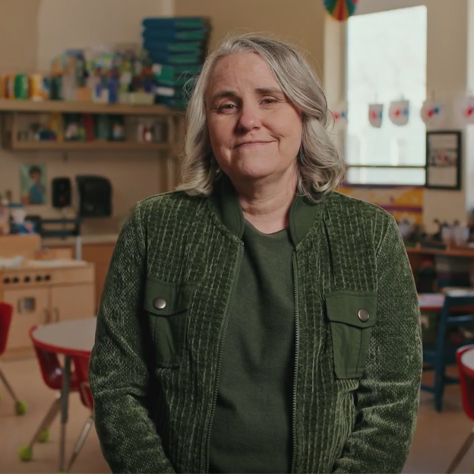
She leads a summer camp that helps teens find their place in the Catholic Church
Lori Purpura | Diocese of Great Falls-Billings, Montana
It is tough for a teenager to find a place in the church. Teens are rambunctious. They question authority. They take risks and are adept at dancing on the last nerves of parents, teachers and mentors. Growing in the faith for teens, especially in underserved and out-of-the-way places, is extremely hard. They need special adults to guide and support them. Lori Purpura is just such a person.
Purpura serves as the leader of St. Thomas Camp, a Catholic summer camp that provides a deeply formative, faith-filled experience for youth across the Diocese of Great Falls-Billings. For the past 12 years, Purpura has guided and sustained this ministry with a clear focus: to create an environment in which young people can encounter Christ through the sacraments, authentic community and intentional discipleship.
Each summer, approximately 250 campers from 35 to 40 parishes across the diocese attend St. Thomas Camp. They are immersed in a deeply Catholic environment centered on daily Mass, eucharistic adoration, prayer and authentic community. For many of these youth—especially those from rural and underserved areas—this is their only opportunity to experience a vibrant sacramental life alongside others their age.
-
Read more
Purpura leaves no young person behind. She has ensured that the camp remains accessible to all, never turning a child away due to financial hardship. Each year, $12,000 to $15,000 in scholarships is provided. This commitment has allowed countless young people to encounter Christ, many of whom would never have the opportunity otherwise. In a diocese where youth ministry resources are limited and distances between towns and parishes are vast, St. Thomas Camp has become a critical point of evangelization and faith formation.
Beyond the campers, Purpura’s influence extends to the young adult staff she mentors, forming them as leaders and disciples who carry their faith back into parishes and communities across the diocese. Through her leadership, St. Thomas Camp has become more than a summer program—it is a transformative ministry that bears fruit in the lives of individuals, families and the broader Church.
Bishop Jeffrey Fleming knows what a great gift he and the young people from his diocese have in Purpura. “I have had the opportunity to spend time at St. Thomas Camp and to witness firsthand the spirit of faith and joy that fills the place. Seeing young people gathered for Mass, prayer and community in such an authentic way is deeply moving. That experience is not accidental—it is the fruit of Lori’s faithful and dedicated leadership.”
The teens in the Diocese of Great Falls-Billings are like teens all over the country. But they are extremely blessed. They have found a place in the Catholic Church, and Lori Purpura and the community of St. Thomas Camp are the reason why.
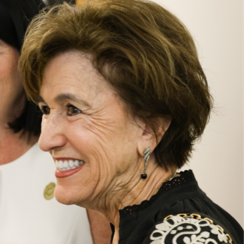
Three ways she shows up for the forgotten
Patricia “Pat” Caillouet | Diocese of Houma-Thibodaux, Louisiana
Patricia “Pat” Caillouet’s ministry is multifaceted. She is committed to serving in a women’s giving circle to raise money, prison ministry and a local food bank that serves families in great moments of need.
Through the Mother Teresa Women’s Giving Circle, Caillouet guides a network of more than 200 Catholic women who are committed to supporting the Church. Together, they have directed nearly $1 million to ministries serving those most in need—including crisis pregnancy centers, Catholic schools, food banks and outreach programs for children and older adults. For Caillouet, this work is not only about raising funds but keeping focus on the people whose lives are changed. She sets an example for everyone in the giving circle for how to stay connected to the realities these families face.
At the women’s prison where Caillouet volunteers, many carry the weight of addiction, trauma and the burden of separation from their families. Caillouet returns week after week, offering a familiar presence. Over time, trust grows in small but meaningful ways. Through prayer and conversation, Caillouet creates space for healing and reminds the women they are not forgotten. It is an approach rooted in the corporal works of mercy.
-
Read more
And furthermore, each week Caillouet serves at Good Samaritan Food Bank in Thibodaux, Louisiana, where she assists families facing food insecurity. She greets each person with warmth and takes time to listen and provide whatever is needed. Her presence creates an environment where people feel welcomed and respected without judgment.
Bishop Simon Peter Engurait of the Diocese of Houma-Thibodaux reflected on Caillouet’s life of service to the poor and forgotten, saying, “Mrs. Caillouet continues to serve with boundless energy, a cheerful heart and a commitment that inspires all who know her. Her life is truly a living witness to the Gospel and a model of Christian charity, humility and devotion.”
Across these ministries, Caillouet’s impact is rooted in the relationships she has built over the years. She meets people where they are and remains present, offering a quiet reminder that they are seen, valued and not alone.
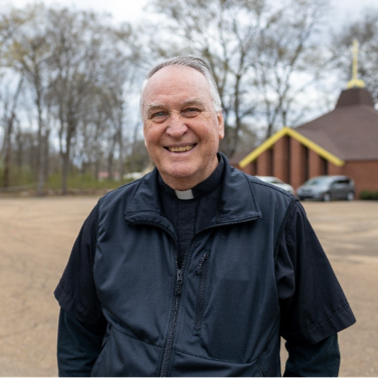
Priest’s interracial, ecumenical efforts transform a Mississippi community
Father Guy Wilson, S.T. | Diocese of Jackson, Mississippi
Light moves at an amazing speed of 186,000 miles per second. Father Guy Wilson moves almost as fast.—he moves at the speed of the Light of Christ. At a very young 74 years old, Father Wilson’s ministry to the people of Mississippi is characterized by pastoral creativity, robust collaboration and powerful initiative.
The cumulative experience of 47 years of priesthood in a variety of cultures and places has prepared Father Wilson for his current ministry in the Diocese of Jackson. He serves as pastor of two historically Black Catholic parishes in Canton: Sacred Heart Church and Holy Child Jesus Church.
Both parishes were established with a clear and courageous mission: to provide Catholic education and to evangelize while building up the faith and dignity of Black Catholics who faced systemic discrimination and social marginalization.
-
Read more
Music is a defining element of parish life at both Sacred Heart and Holy Child Jesus. Both churches maintain long-standing choirs, with several members having received formation from the parishes’ most illustrious native daughter, the late Sister Thea Bowman, whose cause for canonization is being reviewed by the Vatican. This musical tradition, which Sister Thea helped elevate and teach through her life’s work, reflects the beauty and strength of Black Catholic spirituality and continues to inspire the wider diocesan community.
Father Wilson is collaborating with the Diocese of Jackson to prepare for a future shrine honoring Sister Thea. This project holds promise for spiritual renewal, pilgrimage and broader diocesan engagement.
Father Wilson has also been attentive to the growing Latino population in Canton. He bridges communities by offering bilingual programming and hosting diocesan gatherings, youth retreats and three-day retreats for Spanish-speaking men and women. These efforts have strengthened intercultural unity and expanded participation in Church life.
As a religious priest and a lifelong missionary, Father Wilson realizes that a Church’s solidarity with the poor and the wider community takes many forms.
His “Pray and Play” initiative demonstrates tangible ecumenical impact in an area where Catholics are only 2% of the population. By collaborating with Baptist and Evangelical leaders, he has created a faith-based basketball program where youth commit to Sunday worship before participating in tournaments that begin and end in prayer. The program builds relationships across racial and denominational lines.
Father Wilson’s impact is equally visible in social outreach. Through the Sacred Heart Family Center in Camden, Mississippi, he oversees extensive food distribution programs, daily meals for seniors and special needs adults, and summer nutritional support for children. His leadership has created a network of solidarity between suburban and rural Catholic communities.
Father Wilson also fosters economic and health stability. A community health clinic operates on parish property, serving an aging population with limited access to care. The Theresa Day Care Center, also on parish property and the only childcare facility within 30 miles, provides critical support for working families.
His background in community organizing has emerged through his efforts to develop affordable housing on church-owned land, addressing a critical shortage that threatens the sustainability of local schools and families. His long-range vision to build 40 homes reflects his commitment not only to spiritual care but to the flourishing of entire communities.
Father Wilson moves at the speed of the Light of Christ. His ministry covers every dimension—liturgical, cultural, social and developmental. Father Wilson’s ministry strengthens faith, fosters unity across racial and cultural divides and ensures that historically significant Catholic communities remain vibrant signs of Christ’s light.

Fifty parishes take up collection to heat homes through Michigan’s long winter
Home Heating Assistance | Diocese of Kalamazoo, Michigan
In the heart of winter, Southwest Michigan can be an unforgiving place to be without heat. From late November through early March, average low temperatures routinely fall into the teens. In these months, access to heat is not a matter of comfort but of survival. The Home Heating Assistance Program, part of Catholic Charities Diocese of Kalamazoo, assists the most vulnerable households in the nine diocesan counties. By acting swiftly to defray heating expenses and provide heating resources, they ensure no household is one emergency away from crisis.
Each winter, the Home Heating Assistance Program receives hundreds of requests from households facing mounting utility costs. Many of those served are working families, single mothers, veterans and elderly individuals struggling to afford their utility bills. The program provides up to $300 in emergency heating assistance per household to help keep homes warm. Funding comes from a special second collection taken each November in more than 50 parishes throughout the diocese—a testament to how communities can unite around a shared mission of compassion and service.
The need is great, considering rising energy costs have outpaced inflation since 2022. In December 2025 alone, more than 583,000 Michigan households were over 30 days past due on utility bills.
-
Read more
At the heart of this ministry are dedicated volunteers who serve as the program’s front line. Coming from parishes, St. Vincent de Paul chapters and partner organizations such as Salvation Army and Christian Neighbors, these volunteers walk alongside families through the application process and coordinate directly with utility companies to prevent shutoffs.
The program’s impact is both tangible and life‑sustaining. In 2025, the program assisted 261 households, helping 721 individuals remain safely housed and warm through a harsh winter. Among them was a military veteran who returned home from an extended hospital stay only to find his electricity shut off. Thanks to the program’s timely intervention, power was restored, allowing him to safely recuperate at home. Another request came from someone who had been unemployed for two months following a traumatic brain injury after a car accident. His heating had been shut off, requiring help to catch up on bills.
Quick collaboration among partner organizations has ensured single mothers can stay afloat. One single mother needed immediate propane deliveries for her home during extreme cold. In another instance, a single mother with a dwindling work schedule was forced to prioritize rent and food to keep a roof over her two kids, at risk of her gas getting shut off. The program helped her quickly apply for emergency assistance before service was disconnected.
Through parish generosity, volunteer service and collaborative care, the Home Heating Assistance Program shines Christ’s light into the coldest moments of people’s lives, offering not only heat, but hope.
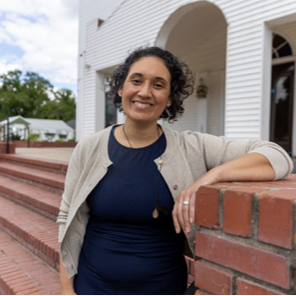
She works additional hours at her day job to fund Black Catholic youth ministry
Bridgette Mouton | Diocese of Lafayette, Louisiana
Bridgette Mouton is a mother of young adult children and a registered nurse. She cares about young people and their well-being. Faith, she knows, is an integral part of their ability to thrive, and she is absolutely committed to ensuring that the young Black kids in her parish experience the fullness of the Catholic faith so that they can live their lives as a blessing to others.
The importance of a Church that is rooted in mission and service is something that is deeply personal to Mouton, who grew up hearing stories from her mother about how Black people in Louisiana had to fight to keep their Catholic faith during the turbulent years of the Civil Rights Movement.
Mouton’s mother, Barbara Robertson, a Black Catholic, helped integrate a segregated Catholic parish, St. Anthony’s in Lafayette, in the early 1960s.
When she approached the altar for Communion at St. Anthony’s, a parishioner slapped her in the face, and the priest refused her the Eucharist for the sin of being a Black woman in a white church. Still, Robertson returned the following week at the urging of local civil rights leaders, bringing her sisters with her.
-
Read more
“Slowly, but surely, more families joined them,” Mouton said. These experiences are documented in Robertson’s book, “My Journey: The Journey of an African-American Woman: Faith, Courage and Hope.”
In her mother, Mouton sees a profound example of faith lived with courage and perseverance—something she now aims to pass on to the next generation.
This sense of responsibility and personal sacrifice drives Mouton, who is a registered nurse and works through private practice in neurosensory motor reflex integration. She works extra hours at her job to fund her ministry to young people. Recently, to make a retreat possible for confirmation students, she calculated how many additional clients she would need to take on and committed herself to the work so she could pay for the retreat. “If I take on this many clients, I’ll be able to support this many young people,” she told herself.
Mouton continues to personally help cover the cost of retreats and other initiatives for her role as youth director, even as she balances family life as a wife and mother. She remains driven by a larger goal. “If I can pass a nugget down to enough kids, then the whole community will change,” she said.
Mouton tells young people that despite their age they, too, are expected to serve, whether through parish events, choir, altar serving or community outreach. She wants youth to see that they play a part in making a faith community stronger, and that they must carry their church forward when older generations are gone.
For Mouton, these moments are formative, helping youth understand that the Church depends on them. “Think about the people who are always serving,” she tells them. “What’s going to happen if you don’t step in?”
She is raising up a generation ready to serve and to carry the faith forward—ensuring that the Church is living its mission for years to come in Lafayette.
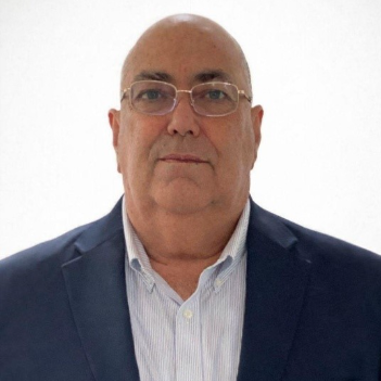
He’s a business man whose ministry as a deacon speciailizes in truck drivers and detainees
Deacon Enrique Peñúñuri | Diocese of Laredo, Texas
For more than 25 years, Deacon Enrique Peñúñuri has faithfully brought the compassionate presence of Christ into some of the most overlooked places in the Diocese of Laredo. Whether inside a prison cell, on lonely highways or in grieving homes, he strives to help people discover that Christ is walking with them.
Laredo is a major international trucking route. For 11 years, Deacon Peñúñuri has accompanied long-haul truck drivers—many of whom live much of their lives on the road away from their families and far from Catholic parishes—through a unique ministry conducted entirely over radio. He provides them spiritual and emotional accompaniment by praying meditations and the rosary together. This outreach, he said, changes their perspective of church as not merely a four-walled building, but rather something that meets people where they are. As a result, faith is strengthened, even inspiring two participants to pursue the diaconate.
-
Read more
At the heart of Deacon Peñúñuri’s ministries is a simple yet profound commitment, inspired by the guidance of a mentor: to remain “on call” for God’s people. Through his tireless service, thousands have encountered not only the Church, but the healing love of Christ.
Deacon Peñúñuri does this in spite of a busy professional career as a computer systems and processes consultant.
Another major pillar of Deacon Peñúñuri’s ministry is his work with inmates, prisoners and detainees across the 15 correctional and immigration detention facilities he regularly visits in South Texas. He has been leading prison ministry since 2002. Together with a team of 30 volunteers, he accompanies more than 6,800 incarcerated individuals, approximately 1,000 of them women. In recent years, the population inside these detention centers has shifted, now including migrants awaiting deportation from across the globe—Africa, Asia and beyond—many of them young men seeking economic opportunity.
Carlos René Ramírez, a fellow man of faith who has walked with Deacon Peñúñuri throughout his diaconate, regards him as “a true saint” for responding in the most holy way “to the most forgotten of our brothers and sisters” through prison ministry. Since Deacon Peñúñuri was ordained in 2014, this ministry has only expanded to include weekly structured Bible workshops. Peñúñuri transforms confinement into a space of healing and spiritual growth.
“We encourage them to draw near to God … to have concrete things to do, such as reading the Gospel,” he shared.
Internal transformations have transpired through his support of detainees’ spiritual lives. One such example is Alicia, a woman from Colombia. Through years of participating in the Bible workshops, her life was gradually reshaped by faith. After completing two years of workshops, she expressed a newfound purpose: to dedicate her life to helping others encounter Christ. Stories like hers are what sustain Deacon Peñúñuri and his team. “It is very gratifying to see [detainees] recover their sense of purpose in living,” he explained.
Deacon Peñúñuri also serves youth through a ministry melding Gospel formation and sports, offers spiritual accompaniment to families and individuals in discernment, and consoles those grieving the loss of loved ones. He has launched a project called “Palabra sin Cadena” (“Word of God without Chains”) centered on Sunday liturgical reflections; his in-depth analyses have been used by deacons, priests and bishops in their homilies.
This is all part of Deacon Peñúñuri’s spiritual commitment as a deacon to remain always “on call.”
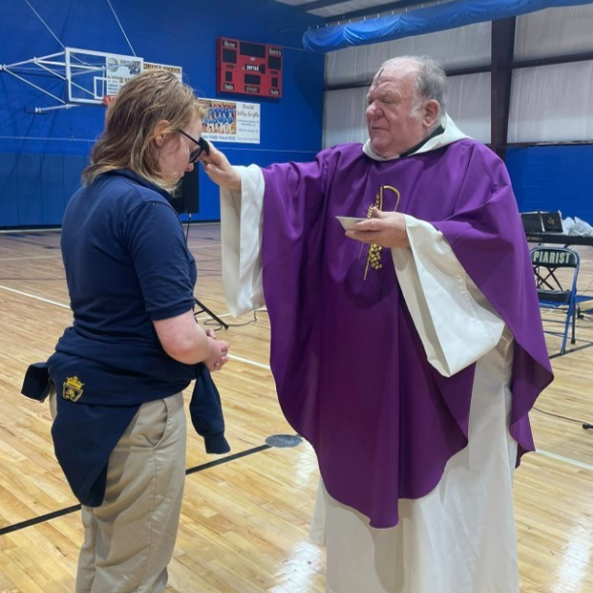
In U.S.’s poorest congressional district, 100% of his students go to college
Father David Powers | Diocese of Lexington, Kentucky
Since he was ordained a Piarist priest in 1985, Father David Powers has lived out his religious order’s vow to educate youth, especially the poor. This vow took him to Appalachia in 1989 to found a school that has provided an exceptional education and professional future for hundreds of children.
The Piarist School in Prestonsburg, Kentucky, which enrolls students in grades 6 to 12, is located in the poorest congressional district in the United States, where only 84% of students graduate from high school; in the neighboring county, only 30% complete higher education. At the Piarist School,100% of students have graduated and attended college. Many are the first in their families to do so.
Father Powers and the school faculty work closely with each student to identify their unique gifts, talents and interests, helping them imagine and pursue a bright future. His approach to each student is, “Let’s get together to see how you can succeed.”
-
Read more
Since opening its doors in 1990 with just seven students, the Piarist School has grown into a beacon of opportunity. Today, it counts more than 250 alumni—many of whom have become lawyers, doctors, nurses, educators and community leaders. Most graduates remain in the area and use their education to strengthen eastern Kentucky. Father Powers sees this region as a place of resilience and potential.
Many other students have had successful careers in law enforcement or military. Father Powers is an Army veteran himself. If he sees a student lacking in confidence, he tailors extracurricular opportunities that will help that student grow personally as well as academically.
Father Powers still serves as a teacher at the Piarist School. In addition to teaching religion, he uses his advanced degrees in biology to teach math and earth science.
Beyond the classroom, Father Powers has had a profound impact on the wider community of eastern Kentucky through his commitment to ecumenical collaboration and direct assistance . The Piarist School itself participates in community outreach, including home repair projects. In a region where the Catholic Church has not always been well known, Father Powers has worked patiently and consistently to build trust among Christian leaders and neighbors of many denominations.
“The Piarist School is a PRESENCE in the community!” he said. “Catholic students, priests and leaders are invited to become voices and active participants in community efforts.”
Through that presence, Father Powers is helping young people discover their God-given potential and carry that confidence into a promising future for themselves, their families and their communities.
She not only serves meals, but restores human dignity
Connie Cobb | Diocese of Little Rock, Arkansas
In the Parable of the Wedding Banquet (Matthew 22:2-14), the kingdom of heaven is likened to a king hosting a lavish wedding for his much beloved son. The Gospel does not mention what was on the menu, but it would be hard to beat the lavish meal offered by Connie Cobb and the volunteers at the St. Edward Outreach Ministry in Little Rock, Arkansas.
Open Monday through Friday, 9:30 a.m. to noon, the St. Edward Outreach Ministry is an incredible place where the homeless, the poverty-stricken and their families can go and be greeted with a welcome smile by volunteers they know genuinely care about them.
Each morning, a variety of sandwiches—chicken salad, egg salad, turkey, ham—are prepared, along with fresh fruit and vegetables.
But more important than this meal is the boundless warmth and love given to each and every guest. One of the worst deprivations of poverty is human dignity. Self-worth, a sense of purpose and personal efficacy are stripped away, leaving a soul-deep diminishment. Cobb is especially attuned to this spiritual hunger.
-
Read more
She said, “Helping the poor and homeless is so meaningful to me because while I only provide food and clothing, I do it in a way that restores a little bit of humanity and kindness to the world. I want to give an example of my faith in God so that it might lead others to Christ.”
Faith is what binds together Cobb, her volunteers and the guests who come to St. Edward’s. There is a prayer book on the counter where everyone enters. The homeless can sign their name and, if they wish, write what they need prayers for. They know that at a certain time every day before the center opens, Cobb and the volunteers pray for them. Beyond sandwiches and desserts, this is a bounty that profoundly touches the ministry’s guests. It is a place of lavish spirituality.
Little Rock Bishop Anthony Taylor marvels at the growth and scope of St. Edward’s outreach. He said, “Over the last 40 years, the Outreach Ministry has gone from a small effort providing needed items to a few people to what it is today. Five days a week volunteers now provide a midday meal to the homeless and to food-insecure individuals and families. They provide an amazing 75,000 meals a year, and Connie is a model volunteer with this ministry’s efforts.”
The menu at St. Edward’s Outreach Ministry would rival any banquet a king might serve up for his beloved son. But Connie Cobb and her volunteers know that what is most needed is friendship, genuine care and love. Without these truly lavish gifts, the ministry’s guests would still go profoundly hungry. Connie Cobb sets a table that makes Jesus proud.
They got Catholic parishes to collaborate on a common mission, rather than compete for resources!
Plainview Pastoral Planning Commitee | Diocese of Lubbock, Texas
Imagine how much more expansive the Catholic Church’s presence would be if parishes learned to collaborate with one another, by complementing each other’s services. This is what St. Alice, Our Lady of Guadalupe and Sacred Heart Catholic churches are doing in Plainview, Texas. Today, these three parishes of unique identities and histories are working to come together as one community rooted in a shared mission, thanks to the efforts of the Plainview Pastoral Planning Committee.
Each church has more than a century of history, and each has their specialty to offer the community. St. Alice has been a cornerstone for religious education in Plainview. Our Lady of Guadalupe primarily serves devoted Mexican American parishioners. Sacred Heart has been hit hard by natural disasters but has overcome thanks to a committed community.
The committee brings together lay leaders, clergy and parish staff from all three communities. They have walked alongside parishioners through a period of change, listening carefully and helping build trust among people that had long operated separately. In doing so, they have encouraged a deeper understanding of how significant it will be when the three parishes come together as one church—which will fittingly take the name Holy Trinity Catholic Church.
-
Read more
In their first joint online giving campaign last Giving Tuesday, the parish raised more than $22,000 in two weeks, reflecting a growing sense of solidarity in working toward this new future. Parishioners who once worshipped in different spaces are now forming connections with their neighbors with the common goal of building a united, vibrant faith community, strengthening the life of the Church in Plainview.
This has been especially important in bringing together youth groups from the three parishes to form the next generation of Catholics in Plainview. Five hundred of these children and youth from across Plainview came together for a local World Youth Day celebration. That experience was crucial to the start of lasting friendships that will strengthen the new Holy Trinity for years to come.
The future is bright for all at Holy Trinity. Over 1,800 parishioners came together to bless the land for their future building on the Solemnity of the Immaculate Conception. Standing together on such a significant day in our liturgical year, the community saw what their future could look like and recognized the progress they had already made together, as one united body in faith.
Advancing the cause for canonization of the “snowshoe priest”
Bishop Baraga Association | Diocese of Marquette, Michigan
Few figures have shaped the Catholic faith in Michigan’s Upper Peninsula and the Great Lakes region as profoundly as Venerable Frederic Baraga. Known as the “Snowshoe Priest” and the “Apostle of the Lakelands,” he spent nearly four decades traveling by foot, canoe and snowshoe to minister to Native American communities and immigrant miners in what is today Michigan and Minnesota. A gifted linguist and pastor, Baraga authored prayer books and a dictionary in the Chippewa language that is still in use today. His episcopal motto Unum es Necessarium—“One Thing is Necessary”—captured the heart of his life’s mission: to know, love and serve God above all.
Today, more than 150 years after his death in 1868, the Bishop Baraga Association (BBA) continues his legacy, working faithfully to advance his cause for canonization while introducing new generations to his life and witness. Founded in 1930 and sustained entirely through donor support, the BBA remains small in staff but remarkable in reach and impact. To date, they have published 13 books written by or about Bishop Baraga and his work throughout the Upper Peninsula.
-
Read more
Through the Baraga Educational Center and Museum—housed in Bishop Baraga’s historic residence—the Association offers visitors an opportunity to encounter the story of this extraordinary missionary and his deep relationship with the Native Americans. In 2025, the museum welcomed 855 visitors from 17 states and four countries, while group tours and presentations brought his story to hundreds more.
The Association’s outreach extends well beyond its physical space. In 2025, BBA representatives traveled more than 8,300 miles, participating in 25 events and offering educational presentations that reached over 2,500 people. They distributed more than 20,000 pieces of faith formation and promotional material, while over 2,100 prayers for Bishop Baraga’s canonization were logged through their website—clear signs of a growing devotion that spans the globe.
Central to the BBA’s work is sharing firsthand accounts of Bishop Baraga’s continued intercession. One such testimony, received in 2025, came from a woman who learned of Bishop Baraga at a presentation before being diagnosed with cancer. After praying a novena for his intercession, she later wrote with gratitude: “I am healed. … His intercession played a powerful role in my healing.”
With nearly 3,600 members and donors worldwide, the Bishop Baraga Association is ensuring that Bishop Baraga’s legacy is not confined to history, but continues to inspire people every day. Their work brings the Church closer to recognizing what so many already believe: that a saint lived and served among them.
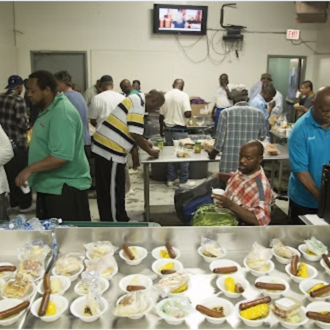
Parish shows how God’s goodness cannot sit still
St. Patrick Champion Community Outreach Center | Diocese of Memphis, Tennessee
God’s goodness cannot sit still. It is always looking for more ways to give itself away. In the bountiful economy of God’s grace, one thing leads to another, and then leads to another.
This is the story of the St. Patrick Champion Community Outreach Center in Memphis, Tennessee. Over the last 70 years, St. Patrick Catholic Church, which is in the poorest zip code in the state of Tennessee, has focused on social ministries solely for the poor in the surrounding area.
What began as a weekly food distribution to the homeless and low-income residents of the surrounding neighborhood has grown. Each Sunday, St. Patrick parishioners and local volunteers cooked a “Sunday Meal” for the homeless and residents after Mass. It was a natural extension of the Eucharist.
-
Read more
When the COVID-19 pandemic hit in March 2020, volunteers continued to provide food assistance to those in need. A mobile food pantry was started: 100 volunteers packed boxes of both perishable and nonperishable food and placed them in the trunks of cars under a tent in a parking lot across the street from the church. To lift spirits, a local radio DJ attended every month to play worship music during food distribution. Today, the mobile food pantry receives 400 to 450 car trunks of food each month.
God’s goodness continued to expand with the establishment of a clothes closet. “It started during the winter when our visitors were picking up food,” said Melissa Krylowicz, co-director and clothes closet coordinator. “Men who live on the streets needed gloves to keep their hands warm, then hats, then coats and then they needed pants.” Shortly after, women from the surrounding area began coming to the center needing clothes for themselves and their children. Today, up to 200 people visit the center’s clothes closet each month.
Krylowicz noticed that many homeless men and women who visited the clothes closet each week had acute and chronic issues with their feet. This was caused by diabetes, arterial disease, poor foot care or poorly fitting footwear. As a result, the Community Outreach Center began to provide monthly wellness checks and foot clinic.
For this service, known as “More Than a Meal,” skilled medical volunteers provide wellness checks, AIDS consultation and wound care. Visitors have their blood pressure and blood sugar checked and feet cleaned, and they receive a new pair of shoes every five months. Medical volunteers refer visitors with issues to local physicians who specialize in foot care or AIDS treatment. The makeshift clinic receives 25 visitors a month.
The 100-plus St. Patrick parishioners who assist at the center are profoundly touched as well. Through the Holy Spirit, these volunteers are fulfilling what God has called them to do: Be the hands and feet of Jesus Christ. For in the bounty of God’s ever-active goodness, the line between the givers and the receivers is blurred. One thing leads to another, leads to another.
She created a home for the dying homeless and poor
Kim Derrick | Diocese of Nashville, Tennessee
“Holy Mary, Mother of God, pray for us sinners, now, and at the hour of our death.”
This, the ending of the Hail Mary, asks Mary to pray for all of us at the hour of our death. What a powerful vision and consolation. Kim Derrick takes this one step further: Her ministry is to pray and care for the dying poor, a group too often forgotten by society.
In 2021, Derrick created Heart of Mary House, a safe home for the poor who have a terminal prognosis to spend their final days in peace, who otherwise would have died alone or with no roof over their head.
Derrick believes that every person deserves a dignified end-of-life experience. Many low-income individuals face immense barriers during this critical time. End-of-life care remains an overlooked need for the dying poor.
-
Read more
At Heart of Mary House, compassionate, loving care is provided to individuals who are navigating the complexities of terminal care alone. For many, the challenges of accessing hospice services, compounded by homelessness, can be overwhelming. Heart of Mary House ensures that no one spends their final days without the care, comfort and respect they deserve.
The residents of Heart of Mary House do not pay anything for their stay or the 24/7 care. All operating costs are supported by private donors in and around the community.
Twenty-five percent of the residents served are unhoused prior to admission. Seventy percent of the residents are minorities. Though residents may have family members present in their lives, those family members often also face hardships that do not allow them to care for their loved ones during this sacred time.
In the absence of family, the devoted staff and caregivers at Heart of Mary House step up. Caretakers provide loving, tailored care around the clock: cooking meals, providing hygienic care, and spending quality time with residents. Over 150 volunteers are involved in the ministry, 45 of which serve on a weekly basis.
The residents’ average length of stay is three to four months. The national average for hospice patients is nineteen days.
Derrick, her staff and many volunteers sit face-to-face with their own vulnerability at the bedside of each suffering resident. Embracing this vulnerability produces love that overflows into every facet of the ministry. This makes all the difference.
Derrick said that it is difficult to know for sure upon which side of the bed the greatest impact occurs. Is it the residents’ or the volunteer/caregivers?’ In Heart of Mary House, everyone finds peace.
“Pray for us, now, and at the hour of our death.” With Kim Derrick in Heart of Mary House, the dying poor will never be left alone.
This tenacious leader takes on one crisis after another
Susan Montalvo-Gesser | Diocese of Owensboro, Kentucky
After Susan Montalvo-Gesser became the director of Catholic Charities in the Diocese of Owensboro in 2019, she had one “normal” year, so to speak.
In 2020, the COVID-19 pandemic upended everyone’s lives. Montalvo-Gesser mobilized Catholic Charities to provide services to people hurting across western Kentucky, facing evictions due to lost work. Shortly after that, the Catholic Charities agency began assisting and resettling Afghan families who escaped to the United States following the Taliban’s rapid takeover of Afghanistan. Catholic Charities went from two or three arrivals to nearly 170 arrivals in three months, ultimately helping resettle 500 Afghan refugees.
“Then we had the tornadoes,” said Montalvo-Gesser of the December 10, 2021, storms that devastated western Kentucky. The tornadoes killed 89 people and caused nearly $4 billion in damages.
In the 30 days following the tornadoes, the Catholic Charities staff was transformed from two people to 18. Montalvo-Gesser quickly became the director of a large group that was still getting to know each other as they worked across more than a dozen counties.
-
Read more
She has learned that “we’re not going to be able to ‘fix’ things” in some scenarios. Instead, Catholic Charities’ focus should be that “we are accompanying the marginalized on their journey—on their terms,” she said.
As tornado recovery continues into 2026, Catholic Charities has been a partnering agency in the construction of hundreds of homes while offering family support and counseling to victims.
Before she began at Catholic Charities, Montalvo-Gesser was the managing attorney at Kentucky Legal Aid in Owensboro. As a lawyer she has represented people from 79 countries. Her passion for helping immigrant families remains with Catholic Charities, which has hundreds of cases open for asylum-seekers, unaccompanied children and domestic violence survivors. “One hundred percent represent Jesus to us,” said Montalvo-Gesser.
Bishop William Medley of the Diocese of Owensboro said, “Parallel to the storm recovery, the expertise in immigration law and advocacy that Susan brought when she was hired continues to help our region thrive. The complexities of immigration issues, especially over the past year, has required a broad knowledge of the law, and few attorneys in our area have such specialty.”
Montalvo-Gesser said she describes her ever-changing but always-loving ministry in the light of St. Veronica. “She wiped the face of Jesus when everyone else was lining the street, watching in shock and horror. She knew his face would be covered in blood, sweat and dirt moments later … but her act of accompaniment produced a miracle … the face of Jesus in His passion captured on cloth,” said Montalvo-Gesser. “I am honored each day to serve our immigrants, community and the Church.”
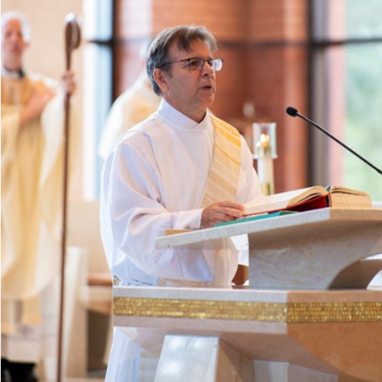
If you want to get something done, ask this busy deacon
Deacon Santiago Molina | Diocese of Pensacola-Tallahassee, Florida
“If you want something done, ask a busy person.” This famous phrase, most often attributed to Benjamin Franklin, is an apt description of Deacon Santiago Molina. As the director of Hispanic Ministry for the Diocese of Pensacola-Tallahassee, Deacon Molina is the epitome of a busy person.
Ordained in 2000, Deacon Molina’s ministry has grown to encompass everything from marriage preparation to prison ministry and more.
He accompanies Hispanic Catholics throughout the region by supporting parishes with Spanish-language catechesis. He works closely with Catholic Charities to help families navigate immigration and legal concerns and provides pastoral support to those facing deportation or detention.
-
Read more
Deacon Molina aims to strengthen the unity of the Church by integrating Hispanic devotional traditions—such as celebrations of Our Lady of Guadalupe and Epiphany festivities—into the broader life of the diocese. He also works with teens, who learn from him how to integrate intellectual, emotional, social and spiritual aspects of their persona and mature into fully integrated adults. As busy as Deacon Molina is, he understands that others must be called into ministry as well, so in association with the Lay Formation Institute, he is helping to provide a platform for the formation of Spanish-speaking leaders and educators in the faith.
Deacon Molina meets families in hardship, and he emphasizes the importance of presence: showing up with a listening ear, offering prayer and reminding them that the Church walks with them. His ministry reflects the belief that we journey toward God together. He truly believes that “even a simple smile” can ease tensions, put others at ease and allow for dialogue and healthy conversations.
He fully supports the vision of his bishop to integrate the Spanish-speaking population into the greater Church of Pensacola-Tallahassee, to share the richness of their cultures and to draw out the true “Catholicity” of the Catholic Church.
Deacon Santiago Molina is a busy person who gets things done. His ministry embodies the spirit of the Lumen Christi Award through his faithful service, humility and dedication to evangelization. He has devoted his life to accompanying Hispanic Catholics, and all those he encounters, with compassion and practical support while helping integrate their gifts and traditions into the life of the wider Church.
His ministry strengthens families, forms disciples and builds unity within a culturally diverse diocese. By combining pastoral care, catechesis and advocacy, he reflects Christ’s light in both spiritual and practical ways, making the Church more welcoming and accessible to those he serves.
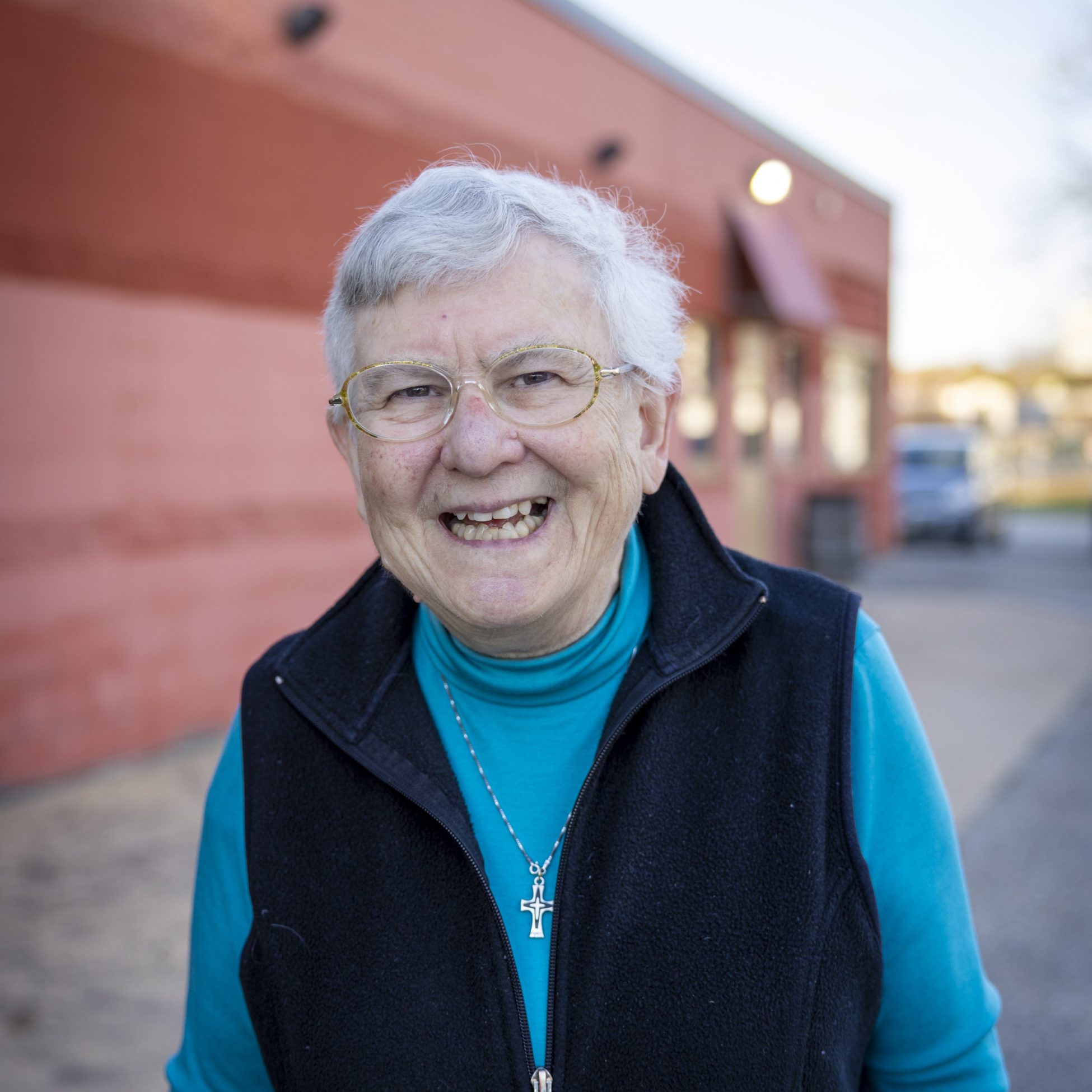
This Catholic sister created Hispanic ministry for all of Maine
Sister Patricia Pora, RSM | Diocese of Portland, Maine
When she was young, Patricia Pora’s family moved from Virginia to Chile. This is where a lifetime of dedication to the poor began to take shape.
“I know the presence of violence,” she recalled. “I’ve seen the extreme poverty. I came out of that, and I hope they can come out of that.”
After returning to the United States to complete her education, Sister Patricia’s heart for the marginalized led her to enter the Sisters of Mercy in 1967. For 60 years she has committed herself to helping the disadvantaged.
After serving Native American communities on Maine’s Pleasant Point Reservation as an elementary school teacher for 10 years, Sister Patricia landed back in South America. In the Diocese of Chulucanas, Peru, where Pope Leo XIV also served as a missionary in the mid-1980s, Sister Patricia worked with the poor.
-
Read more
This experience in Latin America was the basis for the ministry she would establish when she returned to Maine in 2001. There had been a growth in the Hispanic population, and they lacked consistent pastoral support. In response, Sister Patricia established the Diocese of Portland’s Office of Hispanic Ministry and served as its director for the next 15 years.
What began as a ministry that held Mass in just two locations has grown into outreach that extends throughout the entire state of Maine. Thanks to Sister Patricia’s efforts, Hispanic Catholics new to Maine and the United States can find a place to worship, interact with their neighbors and feel that they are fully part of the Church.
Through this ministry she has also served many immigrant families.
“When people come, they are leaving everything behind,” said Sister Patricia about the importance of this outreach. “They want to do good here. They are coming for protection, but they come with nothing. I help provide everything I can.”
She stands side by side with the immigrants she serves in moments of crisis. Sister Patricia will often attend immigration hearings with families—traveling from Maine to Boston just to give them the reassurance that they are not alone. Her goal, she said, is “to bring mercy to people and find God in them.”
“I try to show the human side of the immigrant face,” Sister Patricia said.
Over a lifetime of service, Sister Patricia has built more than ministries—she has built true community. The people she serves are grateful and are comforted by her presence. From Virginia to South America to Maine, Sister Patrica has been a champion for the poor who need her most. In the vast land of lobster and lighthouses, the real legend is Sister Patricia and her unwavering commitment to the state’s most precious resource, its families and workers.
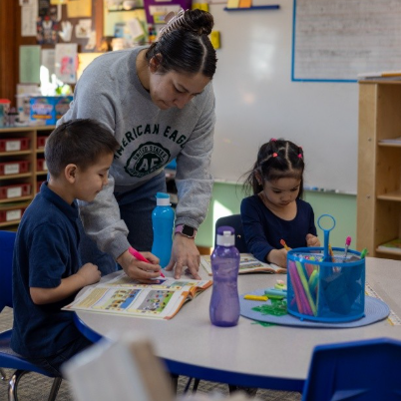
K-8 school forms future leaders for the Rosebud Indian Reservation
Sapa Un Jesuit Academy | Diocese of Rapid City, South Dakota
Sapa Un Jesuit Academy is more than a school. Located on the Rosebud Indian Reservation, this K-8 Catholic school’s mission is to form well-rounded young people grounded in faith, culture and academic excellence so they can contribute their talents to begin breaking cycles of poverty they know too well.
This mission is vital in a region where almost 60% of children live in poverty, there are high addiction and mental health rates, low educational attainment levels, and generational trauma. Despite these obstacles, Sapa Un is changing the narrative one student at a time.
Sapa Un is a ministry of St. Francis Mission, which Jesuits founded in the 1880s at the invitation of a local Lakota chief. Catholic Extension Society has supported the mission since 1910. Today, it has grown to include five parishes, lifesaving programs and Sapa Un School to meet a pressing need for quality Catholic education on the reservation.
-
Read more
Modeled after the Jesuit Nativity network of schools, Sapa Un’s holistic education emphasizes academic rigor, character formation and a deep sense of religious identity. A defining feature is its dual formation in Catholic and Lakota teachings, fostering a strong sense of identity and purpose. Small class sizes of 10 to 12 students allow teachers to provide individualized instruction tailored to each child’s unique needs. The school’s extended days, nutritious meals and highly qualified faculty—many of whom come from the local Lakota community—create a nurturing and disciplined learning environment where students can thrive.
Sapa Un has grown from a single class of a dozen third graders to its current enrollment of 38 students from 23 families. Nearly all students are performing at or above grade level in math and language, and every graduate has gone on to high school, with many pursuing higher education.
Equally important is the school’s commitment to faith and service. Students participate in bimonthly school Mass, religious education and daily prayers, growing spiritually in both Catholic faith and Lakota traditions. They live out these values through service projects supporting neighbors and elders in need.
Parents Sharon Guerue and Charles Waln, whose son Carter is now in seventh grade, affirm the school’s impact: “We are deeply grateful for the opportunities Sapa Un has provided our son. The school’s commitment to meeting each student where they are, encouraging them to reach their fullest potential, and instilling values of compassion, courage and service has made a profound difference for our family. Sapa Un is preparing students not just for academic success, but for lives of leadership grounded in faith and community.”
Through its holistic approach, Sapa Un Jesuit Academy is cultivating a new generation of leaders to build a stronger, more hopeful future for the Rosebud Indian Reservation.
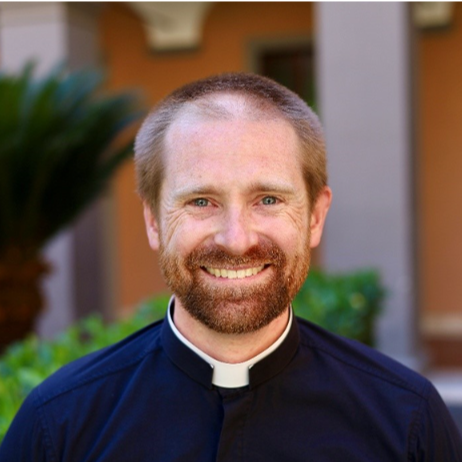
Student attendance up 50x in four years at university campus ministry under his pastoral care
Father Joe Walsh | Diocese of Reno, Nevada
Father Joe Walsh’s loving guidance and energy make him a beloved young pastor at Our Lady of Wisdom, the University of Nevada, Reno’s (UNR) Newman Center. There, he shepherds a rapidly growing campus ministry, accompanying hundreds of students as they encounter Christ and discover how God is calling them to make a difference with their lives.
Born and raised in Reno and ordained a priest in 2018, Father Walsh has always understood the 70,000-square-mile diocese as mission territory. His early priesthood meant serving tight-knit, geographically scattered communities in northern Nevada’s mountainous and desert terrains. Those experiences shaped a priest who learned what it means to immerse himself with his people and appreciate their goodness—qualities that ultimately led Bishop Daniel H. Mueggenborg to entrust Father Walsh with campus ministry at UNR.
In a region with a large Mormon presence, Our Lady of Wisdom is a unique place where young adults can meet other Catholics and grow in their faith together. In a remarkably short time, Father Walsh has transformed the Newman Center into a dynamic hub of connection and support. Today, 920 students are registered at the Newman Center, compared to 20 students just four years ago. Mass in their 200-seat church regularly overflows, so a third service was added. Weekly Bible studies have expanded to 15. This past year alone, 11 students entered the Catholic Church—with eight baptisms and three professions of faith—and 20 more were confirmed at Easter.
-
Read more
What draws students in, Father Walsh said, is community. Father Walsh has intentionally cultivated a true spiritual home of welcome, belonging and opportunity. Robb Northrup, a campus minister initiated into the Church at Easter, said he met “devout, charitable, kindhearted people” through the Newman Center. Another student, Rebecca Reyes, who helps lead Bible studies, remarked that the center “improved my prayer life and increased my sense of mission.”
In a world increasingly virtual, Father Walsh said students are rediscovering the power of the sacraments—something tangible through which God meets them. Additionally, a hunger to understand the faith is what he says is attracting his students to the Catholic faith.
Nowhere is Father Walsh’s impact clearer than in vocational discernment. He leads a discernment group of 11 young men exploring the priesthood and is interested in forming a similar group for women discerning religious life as well.
Witnessing his students excel in their studies while giving themselves wholeheartedly to Christ has strengthened Father Walsh’s own priesthood. Through his leadership at UNR, Father Walsh is not only forming students—he is securing the future of the Church in northern Nevada by forming a generation of men and women to be people of faith and service.
Ministering to youth through the church’s millennial saint
Michael Edwards | Diocese of Salt Lake City, Utah
Michael Edwards has had the perfect preparation for his ministry to the Diocese of Salt Lake City’s youth and young adults. He is a retired public-school teacher and a retired command chief master sergeant of the Utah National Guard. These two professions make Edwards uniquely qualified to handle the rambunctious, energetic and challenging world of today’s youth.
Edwards needs every bit of this preparation because he has a big job. He is the co-chair of the diocese’s St. Carlo Acutis Apostolate. St. Carlo Acutis, a 15-year-old canonized by Pope Leo XIV in 2025, is the first saint of the millennial generation. St. Carlo has been referred to as the patron saint of the internet. His devotion to the Eucharist is having a profound impact on Catholic youth worldwide.
Edwards plays a core part in spreading St. Carlo’s example in the Diocese of Salt Lake City. He organizes events, communicates with parishes, creates and distributes religious materials, and serves as the emcee for the St. Carlo Acutis Apostolate.
-
Read more
The Apostolate holds youth rallies and retreats for diocesan parishes which are often the required Confirmation retreat for local parishes. Through videos, lectures, games and vocation talks, along with Mass, adoration, veneration and confession, the Apostolate challenges youth to go deeper in their faith and live a life close to God like St. Carlo did.
The Apostolate often provides licensed therapists to assist youth struggling with demands and social pressures to confront issues like depression and anxiety. These youth leave with a deeper knowledge of their faith and a new enthusiasm for growing in their faith journey with the Lord.
Since the start of this ministry, the Apostolate has presented at over twenty events throughout the Diocese of Salt Lake City, impacting and reaching well over 3,000 youth, deepening their faith lives with their families and parishes. Edwards’ impact has been felt outside the Diocese as well—he has been invited to bring the Apostolate message to the Dioceses of Allentown, Pennsylvania; Honolulu, Hawaii; Stockton, California; La Crosse, Wisconsin; Tyler, Texas; and many other dioceses around the country this upcoming year.
Edwards has been instrumental in helping form a diocesan young adult leadership council with representatives from many of the parishes in and around Salt Lake City. This council shapes and promotes ministry to young adults, a group that is too often overlooked on the parish level.
Public-school teacher. Command chief master sergeant of the Utah National Guard. These are accomplishments anyone would be proud of. But Michael Edwards’ greatest calling is to be a man of faith for the Diocese of Salt Lake City. St. Carlo once said, “To always be close to God, that’s my life’s plan.” The same can be said of Michael Edwards.
Diocesan legal representative embodies a church that walks with immigrants
Patricia Stokes-Santana | Diocese of San Angelo, Texas
Patricia Stokes-Santana serves as a vital force within the Diocese of San Angelo’s Immigration Services ministry, where her work ensures that both individuals and the Church itself can flourish without being hindered by legal barriers. A 2026 graduate of the University of Cincinnati, and a dean’s lister, Stokes-Santana earned her degree in law and paralegal studies. She brings discipline and intellect and stands as a vital protector of the Church’s mission in West Texas.
Federally authorized to provide legal counsel and represent clients before U.S. Citizenship and Immigration Services, Stokes-Santana also holds Department of Justice Partial Accreditation, a recognition of both her legal expertise and ethical integrity. In her role, she is the legal and administrative heartbeat of the diocesan Immigration Services Office, a recognized agency by the U.S. Department of Justice. Her work is twofold: She manages a complex caseload that safeguards the dignity and unity of families—handling petitions for family reunification, adjustments of status and naturalization—and she secures legal protection for vulnerable individuals through the Deferred Action for Childhood Arrivals program, the Violence Against Women Act and critical waivers.
At the same time, Stokes-Santana ensures the continued presence of clergy by securing R-1 visas for international priests and women religious serving throughout the diocese. In a real sense, her work allows the local Church to remain both legally compliant and spiritually present in the communities it serves—and is quietly facilitating the growth of the Catholic faith.
-
Read more
What distinguishes Stokes-Santana is her remarkable versatility. She moves effortlessly from collaborating with high-level attorneys at Catholic Legal Immigration Network, Inc. to offering a calm, compassionate presence to families facing fear and uncertainty. In 2026 alone, she is expected to serve more than 350 individuals and 120 families, while supporting 100% of the diocese’s religious worker petitions.
“My work is about removing the barriers of fear. Whether I am helping a family stay together through a waiver or helping a priest secure his R-1 status to serve our people, I am simply trying to ensure that the law serves the dignity of the human person,” Stokes-Santana shared. Through her dedicated service, she embodies a Church that accompanies, protects and uplifts every person in their journey of faith.
How beautiful that feet that bring the good news to these six Native American communities
Deacon Andy Orozco | Diocese of San Bernardino, California
Romans 10:15 proclaims, “How beautiful are the feet of those who preach the Good News, who bring glad tidings of good things!” St. Paul could very well have been talking about Deacon Andy Orozco, but he would have to switch out “feet” for “family car.” But the long miles that he and St. Paul traveled on mission are the same.
Deacon Orozco and his wife, Rosanne, minister to six church communities on Native American reservations in southern California. Deacon Orozco celebrates Liturgy of the Word services with distribution of holy Communion and prepares youth of Native American descent for the reception of the sacraments. Some of these communities are small—the St. Michael Parish serves roughly 400 Pechanga reservation residents—while others are huge. Our Lady of the Snows Church serves the Cahuilla reservation, which has thousands of residents.
This ministry is personal for Deacon Orozco. He is from the San Pasqual Band of Mission Indians near San Diego, and he knows how important it is that church programs like the OCIA be tailored to his Native brothers and sisters seeking to understand and accept Catholicism.
-
Read more
This sacramental preparation has increased the numbers of youth, young adult and adult parishioners receiving sacraments. Many children, teens and adults are baptized each year at the mission churches Easter Vigil services in a truly joyous event.
Deacon Orozco has also introduced youth from the missions to the greater Church by organizing outings to the Los Angeles Religious Education Congress and the National Catholic Youth Conference. This is no easy feat: Native youth are not accustomed to leaving the reservation for regional events. Deacon Orozco seeks out sponsors and personally donates money for all expenses so youth do not have to pay to participate. No one is left behind.
Deacon Orozco did not let COVID-19 deter him from his ministry; he took the pandemic as an opportunity to utilize Zoom video calls to continue catechizing. This allowed for a more efficient method of bringing the Good News and sacraments to those who were affected by the pandemic. Deacon Orozco and Rosanne continue to utilize Zoom to catechize the faithful. Now many parishioners from the six mission churches participate in the sacramental formation sessions being offered three days a week, three weeks a month, during the academic year, hosted by Deacon Orozco and Rosanne.
St. Paul is said to have traveled 16,000 miles through present-day Turkey, Greece, Syria and Israel. Each weekend, Deacon Orozco makes the long trek from his home in Moreno Valley to each of the reservation’s mission churches: It may not be as many miles as St. Paul journeyed, but Deacon Orozco’s mission is the same.
Former DJ has led 5,000 lost and searching souls back to Christ
Martin Noriega | Diocese of Savannah, Georgia
Martin Noriega’s life and ministry are a powerful testament to the transforming grace of God. Having served the last 18 years as president of the John XXIII Movement in the Diocese of Savannah, he is recognized as a tireless lay leader who meets people where they are—and accompanies them into the warmth of a relationship with God.
Under Noriega’s leadership, the John XXIII Movement has become a vital engine of evangelization in Savannah and beyond. Its mission is clear: to seek out those on the peripheries—individuals struggling with addiction, family brokenness, divorce or spiritual isolation.
Noriega has been married for 23 years and is a father of two kids ages 10 and 11. He works full-time as a ranch manager while devoting himself to the John XXIII Movement, but before encountering the organization, Noriega lived a very different life—as a young man, he was a DJ performing weekends in bars and clubs and was internally unfulfilled. That changed in November 2008 when he experienced a personal encounter with the Lord at a John XXIII retreat. The moment became a turning point in reshaping his path in life. From that day forward, Noriega committed himself fully to the movement, attending every gathering and gradually becoming a servant-leader.
-
Read more
Through retreats, ongoing formation and personal accompaniment, Noriega and his team have helped participants discover that they are known, loved and called to a deeper relationship with Christ.
What distinguishes Noriega’s approach is his commitment to formation beyond the retreat experience. Recognizing that life-changing encounters are only the beginning, he has dedicated himself to programs that provide ongoing catechesis and Bible study for continued spiritual growth, especially at parishes where retreatants are based. Dozens of individuals receive structured formation, laying the groundwork for a thriving community of disciples across the diocese.
Today, the movement in the Savannah diocese alone has reached more than 5,000 people across 16 parishes, offered over 100 retreats and formed more than 100 lay ministers. Central to this growth is Noriega’s “multiplication” model for lay ministers. Many retreatants who go on to receive consistent faith formation express interest in becoming such leaders. He identifies committed participants in weekly parish study meetings and forms them intentionally so they, in turn, can lead others. Monthly diocesan training sessions, in which lay ministers receive deep catechesis, are another key part of this discipleship process. This ripple effect has ensured the sustainability and expansion of the John XXIII Movement, which now extends beyond Savannah to other dioceses and continues to grow nationally.
The fruits of Noriega’s ministry are best seen in lives transformed. Participants who once resisted faith are seen embracing the topics of discussion at Sunday retreats and, by the end, falling to their knees in prayer. He has also helped reconcile broken marriages to make families feel closer again. Maria Barragan, who participated in Catholic Extension Society’s Mujer Valiente leadership formation program for Latina Catholics, credits Noriega’s sharing of his transformation at a 2014 retreat for helping her rediscover her faith after years of feeling alienated from the Church. She is now empowering other women in Savannah to serve their parishes and is vice president of the John XXIII Movement.
As Bishop Stephen D. Parkes noted, Noriega is a “hidden hero” whose quiet dedication has filled pews, strengthened families and brought countless souls to Christ. Noriega is now director of the John XXIII Movement nationally and has expanded it to several dioceses. Though his impact is far-reaching, Noriega remains deeply humble, seeking to further evangelize and meet “lost sheep” so they all feel Christ’s love for them.
Interior designer makes space for those without shelter
Marianne Jones | Diocese of Springfield-Cape Girardeau, Missouri
Marianne Jones has spent more than 25 years as a professional interior designer, shaping homes across Southwest Missouri. In addition to helping families create spaces of comfort and stability, she also coordinates the Catholic Cold Weather Shelter, a ministry of Sacred Heart Church in Springfield. The shelter provides homeless men a place to stay during freezing winter nights.
Jones stepped into this ministry without previous experience, but she brought with her a strong sense of organization and a natural ability to help people feel at ease. Now in her fifth year as coordinator, she oversees the shelter’s operations, organizes volunteers and helps ensure that each guest is received with care. She works closely with a small planning team that includes longtime volunteers and one man who has experienced homelessness himself.
The shelter opens on nights when temperatures drop to 32 degrees or below and offers space for up to 30 men. Guests are welcomed by Jones and her team of volunteers with a hot meal and given access to showers, clean clothes and other basic needs. Jones and the volunteers also make their best efforts in helping the unsheltered get back on their feet for the long run, whether that means obtaining identification, finding work or securing more stable housing. Through Jones’ leadership, the effort has grown to include support from several Catholic parishes and local partners.
-
Read more
Jones stays at the shelter most nights it is open, getting to know the men and hearing their stories. Her presence shapes the environment; volunteers follow her example and work with Jones to create a space where people are treated with dignity.
Bishop Edward M. Rice of the Diocese of Springfield-Cape Girardeau reflected on Jones’ service, saying, “Our diocese has been blessed to have Jones voluntarily coordinate the shelter for five years, continuing this ministry to those without homes. She has a passion and enthusiasm that not only provides shelter but also brings together a group of dedicated volunteers who share her devotion through meals, oversight and hospitality.”
Jones certainly knows how to make this space feel like home. Even if it’s just for one night. And thanks to her dedication and compassion, the Cold Weather Shelter is a place where the people who walk through its doors on cold Midwest nights can begin again.
Generations of youth and young mothers see her as a mentor
Yvonne Huck | Diocese of Steubenville, Ohio
Christa McAuliffe, the first teacher chosen to go into space said, “I touch the future. I teach.” This profound philosophy powerfully describes the ministry of Yvonne Huck. She has truly touched the future.
Huck has served in catechetical and youth ministry in the Diocese of Steubenville since 1990, spanning more than three decades of continuous service. During that time, generations of children and youth have passed through her catechetical programs, youth ministry, CCD classes and Catholic school classrooms. Today, she is witnessing the fruits of that long-term investment as she now teaches a second generation, the children of those she once catechized, demonstrating the enduring influence of her faith formation across families and communities. She has truly touched the future.
Another measure of robust ministry is how we care for those when they are in need. On this score, Huck is a role model for all who minister to youth. Huck is a founding member of Mary’s House, a maternity home that provides shelter, support and hope to pregnant women who have nowhere else to turn. This ministry reflects Huck’s deep commitment to the dignity of human life and her willingness to respond concretely to the needs of the most vulnerable.
-
Read more
Mary’s House provides comprehensive, wraparound support designed to help women move toward stability and independence. Residents receive life-skills training including cooking, cleaning, parenting skills and household management. The program includes financial education such as budgeting, paying bills and maintaining a checking account, as well as assistance with transportation, obtaining driver’s permits and licenses and navigating local transit options.
The ministry also supports residents in areas critical to long-term success, including health care access, birthing classes, substance-abuse education and legal support as needed. Educational and employment assistance is provided, including help with GED completion, job applications, interview preparation, and future housing applications. Equally important, Mary’s House prioritizes the health of mind, body and soul by offering spiritual support and direction in a judgment-free environment.
Huck understands the mission of Mary’s House as more than providing shelter; she sees it as a sacred call to bring women closer to Jesus, to help them encounter truth, healing and hope during vulnerable moments. Walking alongside mothers facing uncertainty has reinforced her belief that faith must be lived through accompaniment, patience and mercy. This ministry has challenged her to rely more fully on prayer and discernment, trusting that God is at work even in the most difficult circumstances.
The lives touched through Mary’s House are intentionally measured in transformation. Each woman that is welcomed, each child born into a safe and supportive environment and each family strengthened through the ministry represents lasting impact that cannot be fully captured by numbers alone. Together, Huck’s decades of catechetical leadership and her foundational role in Mary’s House reflect a ministry that has shaped faith, families and community life across generations.In Christa McAuliffe’s words, Huck has touched the future.
Deacon helps victims of violence begin healing
Deacon Fidel Carrillo | Diocese of Stockton, California
Ordained to the permanent diaconate in 2015, Deacon Fidel Carrillo of the Diocese of Stockton has dedicated his ministry to accompanying victims of violence and their families, as well as the incarcerated, bringing healing into places of deep suffering and need. He is always looking for ways to better serve them as their advocate. His ministry is to restore dignity, rebuild relationships and offer hope where it is most needed.
Deacon Carrillo serves as the diocesan liaison to the Office of Restorative Justice and Detention Ministries and chaplain for the California Health Care Facility in Stockton. He walks closely with incarcerated individuals and their loved ones in detention ministry, while also equipping communities with tools for healing. Through the Restorative Justice Ministry program, he shares best practices in conflict resolution, promotes violence prevention strategies, and provides formation for leaders responding to the complex mental, physical and spiritual needs of victims and their families. Each year, nearly 400 victims and their families are served through these efforts.
-
Read more
At the state facility, Deacon Carrillo organizes sacramental and pastoral events for residents. Notably, he puts together an annual Christmas Mass and banquet, gathering support from local businesses and community members to create a meaningful celebration that includes the presence of the bishop of Stockton, Myron J. Cotta, and diocesan leaders. He does it all with extremely limited resources and staffing.
Deacon Carrillo developed a bus program at a California state youth prison to reunite young people with their families—an initiative grounded in his belief that healing begins with restored relationships. Today, he continues to foster reconciliation through a bilingual annual Mass for Victims of Violence, offering a space for communal prayer, remembrance and healing at one of the local parishes.
A recipient of Catholic Extension’s Restorative Justice Ministry Certification program (2021), Deacon Carrillo draws faith-filled inspiration from his ordination motto rooted in John 12:26: “Where I am, my servant will be.” Reflecting on his work, he shared, “As prison chaplain I feel it is our responsibility to help unite and rebuild the family unit.” Through his compassionate leadership, Deacon Carrillo represents Christ’s presence among the wounded, guiding individuals and families toward healing and hope.
The saintly man on the pastors speed dial
Michael Mosyjowski | Ukrainian Catholic Eparchy of Saint Josaphat in Parma, Ohio
Catholic theology has a patron saint for almost every profession, place or thing. Teachers have St. Thomas Aquinas. Animals have St. Francis of Assisi. Hairdressers have a patron saint (who else but St. Mary Magdalene). But is there a patron saint for the person on the pastor’s speed dial when something breaks down, goes wrong or just plain needs fixing?
Michael Mosyjowski is the perfect candidate. He spends his time taking care of his spiritual home better than his own physical home. He is the first to be called if something plugs up, breaks down, emits funny smells or strange noises, burns out or otherwise requires fixing or replacing.
Mosyjowski is the quintessential quiet Catholic parishioner who is the pillar of his community. He never asks whether something will benefit himself; he does everything to benefit the parish and his fellow parishioners. Others look to him as a leader and follow his example. In his quiet, unassuming way, Mosyjowski is helping to grow his Ukrainian Catholic parish.
-
Read more
Mosyjowski is everywhere. He participates as a choir member, lector, pastoral advisory council member, annual festival committee member, lawn-care crew member in summer and sidewalk-snow-removal crew member in winter. He suffered a heart attack in 2007 while he was clearing the snow in front of the parish in anticipation of another parishioner’s funeral the next day. He attributes his own ongoing cardiac health to his habitual service in and around the parish.
For many years, Mosyjowski has generously donated part of his retirement fund (IRA) to the Eparchy of St. Josaphat for the purpose of supporting its Mission Parish outreach. He himself does not belong to a mission parish, but this generosity is characteristic of the way he is always thinking of others.
Mosyjowski’s dedication also extends beyond the boundaries of his parish. For the past two years, Mosyjowski has been the treasurer of “Akron Ohio for Ukraine” which sponsors a family of five displaced persons who came to America from Ukraine due to the full-scale Russian invasion in 2022.
So, is there a patron saint for the person who is on the pastor’s speed dial when something breaks down, goes wrong, or just plain needs fixing? One must look no further than the Eparchy of Parma and Michael Mosyjowski. Every pastor needs someone like him. His devotion to his parish and to others inspires all to open their hearts and participate more deeply in the life of the Church.
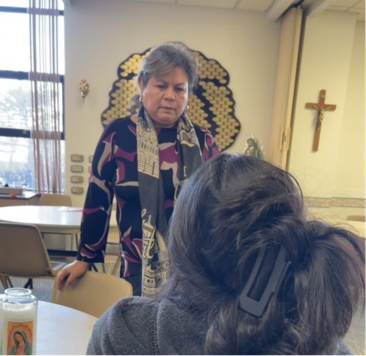
She is caring for children ‘orphaned’ by immigration arrests
Cristina Hernandez | Diocese of Youngstown, Ohio
At the plenary meeting of U.S. bishops in Baltimore in November 2025, 220-plus bishops delivered an extraordinary joint statement defending the dignity of immigrants.
“We oppose the indiscriminate mass deportation of people,” they said. “We note with gratitude that so many of our clergy, consecrated religious and lay faithful already accompany and assist immigrants in meeting their basic human needs.”
One of the members of the lay faithful doing her part to assist immigrants is Cristina Hernandez, coordinator of Hispanic ministry for the Diocese of Youngstown, Ohio.
As coordinator of Hispanic Ministry, for 16 years Hernandez has labored to help everyone in the diocese appreciate and embrace the richness of Hispanic culture within the broader Church community. She organized large, highly attended religious cultural events that welcomed all. Under her leadership, the diocese saw a significant increase in Hispanic Mass attendance.
-
Read more
Now she is doing some of the most important work of her life by helping children in desperate situations.
Hernandez never could have expected that her work would prepare her for the new responsibility she accepted for the diocese: helping families torn apart by detentions and deportations, after a string of immigration arrests created motherless and fatherless households.
At just one parish in her diocese, Hernandez has been serving 60 children who have seen one or (in some cases) both parents arrested and/or deported, resulting in an immediate humanitarian and economic crisis for those children. One woman from Guatemala has six children, the youngest of which is under 2 years old. Since her husband (who had a work permit) was detained, she has not been able to work given that the cost of childcare for six kids would exceed what she could reasonably earn. Her story is just one of too many heartbreaking situations that Hernandez constantly encounters. Hernandez also accompanies children to detention centers, where they see their dads in shackles and confined behind thick glass.
Hernandez is working to support families like these in Ohio who have lost household income, have U.S. children to feed and are struggling to pay bills.
“I’m a follower of Jesus, and helping the least of His people is my way to give thanks to Him,” said Hernandez.
We are proud to honor all of the Lumen Christi Award Nominees for 2026. Learn more about the award here.